

The $5k rule multiplies your AC repair cost by the system's age. Over $5,000, replacement is worth comparing. Under it, repair.
It shows up at the top of every "should I repair or replace my AC" Google result. It's clean, easy to repeat, and feels like math. It gets treated as the answer when it only has two inputs, the repair cost and the age of the unit. Everything else about the system stays out of the arithmetic.
Where the $5k AC rule came from
My best guess is that the $5k rule evolved from an older heuristic contractors actually used. Repair cost × age of unit > new unit cost → replace. That math made sense in its original context. It weighs the cost of keeping the current system running against the cost of starting fresh, and age stands in for how many more repairs are coming.
When a new residential AC system cost $5,000, the rule's threshold landed at $5,000. The equation got simplified into a marketing-friendly "5k rule," and the threshold got cemented even though the underlying input changed. New units in Florida now cost $10,000 to $15,000+ depending on tier. Nobody updated the number.
Even if you updated it to "rule of $8k" or "rule of $12k," you'd still be missing the real problem. Five other things decide this call on a real house, and the multiplication has no room for any of them.
Five factors the $5,000 rule leaves out
1. What specifically failed and what it signals about the next failure
Not all repairs are equal at the same dollar amount. Two non-warranty motor replacements on simple residential systems, both costing roughly $900. One is a blower motor. The other is a condenser fan motor. The rule multiplies both by the same age and hands you the same answer. On the truck they're two different jobs.
With the blower motor, the system iced up, the customer noticed fast, and the failure is isolated. The $900 repair is likely to be the end of the problem.
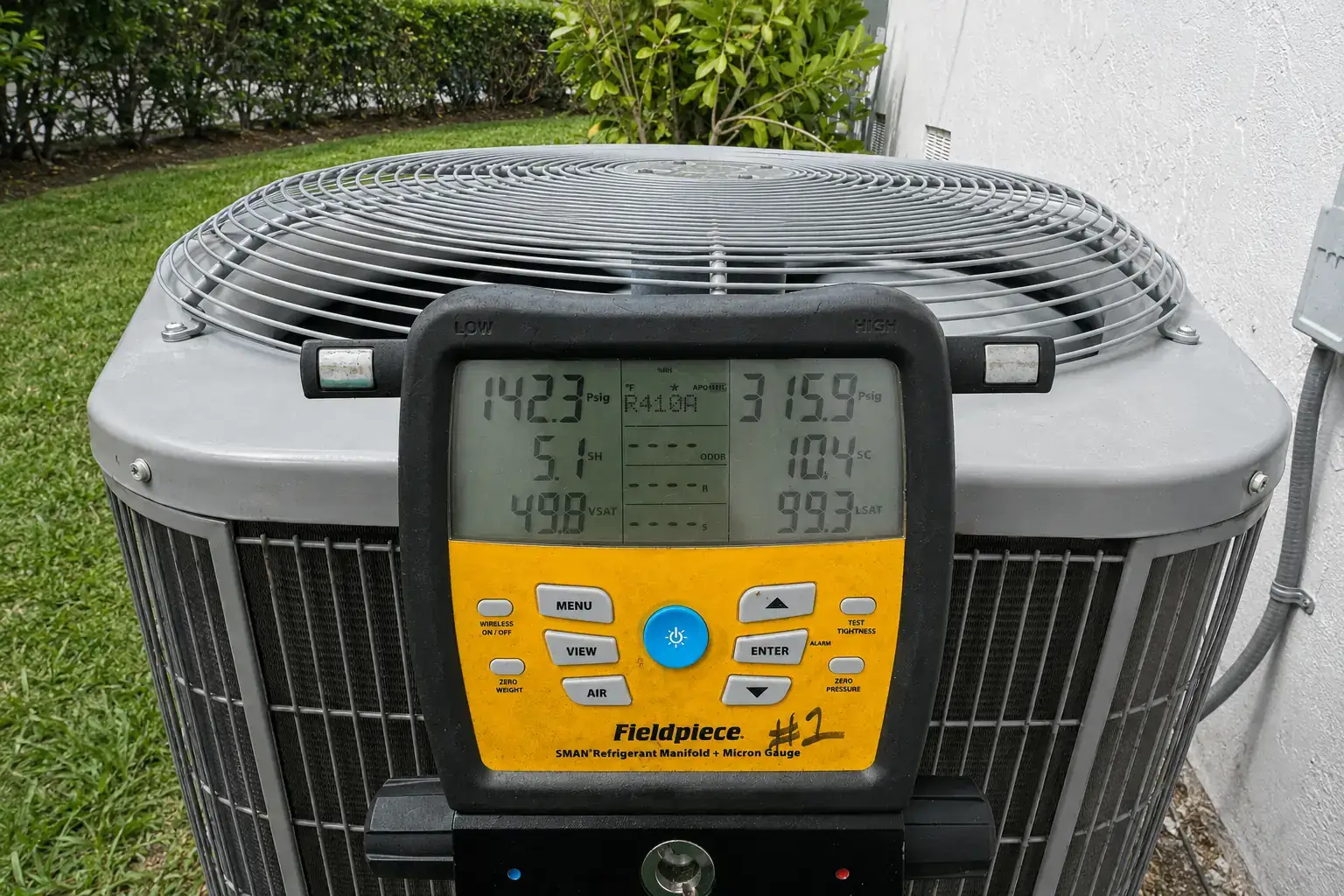
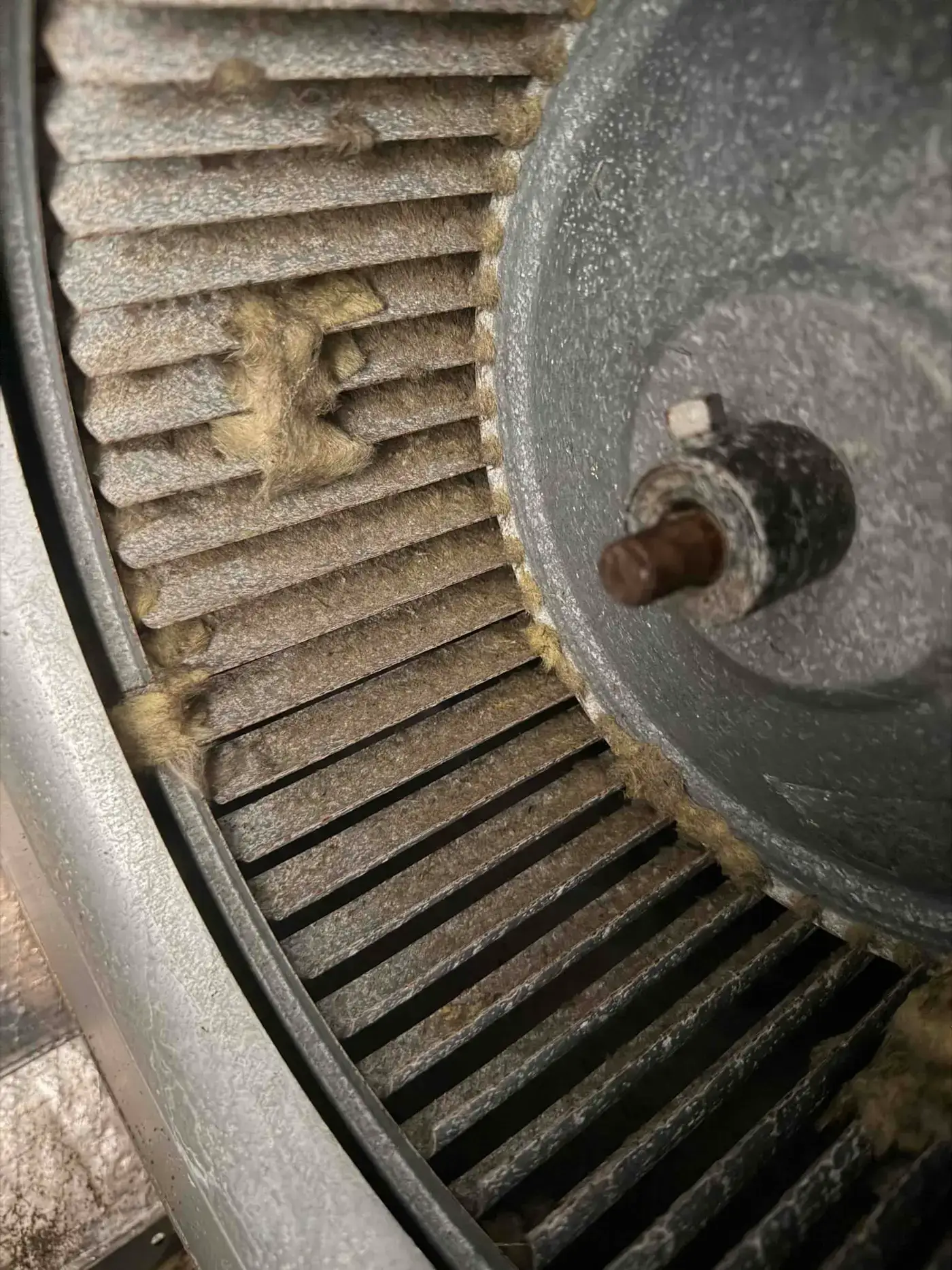
With the condenser fan motor, the compressor ran with no airflow over the condenser coil before anybody caught it, often for hours. Compressors are sensitive to that. The compressor took a hit even if it doesn't show today. That $900 motor repair can turn into a $2,500-3,500 compressor failure within 6-18 months.
Same $900 either way. The rule multiplies that $900 by the age and stops there. It has no input for whether the real number is $900 or $3,400 across the next year. That's what a good diagnostic call is for.
2. The failure pattern over time
The rule multiplies this repair by the age of the unit. It has no input for whether this is the third capacitor in three years.
A capacitor at year 12 on a system with no recent failures is a normal part replacement. The $300 you plug into the rule is the real number.
A third capacitor in three years means something else is going on. Usually a system running hot, probably oversized, maybe undercharged, possibly with airflow issues stressing the start circuit. You'll be buying that capacitor again. What matters is what the next few years cost, and the rule only has this one repair in it.
3. Duct system condition
Replacing the equipment doesn't fix a bad duct system. New $10k system on 18-year-old leaky undersized ducts gives you the same comfort issues you had before, sometimes worse if the new equipment is more sensitive to static pressure (most modern variable-speed and inverter systems are).
Florida ducts age faster than ducts in most other climates. Hot attics and long cooling seasons wear them out, humidity gets into them, and wildlife in the attic tears them up. A 15-year-old duct system in Florida may already be what's holding the whole thing back, regardless of what the equipment is doing.
The rule asks what the repair costs and how old the equipment is. It never asks about the ducts, and the ducts are what move the air.
4. Original sizing
If the system was sized wrong from the start, replacement fixes a problem repair won't.
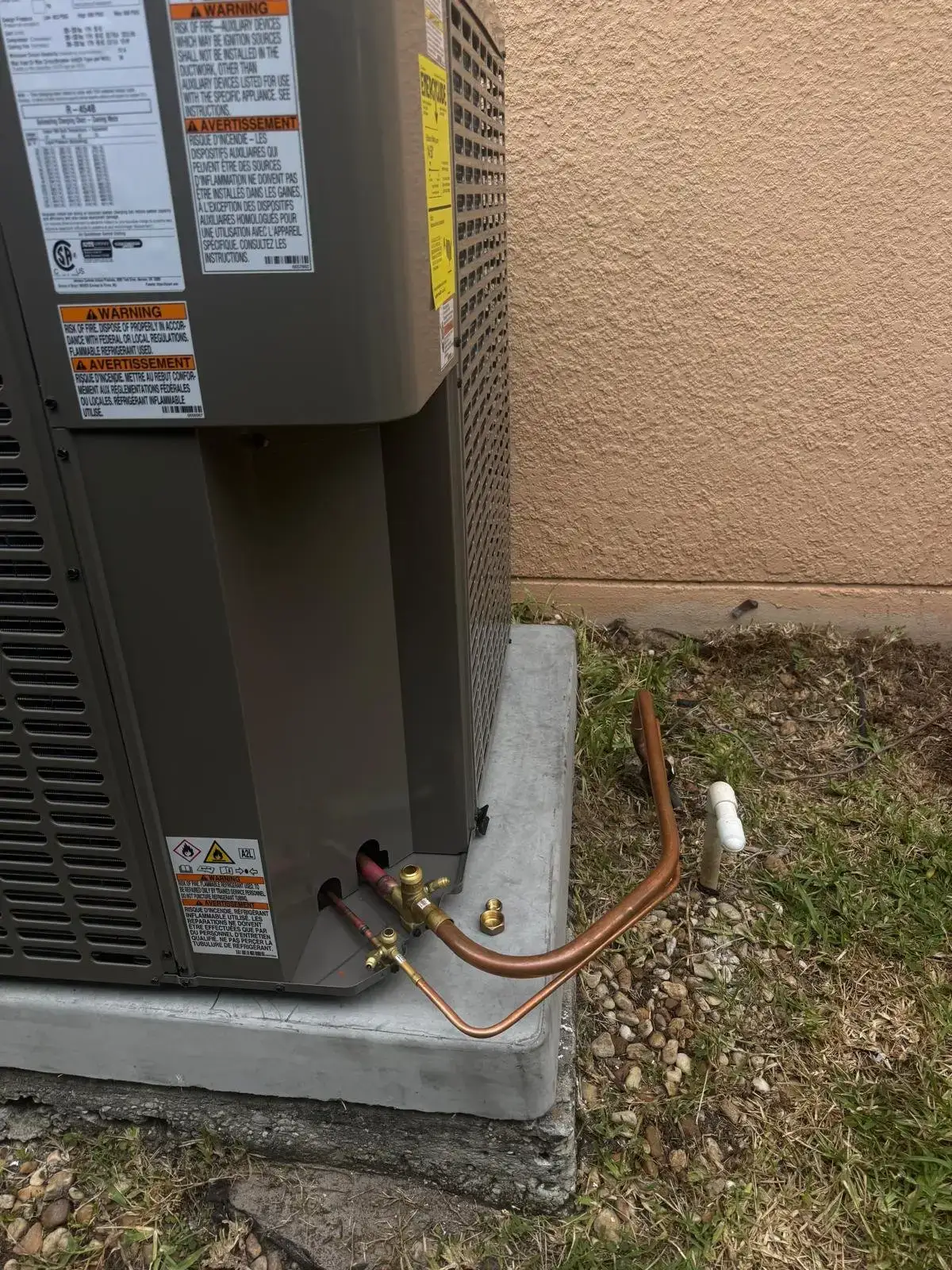
A previous contractor upsold a customer from a 4-ton to a 5-ton system. The ducts in the home were sized for 4-ton airflow. The 5-ton system runs short cycles, never dehumidifies properly, comfort suffers, and the blower motor eventually fails because it's working against undersized ducts.
The blower motor fails at year 5. A $700 warranty repair, well under the rule's threshold, so the multiplication says repair. The system is still wrong for the home. The blower will fail again, and even a successful warranty repair leaves the customer with the same comfort problem they've had since the install.
Sizing is measurable. It isn't a judgment call and it isn't whatever came off the last truck. We run a Manual J load calculation on every replacement quote we write. Room by room, we measure window area, insulation, and which way the house faces. Then we check what the existing ducts can actually move. That's how a 4-ton house ends up with a 4-ton system.
The rule takes the cost of the failure and the age of the unit. Whether the system was ever right for the house isn't one of the numbers.
5. How long you plan to stay
On a five-year stay with a planned sale, repair is usually right unless the repair is really just buying time before a replacement that's coming anyway. The breakeven on a new system over 5 years often doesn't pencil out for the seller.
On a twenty-year stay with kids growing up in the home, the calculus changes. The breakeven on better equipment over 15-20 years shifts the math toward replacement earlier. A higher-efficiency system, better humidity handling, and lower bills all compound over that many years.
The rule runs on the unit. Who's living in the home, and for how long, isn't part of the multiplication.
How the $5k rule fails on both ends
Cheap repair on an old unit. A $400 capacitor on a 15-year-old system. The rule's math is $400 × 15 = $6,000. Over the threshold, so the rule strictly says replace.
Real answer. Replace the capacitor. Capacitors are cheap, isolated, and common across the system's lifespan. You don't replace a $10,000 system to avoid a $400 capacitor. The arithmetic is right and the answer is still wrong, because age is doing almost all the work in that multiplication and the part that actually failed is doing none of it.
Pricier repair on a newish but wrong-sized unit. The 4-ton house that got sold a 5-ton system. A $700 warranty repair on the blower motor of a 5-year-old system. The math is $700 × 5 = $3,500. Under the threshold, so the rule says repair.
Real answer. Replace. The repair is fine in isolation, but the system is wrong for the home. The blower will fail again, the comfort issues continue, and the customer keeps living with a system that was misspecced from day one. The customer often doesn't want to hear it (the unit is "still new"). The rule's "repair" answer is wrong here because it priced the blower motor. The trouble is the system that blower motor is bolted into.
The actual repair-or-replace question to ask
"Is my repair cost times age over $5,000" is the wrong question to finish on.
Here's the one that actually decides it. "What does it cost to get another 5-7 years out of this system, and what does it cost to start a new 15-year cycle, accounting for what specifically failed, the failure pattern, the duct system, the original sizing, and how long I'll be in this home?"
Answering that takes somebody putting hands on the system. A real estimate covers what failed and what shape the ducts are in. Then the sizing, the age in context, and what the customer plans to do with the house. The rule is a useful first-pass filter for whether it's even worth getting an estimate on replacement. The estimate is where the decision gets made.
How Liberty handles the call
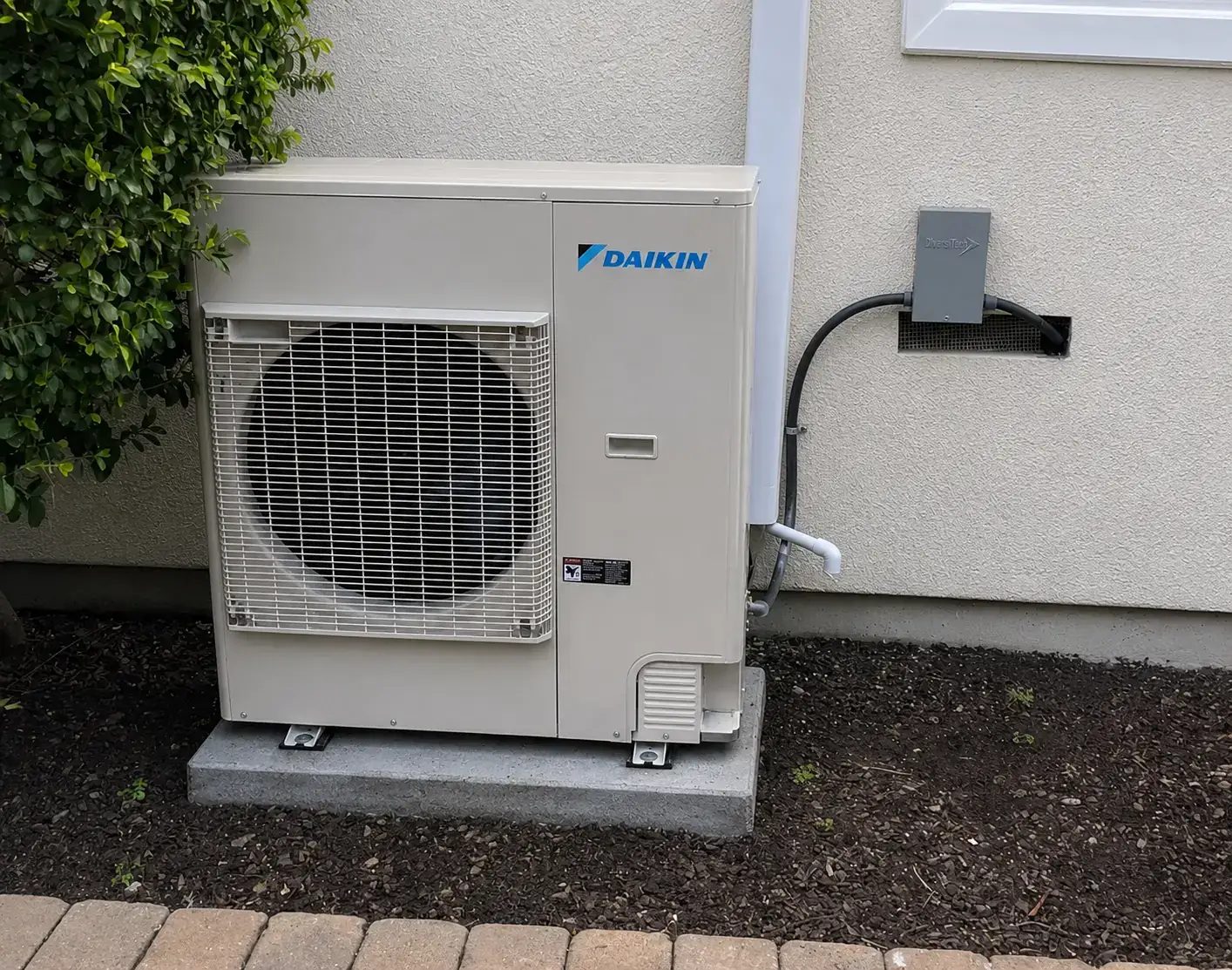
Most of our calls end as repairs. Once you add in what actually failed and what shape the rest of the system is in, the simple isolated cases usually come out as fix-it. We don't push replacement on a $400 capacitor on an old unit.
Every tech we send out holds EPA Section 608 certification. On any repair that opens the sealed system, the refrigerant gets recovered and weighed back to spec. That matters for the diagnosis as much as for the rules. You know what's in the system by weight.
When replacement is the right answer, we walk through which specific factors apply. Maybe the condenser fan motor went and the compressor took a hit with it. Maybe the failure pattern says the system is at the end of its life, or the sizing has been wrong since the install, or the ducts are what's holding everything back. We explain why specifically, not "the math says replace."
At Liberty, when we say replace, it's because what we found on the call points there. Florida shop, owner-led, no commission incentive to push replacement over repair. We come out, run the actual analysis for free, and tell you which side your situation lands on.
Repair or Replace FAQs
What Homeowners Ask About Repair vs Replace
Q: Is the $5,000 rule accurate for AC repair vs replacement?
A: The $5,000 rule is a useful starting point but not an accurate final answer for AC repair vs replacement. It compresses a multi-factor decision into one number and fails on both ends: it tells you to replace working old systems over cheap isolated parts, and to keep repairing wrong-sized newer systems that should be replaced.
Q: What is the $5k rule for AC?
A: The $5k rule multiplies your AC repair cost by the system's age in years. If the result is over $5,000, replacement is worth comparing to the repair. It likely descends from an older contractor heuristic that compared repair cost times age against the price of a new unit, back when a new unit cost about $5,000.
Q: When should I repair my AC instead of replacing it?
A: Repair the AC when the failed part is isolated, the failure is not part of a repeating pattern, and the system is sized right for the home. A $400 capacitor on a working 15-year-old system is a repair, not a replacement trigger.
Q: When does AC replacement make more sense than repair?
A: AC replacement makes more sense when failures keep repeating, the compressor has taken damage, the system was sized wrong from the start, or you plan to stay in the home long enough for better equipment to pay back through lower bills and better humidity control.
Q: How much does a new AC system cost in Florida?
A: A new AC system in Florida typically costs $10,000 to $15,000 or more depending on the equipment tier. That number matters for the repair-vs-replace math: the old $5,000 threshold dates from when a full system cost $5,000.