
New AC Installation Built for Florida Homes
Putting central AC in a home that doesn't have it? Liberty Air and Electric designs ducts, electrical, refrigerant lines, and drainage as one system. So it runs right your first summer and your tenth.
- Free estimates for new AC systems
- Licensed for HVAC and electrical work
- Flexible financing available

Planning a New AC Installation
Liberty Air and Electric plans new AC installs as one design, from the duct layout to the breaker.
When the space doesn't already have central AC, the ductwork, electrical, refrigerant lines, condensate drainage, and equipment location all have to be planned before the quote is finalized. Otherwise you're stitching together what should be one design. You end up with inconsistent comfort, weak airflow in some rooms, and control issues nobody can quite trace. If your home already has central AC and the new equipment is going back in the same general setup, that's an AC replacement. And if the existing system has stopped working and you're not sure how bad the problem is, it usually makes sense to diagnose what you've got before planning a new install. For multi-family or commercial properties planning a re-roof where existing AC units have to come off the roof and go back on, that's our HVAC for re-roof projects specialty, run in partnership with the roofing contractor.
Adding AC to a New Space
You may be cooling an addition, garage conversion, enclosed patio, renovated room, or part of the home that never had proper air conditioning.
Building Central AC From Scratch
A ducted central AC install usually needs ductwork, return air, refrigerant lines, high-voltage wiring, low-voltage control wiring, and condensate drainage.
Changing the HVAC Layout
If the equipment location, duct layout, return air, or conditioned area is changing, the job needs more planning than a standard equipment replacement.
Planning Around a Remodel
A remodel is the right time to plan the AC system before walls, ceilings, soffits, or attic access make the project harder.
Schedule your free estimate with the trusted, local pros at Liberty Air and Electric.
- Solutions for all budgets
- Flexible financing
- Extended warranties available
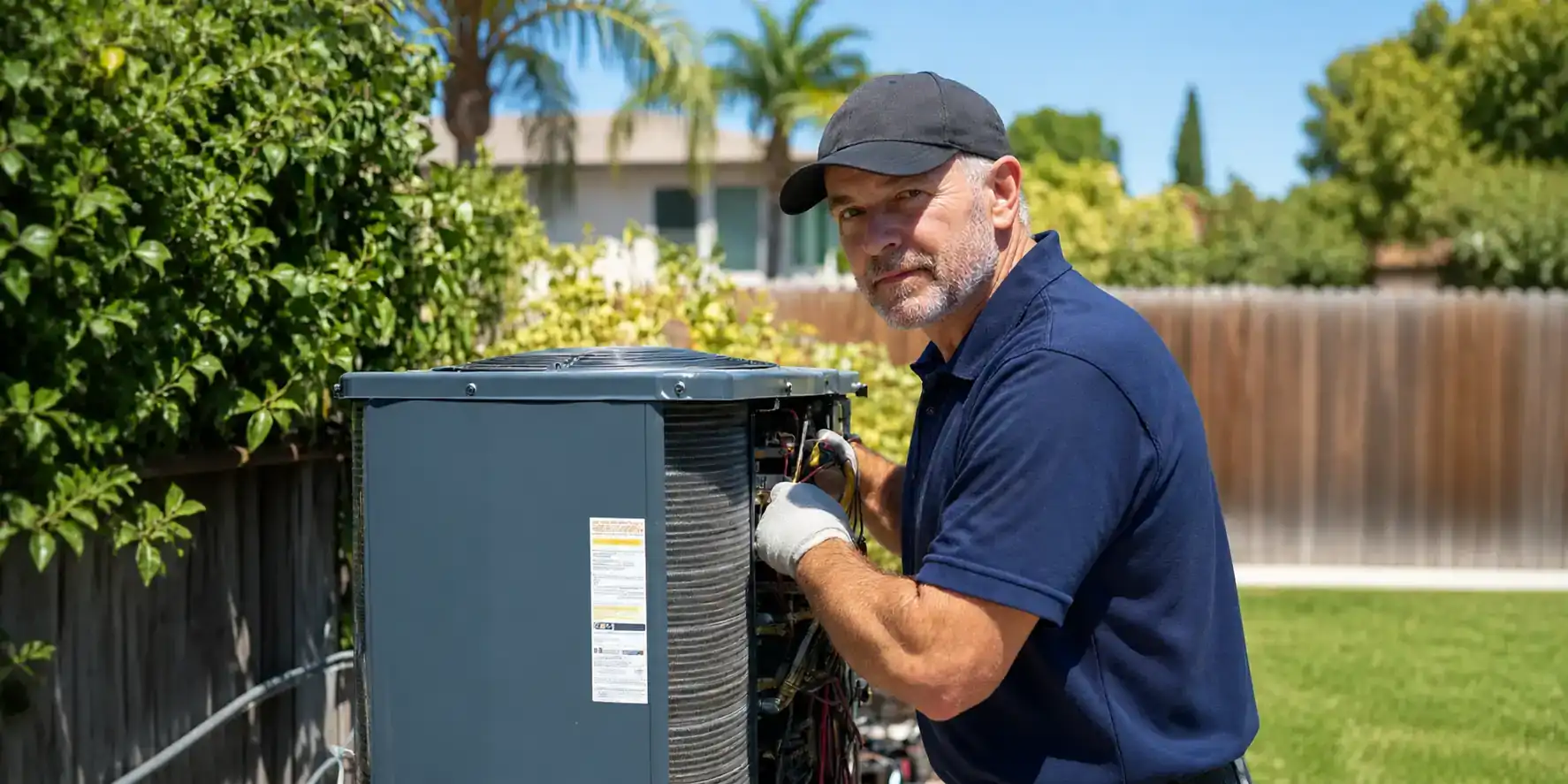
Installation and replacement get used like the same word. The scope behind them rarely matches.
A standard replacement means the home already has central AC, and the new condenser and air handler are going back in roughly the same place. Existing ductwork, electrical, drain, and thermostat setup may be reused if they're in good condition and meet the new system requirements. Equipment changes, infrastructure stays.
A real installation is different. You're adding cooling where there wasn't any, running new ductwork, installing new high-voltage and low-voltage wiring, running copper refrigerant lines, routing a condensate drain, or planning equipment around a remodel that's changing the floorplan. The infrastructure changes too. The design starts from the home, and the equipment pad is one piece of it.
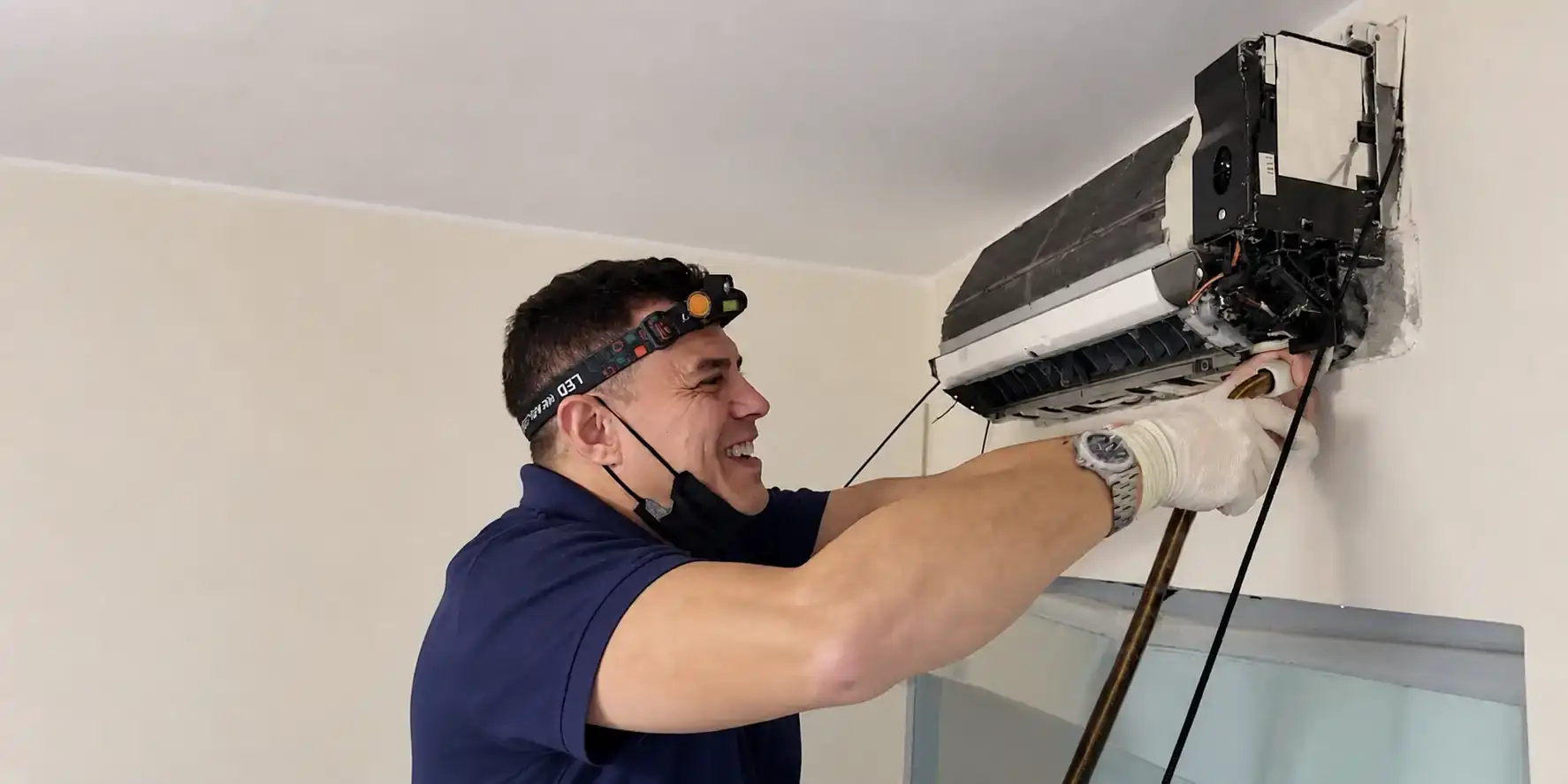
Liberty Air and Electric estimates every new install after seeing the home, because a real installation isn't an equipment swap.
For a ducted split system, a scratch install commonly involves new high-voltage wiring, low-voltage control wiring, copper refrigerant lines, condensate drainage, ductwork, equipment placement, return air, permits, and inspections. That's a project.
That's why we don't publish a simple online price range for installation. One home needs a straightforward layout. Another needs attic ductwork, a new return, panel work, drywall access, a difficult line-set route, or permit-driven changes. The real range between those two homes is too wide to commit to without seeing the actual site.
New installations touch every chapter of the Florida Building Code that affects HVAC: mechanical, energy, and electrical. Right-sized equipment, proper duct design, code-compliant electrical, and inspection-ready documentation are all standard on a permitted install.
Almost every Florida permit office wants an AHRI matched-pair certificate when the install permit gets pulled. The cert proves the air handler and condenser were tested together as a matched system. No cert, no permit. That's also where the published SEER2, EER2, and heating numbers come from. Same source backs the rating and the permit.
For new installs in Miami-Dade or Broward, the FBC's High Velocity Hurricane Zone (HVHZ) rules add real layers: hurricane-rated condenser pads, hurricane-rated tie-downs on outdoor units, and specific stand-height and anchor-leg spacing rules when the condenser is rooftop. Different scope start to finish from a typical Florida install.
A mini split or ductless install is different because it skips traditional ductwork, but it still needs electrical, refrigerant lines, condensate drainage, placement planning, and proper sizing. We still need to see it before we can price it.
Liberty Air and Electric offers free estimates so we can inspect the space, explain the scope, and give you a real number before any work begins. No surprise add-ons mid-project.
Want a real number for your install?
Free estimate. We'll inspect the space, walk through the scope, and give you a real installation plan in plain English.
What a Scratch AC Install Covers
A new install has more moving pieces than a standard replacement. The exact scope depends on the home, but these are the major items we look at during the estimate:
Ductwork and Return Air
For ducted central AC, the system needs supply ducts, return air, proper sizing, and airflow that can support the equipment. If the home needs new ductwork, we will explain what has to be built and why.
Electrical Wiring
A new system usually needs high-voltage wiring, low-voltage control wiring, breaker and disconnect planning, and code-compliant connections. Liberty Air and Electric is licensed for HVAC and electrical work.
Copper Refrigerant Lines
A split system needs copper line sets between the indoor and outdoor equipment. The route, length, access, protection, and refrigerant requirements all matter.
Condensate Drainage
The indoor system removes moisture from the air. That water has to drain safely, which usually means planning a condensate line, safety switch, and drain route.
Equipment Location
The condenser, air handler, thermostat, and service access all need to be planned. Bad placement can make the system harder to service and worse for comfort.
Permits and Inspections
Many new system installations require permits and inspections. We will tell you what is needed before work starts and handle permits when required.
How Liberty Sizes a New AC Installation
Liberty Air and Electric sizes a scratch install from a load calculation, because a space that never had central AC gives you no track record to copy.
A replacement at least has history. The old system either kept up or it didn't, and that tells you something before any math gets done. A new install has nothing to lean on. Guess small and the system runs all day without catching up. An oversized one cools fast, shuts off early, and leaves the new space cool but sticky. Either way the homeowner blames the equipment. Most of the time nobody ran the load calc.
We size by:
- Home size and layout
- Insulation
- Windows and sun exposure
- Ceiling height
- Ductwork and return air
- Room-by-room comfort issues
- Existing hot spots
- Equipment location
- Whether the space is new, remodeled, or already conditioned
If the space never had proper AC, copying a rule-of-thumb tonnage number isn't good enough. Installation is when the system gets designed around the actual home.
For scratch installs, sizing shouldn't be based on a square-foot rule of thumb. ACCA's Manual J load calculation (or at least a proper room-by-room load evaluation) is the right starting point before equipment is even picked. Manual S follows for matching the equipment to the load. Manual D follows for the duct design. That's the actual sequence the trade is built around. Eyeballing tonnage is how you get the comfort problems we end up fixing five years later.
Choosing a SEER2 Tier on a New AC Install
Liberty Air and Electric walks through the SEER2 decision during design, when changing your mind is still free. SEER2 is the current efficiency rating on new AC equipment, and a higher number generally means less electricity for the same cooling.
A scratch install holds one real advantage over a changeout here. The ductwork, return air, and electrical all get designed around the new equipment. High-efficiency variable-speed equipment on a replacement often ends up throttled by ducts that were sized for something else. On a new install, the airflow gets designed to let the equipment actually deliver its rating. Comfort planning can fold in air quality too. If dust, allergies, filtration, UV, or humidity control matter for the new space, indoor air quality options get planned into the design from the start.
A garage conversion running a single mini-split doesn't need the same analysis as a whole-home system designed from plans. Single-stage equipment fits simple, smaller scopes with straightforward airflow. Two-stage, variable-speed, and inverter systems cost more, and they're worth it when the design calls for tight humidity control, quiet operation, long gentle run times, or zoning across a larger floorplan.
In Florida humidity, how long the system runs matters more than the sticker rating. A system that runs longer at lower capacity pulls more water out of the air. On a new install that run time gets set during design, before anything goes in the walls.
Duct Design and Airflow Planning
The duct system has to support the equipment being installed. New equipment on bad ducts is one of the most common comfort failures in HVAC.
Crushed, undersized, or poorly designed ducts raise static pressure and make the blower work harder than it should. Ripped or disconnected ducts dump conditioned air into the attic or crawl space before it reaches the rooms. Poor return air makes the system noisy, inefficient, and uncomfortable. Any one of these problems shows up as a complaint about the new equipment, even when the equipment is fine.
That's why we look at the home room by room. A proper design starts with the cooling load (usually expressed as a Manual J load calculation) and works backward into equipment size, duct layout, return-air needs, register placement, and airflow.
For scratch installs, the duct work matters even more because the system may be serving a space that's never had central AC. If the existing ducts are in good shape (or there are no existing ducts and we're starting clean), we'll say so. If the project needs new ductwork or airflow corrections, we'll explain the scope before any work starts, not after the install when something doesn't feel right.
How Liberty Plans Electrical, Line Sets, and Drainage
Liberty Air and Electric plans a new install as one system. Three trades touch the job, and they all work off the same plan.
High-voltage wiring, low-voltage controls, the copper line set, and the condensate drain route all get sorted before the equipment goes in. We've seen plenty of installs where the electrical was sized after the equipment was already chosen, the line set went too long because the route wasn't planned, and the drain had to be re-routed mid-install when it turned out the original plan didn't have proper slope. All of that is fixable on the job, and none of it had to happen.
Because the Liberty Air and Electric crew works across HVAC and electrical, we settle the wiring scope while the system is still being designed. The breaker, disconnect, wiring route, panel capacity, grounding, and surge protection all get planned alongside the equipment.
This is why scratch installs need a real estimate. The equipment is one part of the job.
How Liberty Air and Electric Installs a New AC System
Liberty Air and Electric runs an install in clear steps from the first estimate to the final test. Here's how a job usually runs:
You schedule a free estimate
We look at the space, existing equipment if there is any, ductwork, electrical setup, access, and comfort goals. We also ask what hasn't been working well, so we don't repeat the same problem with new equipment.
We inspect the full setup
Equipment location, duct route, return air, drain path, line-set route, electrical setup, thermostat location, access, permit requirements. Takes longer than a 10-minute walk-through.
We give you options
Clear installation options with equipment, price, financing, warranty, and scope laid out in plain English. Tradeoffs explained.
We handle permits when required
Some installs need permits and inspections. We explain what's needed before the work begins and handle the coordination.
We install the system
Equipment in, ductwork connected, electrical run, refrigerant lines and condensate drainage routed, thermostat wired. The install matches the approved scope. No surprises.
We test the system before we leave
Airflow, temperature split, drain safety, electrical readings, thermostat operation, overall performance. We don't call it done until it actually works.
Liberty Air and Electric Service Area for AC Installation
Liberty Air and Electric installs new AC systems across South Florida and Greater Orlando, with the deepest local resources in these areas:
Don't see your area listed? We likely still cover it. Call us to confirm availability.
Why Homeowners Choose Liberty Air and Electric for AC Installation
Installing a new AC system is a design and execution decision. You're choosing who does the sizing and who owns the job after the crew drives off.
Liberty Air and Electric is family owned, with no private equity behind it. That matters on installs specifically, because a scratch install is where a sales-driven shop can load a quote with equipment the home doesn't need. Our quotes come off the load calc and the site visit. And since we hold both the HVAC and electrical licenses, the wiring, breaker, and disconnect scope is ours too, not a second contractor's change order.
Our techs average 7 years in the field with ongoing factory and in-house training, and on installs the same crew carries the job from design walkthrough through final commissioning.
Licensed for HVAC and Electrical Work
Useful when an installation involves equipment, wiring, breakers, disconnects, permits, or code requirements.
Free New System Estimates
We inspect the space, ductwork, electrical setup, access, and comfort goals before giving installation options.
Flexible Financing Available
Payment options are available when a new system is the right move. Specific financing terms are subject to approved credit.
Direct Distributor Relationships
We work with major brands for equipment access, parts support, installation options, and warranty coordination.
Financing and Warranty Options
A new AC installation isn't a small purchase. Liberty Air and Electric offers flexible payment options, including 0 down and 0% financing with approved credit.
We can show monthly payment options during the estimate so you can compare systems without guessing what the budget actually looks like over time. The math on a higher-tier system can change meaningfully when you spread it over 60 or 84 months instead of looking at the lump sum.
Most installs come with a 1-year workmanship warranty, plus the manufacturer's parts warranty (typically 10 years on registered systems). 10-year extended install warranty options are available as an upgrade. We'll explain what's included, what isn't, and how the warranty option affects the total project cost. Registration matters too, and we handle that step at install instead of leaving it to the homeowner.
A maintenance plan can also start at install. New equipment runs cleanest in the first few years, but that's exactly when small problems are easiest to catch. Regular HVAC maintenance from day one keeps the warranty in good standing and the service history complete.
AC Brands Liberty Installs
Liberty Air and Electric installs systems from major AC brands, and on a scratch install the brand decision runs through the design. The air handler and condenser have to be an AHRI-certified matched pair before the permit gets pulled, so we pick the brand and the size together.
Common brands we install: Rheem, Carrier, American Standard, Trane, York, and Daikin. Ductless scopes shift the list. Daikin and Mitsubishi lead most mini-split conversations, and both run R-32 refrigerant on current equipment. Our direct distributor relationships matter most on installs tied to a build schedule, where equipment availability decides whether the project stays on the calendar. On a new install, the installer matters more than which AC brand is best.
We help you compare the options that actually matter:
- System size
- Efficiency
- Straight cool vs heat pump
- Single-stage vs two-stage
- Variable-speed or inverter options
- Warranty
- Financing
- Availability
- Fit with the home's ductwork and electrical setup
The badge on the condenser matters less than whether the system fits the load, the duct design, and the budget. Sometimes the right answer is a top-tier inverter system. Sometimes it's a well-installed single-stage. The design tells you which, not the brochure.
Heat Pump vs Straight Cool on a New AC Install
In Florida, a lot of new installs are heat pump systems. They handle both cooling and heating from the same equipment, and they're efficient in our mild winters.
A heat pump cools like a standard AC in summer and provides heat during cool weather. If you're installing a system in a new space, replacing straight-cool equipment, or planning a comfort upgrade, we'll explain whether a heat pump fits your home, electrical setup, and budget. The decision usually comes down to electrical capacity, fuel cost in your area, and how often the heating side actually gets used. If your real issue is heating-mode failure on an existing system rather than a new install, that's a heating repair call. The whole system probably doesn't need replacing.
Questions?
Frequently Asked Questions About AC Installation
Q: Is AC installation different from AC replacement?
A: Yes. AC installation and AC replacement are different jobs. Replacement is swapping old equipment for new in roughly the same setup: same load, same general infrastructure. Installation means adding cooling to a space that didn't have it, changing the layout, building new ductwork, running new electrical, or designing a system from scratch. Different scope, different conversation, different price.
Q: What is a scratch AC install?
A: A scratch install is HVAC trade language for installing a system where the needed infrastructure does not already exist. That can include ductwork, high-voltage wiring, low-voltage wiring, copper refrigerant lines, condensate drainage, equipment locations, and controls.
Q: Do you offer free estimates for AC installation?
A: Yes. Liberty Air and Electric offers free estimates for new AC systems. We inspect the space, ductwork, electrical requirements, access, drainage, and comfort goals before giving options.
Q: How much does AC installation cost?
A: AC installation cost has to be estimated after seeing the home. Price depends on equipment, system size, ductwork, electrical work, refrigerant line routing, condensate drainage, access, permit requirements, and whether the space has any existing HVAC infrastructure. The range across all those variables is wide enough that we don't publish a fake one.
Q: Do I need new ductwork with a new AC installation?
A: New ductwork is usually part of a ducted central AC scratch install. The main exception is a ductless or mini split system, which does not use traditional ductwork.
Q: Does a new AC installation require electrical work?
A: Yes. A new AC installation almost always requires electrical work: high-voltage wiring, low-voltage control wiring, disconnect planning, breaker sizing, and code-compliant connections.
Q: Do you run the copper line set?
A: Yes. We run the copper line set on split systems, where the indoor and outdoor equipment need copper refrigerant lines. We plan the line-set route as part of the installation scope.
Q: Do you run the condensate drain?
A: Yes. We run the condensate drain and its safety controls, because the indoor equipment pulls moisture from the air that has to go somewhere safe.
Q: Do you handle permits?
A: Yes. We handle permits when they are required and explain what is needed before the work starts.
Q: Should I install a heat pump or straight cool system?
A: A heat pump or straight cool system comes down to your home, electrical setup, budget, and comfort goals. Heat pumps can provide both cooling and heating, while straight cool systems are cooling-focused. We can compare both options during the estimate.