
Electrical Services for Florida AC Systems
AC replacement isn't just AC. New disconnects, fresh whips, sometimes a breaker upgrade. And a lot of the time an AC problem is an electrical issue in disguise. Liberty Air and Electric is licensed for both. One truck, one visit.
- Dual licensed and insured
- Same-day emergency service
- Breakers, wiring, disconnects, and control boards

Good AC Service Requires Electrical Expertise
Liberty Air and Electric traces a lot of AC complaints back to the electrical side.
A failed contactor that won't pull in. A blown low-voltage fuse. A weak breaker that trips when the heat strips light up. Compressors, motors, and refrigerant charge fail in fairly predictable ways. Most of the diagnostic time on a modern system goes into the electrical side instead, so we check power and controls on every call.
The Breaker Trips When the AC Runs
A breaker that trips during cooling, heating, or heat-strip operation needs to be checked. Most of the time it's the equipment pulling too much current or a breaker that's gotten weak. Less often it's the wiring or the disconnect. The panel itself is rare, but it happens.
The Thermostat Is Blank or Not Responding
A blank thermostat can point to low-voltage wiring, a blown fuse, a transformer issue, a float switch, control board failure, or a power problem.
The System Acts Intermittent
Modern AC systems use boards, sensors, relays, communication wiring, and safeties. Intermittent operation often needs a stronger electrical diagnostic process.
A New AC Needs Electrical Support
Replacement and installation work can involve disconnects, breakers, wire sizing, control wiring, surge protection, and proper commissioning.
Book electrical support with the AC pros at Liberty Air and Electric.
- AC and electrical licensed
- Advanced diagnostics
- Same-day service available
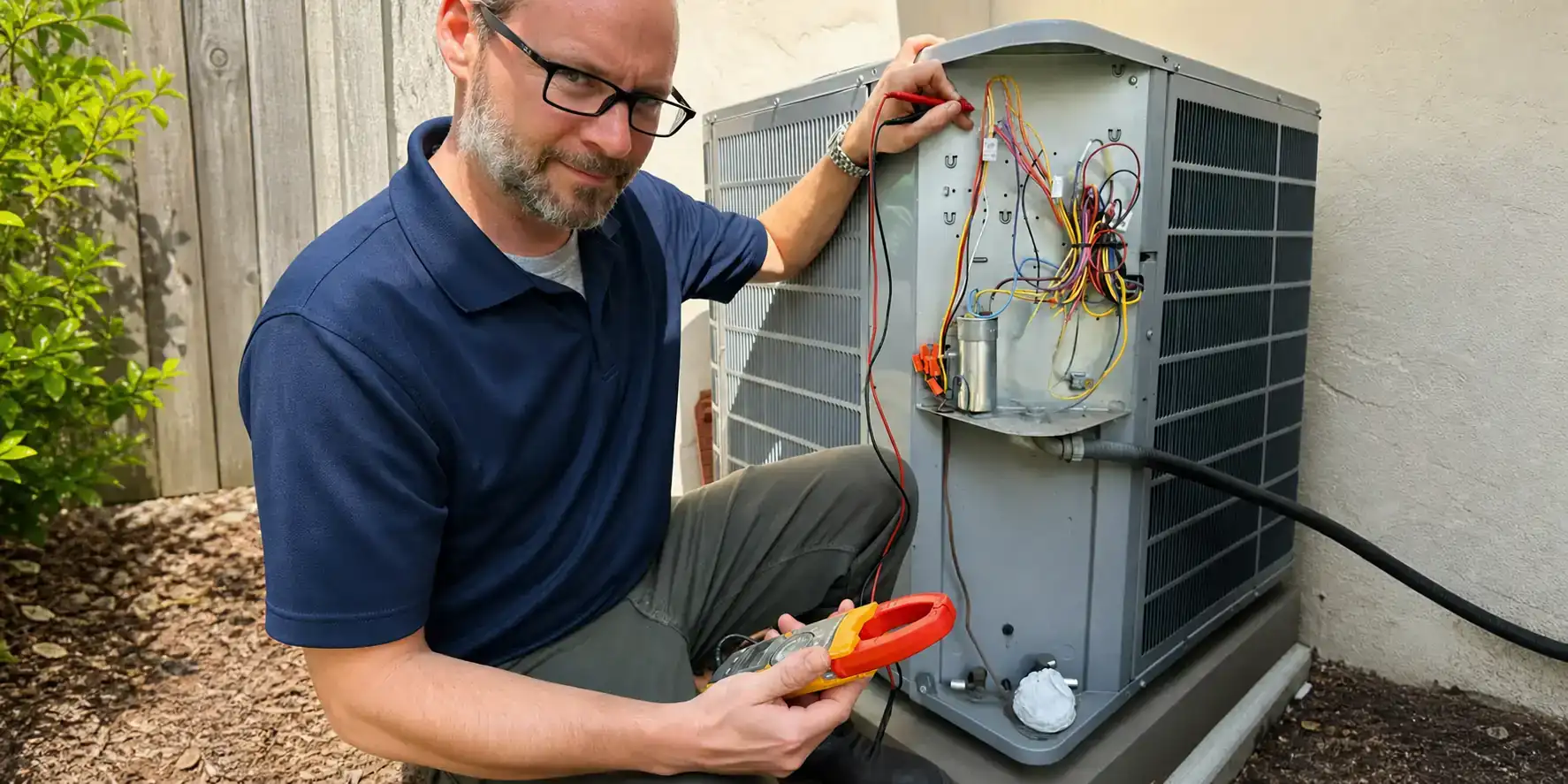
Twenty years ago, AC repair was mostly mechanical. A capacitor or two. A contactor. A fan motor. Refrigerant charge. Most diagnostics could be done with basic tools and a multimeter.
That's not how modern systems work. Variable-speed compressors, inverter drives, communicating thermostats, ECM blower motors, multi-stage controls. The electrical and electronics side is now where most diagnostic time gets spent. A high-SEER system with a misbehaving control board can read like a refrigerant problem to a technician who isn't looking deeper.
Liberty Air and Electric is licensed for both AC and electrical work, so the same crew that knows the equipment also knows the controls, breakers, wiring, and code requirements that let it run right.
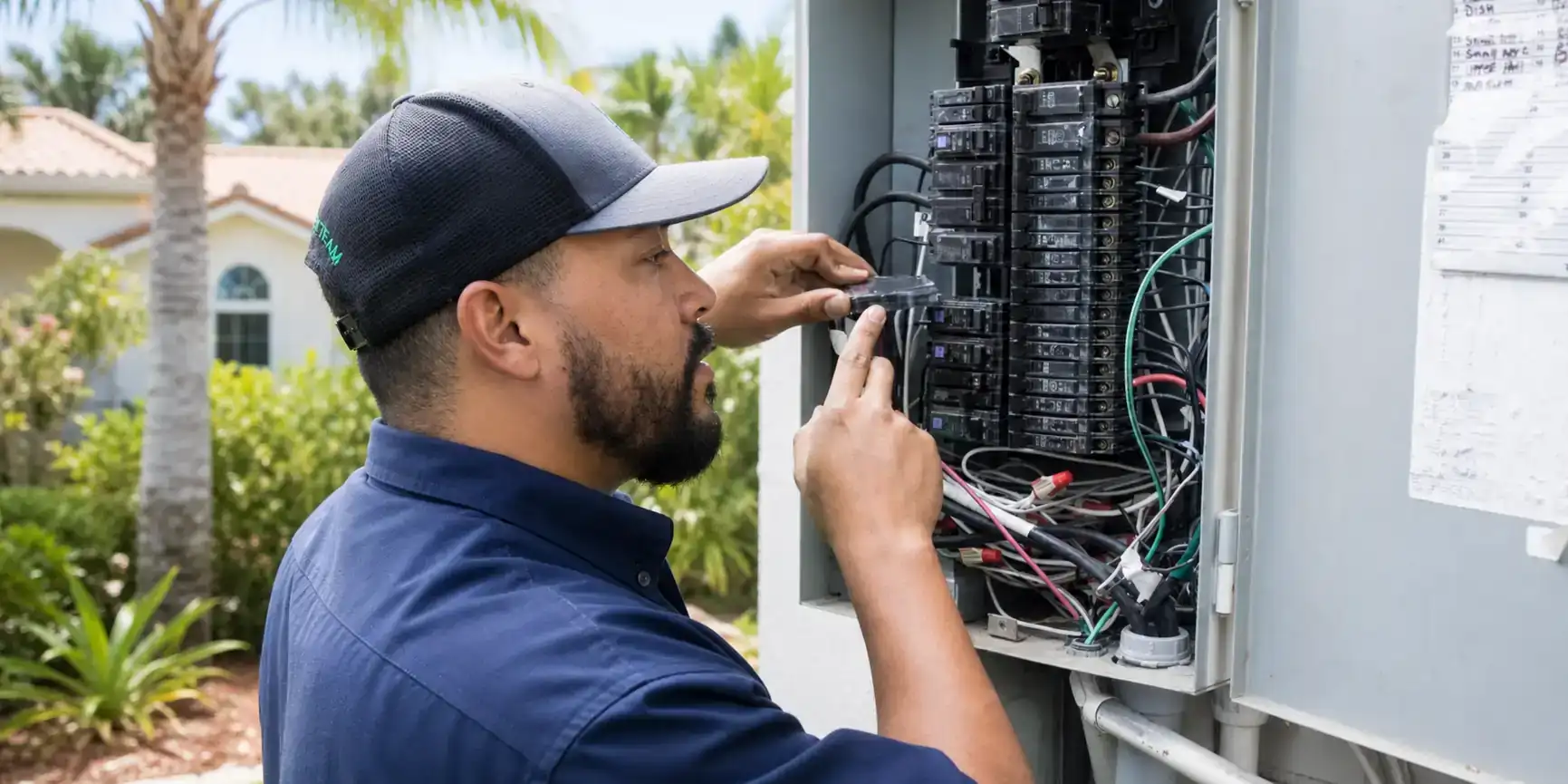
A real AC diagnostic checks more than whether the condenser turns on.
Power side, low-voltage controls, safeties, boards, capacitors, contactors, motors, thermostat wiring, float switches, communication wiring. Any of them can be the actual cause when a system isn't running right. On variable-speed and inverter systems, the diagnostic path goes deeper into the electronics every year.
Electrical issues show up as:
- A system that will not start
- A blank thermostat
- A blown low-voltage fuse
- Short cycling
- Intermittent operation
- Breaker trips
- Error codes
- Failed boards
- Communication faults
- Motors that do not ramp correctly
If the system isn't cooling, freezing up, short-cycling, or throwing error codes, we look at the AC repair and the electrical side on the same visit.
How Liberty Wires an AC Replacement
Liberty Air and Electric matches the electrical to the new equipment, because a replacement isn't a box swap.
The more advanced the new equipment, the more electrical detail matters. Proper breaker sizing. Whip and disconnect condition. Wire gauge for the new amperage. Low-voltage control wiring matched to the new thermostat. Surge protection sized for the inverter. A high-efficiency system installed on undersized or aged-out electrical can underperform from day one. And the homeowner usually never knows why.
On a replacement, the electrical side covers:
- Disconnect condition and location
- Breaker size
- Wire sizing
- Grounding
- Low-voltage control wiring
- Thermostat compatibility
- Surge protection
- Heat strip electrical requirements
- Panel capacity when the scope changes
When you're replacing your AC, we confirm the electrical scope first, then recommend the equipment.
Electrical Planning on a New AC Install
Liberty Air and Electric plans more electrical work into a new AC installation than into a standard replacement.
If the space didn't already have central AC, you're adding new high-voltage wiring, low-voltage control wiring, disconnect placement, thermostat wiring, line-set routing, drainage, ductwork, and equipment location all at once. That's a project, not a parts swap.
Electrical has to be planned before the job starts. Otherwise the install runs into panel limitations, access problems, code issues, or controls that weren't planned right.
When you're adding cooling to a new space, the AC and electrical plan have to work as one design from day one.
Heat Strips and Breaker Trips on AC Systems
Electric heat strips heat most Florida air handlers. They provide backup heat for heat pumps or primary heat for straight-cool systems.
They also pull serious current. That's why heat-strip problems usually show up as breaker trips. Or burnt wires. Or failed sequencers, bad relays, limit-switch issues, or heat that just won't come on. Weak airflow over the strips can also damage them, which sometimes traces back to duct issues rather than the strips themselves.
Don't keep resetting a breaker that trips when the heat turns on. Something on the strip side, the wiring, the breaker, or the panel is taking damage every cycle.
If the problem is in heating mode, the repair often involves heat pump or heat strip diagnostics alongside the electrical side.
How Liberty Builds AC Electrical Support
Liberty Air and Electric builds the electrical support around the AC equipment, from the panel out to the disconnect.
That includes the panel, breaker, disconnect, wiring, grounding, control wiring, and surge protection. If one part of that setup is wrong, weak, damaged, or undersized, the AC becomes unreliable even when the equipment itself is fine. A lot of these issues never trip a breaker, so they keep wearing on the equipment summer after summer.
All of that ties back to the National Electrical Code (NFPA 70). Florida adopts the NEC into its building code with state-specific amendments. So when we size a breaker, route a wire, or set a disconnect, we're working from the same rules the inspector reads. Wire sized right and grounded right stays safe for the life of the system, and it passes inspection the first time.
Surge protection is worth talking about because modern systems lean on more sensitive electronics than older ones did. Inverter drives, control boards, sensors, communicating controls. All of it gets expensive to replace after a single bad surge event.
We don't sell electrical work you don't need. The AC just needs power and wiring that can carry it safely, and that's what we check. A seasonal HVAC maintenance check catches loose connections and weak breakers before they fail in the middle of summer. A capacitor is the easy one to check with a meter. More than 6% off its rated microfarads and it gets replaced.
DIY vs Pro on AC Electrical
A few things are reasonable to check yourself before calling. Most of the electrical side isn't.
Fine to handle yourself:
- Reset the breaker once. If it trips again, stop and call.
- Confirm the disconnect at the outdoor unit is engaged.
- Replace the thermostat battery if the screen goes blank.
- Make sure the outdoor unit isn't covered, blocked, or buried in debris.
Not DIY territory:
- Anything inside the disconnect, the air handler, or the panel.
- Replacing capacitors, contactors, fuses, or any wiring.
- Resetting a breaker that keeps tripping (something is wrong, and resetting it cycles the damage).
Beyond the basics, HVAC electrical isn't DIY territory. The voltages involved are dangerous. Capacitors hold charge after the power is cut. Bad work creates fire risk. The cost difference between hiring a licensed crew and a homeowner attempting electrical repair just isn't worth what's on the line if it goes wrong.
This is also why annual HVAC maintenance makes sense for most homes. A tech with a meter catches the slow electrical issues (loose lugs, weak capacitors, corroding disconnects) before they turn into a no-cool emergency.
What Electrical Work Typically Costs
Liberty Air and Electric prices electrical work across a wide range. A $75 capacitor swap is a different conversation from a panel upgrade quoted by scope. Below are real Florida ranges for the most common HVAC-side electrical jobs. You'll get a flat-rate quote before any work starts.
| Electrical Work | Typical Cost | What's Included |
|---|---|---|
| Minor electrical repair | $75 – $450 | Capacitor, contactor, low-voltage fuse, small relay |
| Disconnect or breaker work | $150 – $500 | Disconnect replacement, breaker swap, lug or whip repair |
| Surge protection install | $200 – $600 | At-equipment surge device, sized to the system |
| Panel-side work | Quoted by scope | Panel upgrades, sub-panels, dedicated circuits, EV charger circuits |
Pricing varies with access, equipment, system size, and code requirements. Larger residential electrical scope (panel upgrades, sub-panels, dedicated circuits, EV charger installs) gets quoted by the job after a site visit. We'll explain what's needed and what it costs before any work starts.
How Liberty Air and Electric Diagnoses AC Electrical
Liberty Air and Electric starts electrical work by finding the actual problem. Here's how a visit usually runs:
We Ask What the System Is Doing
Is the AC not starting? Tripping a breaker? Is the thermostat blank? Locking out, short-cycling, or acting differently in heat mode? What you tell us narrows the diagnostic before we even pull a panel.
We Check Power and Controls
Power supply, disconnect, breaker, wiring, low-voltage controls, thermostat signals, safeties, and board behavior. We don't skip steps just because something looks obvious.
We Connect the Findings to the AC Problem
You'll know whether the issue is inside the AC equipment, in the electrical support around it, or both. No guessing.
We Explain the Repair Clearly
What failed, why it matters, what the repair costs. Before we start work.
We Complete the Approved Work
If the repair can be done on the spot, we handle it. If the job needs a special part or larger electrical scope, we explain what comes next.
Liberty Air and Electric Service Area for Electrical Work
Liberty Air and Electric handles HVAC electrical across South Florida and Greater Orlando, with the deepest local resources in these areas:
Don't see your area listed? We likely still cover it. Call us to confirm availability.
Why Homeowners Choose Liberty Air and Electric for Electrical Work
The Liberty Air and Electric crew is licensed for both AC and electrical work, so we look at the equipment, power, controls, wiring, and installation requirements as one system. That matters most on advanced AC equipment, heat strips, replacements, and new installs. Exactly the jobs where the electrical side is most likely to be missed.
Built Around AC and Electrical Together
We understand how breakers, wiring, controls, boards, thermostats, and AC equipment work as one system.
Advanced System Diagnostics
Modern high-SEER, variable-speed, inverter, and communicating systems need more than a basic single-stage diagnostic process.
Replacement and Install Support
We check the electrical requirements before recommending or commissioning new AC equipment.
Upfront Pricing
We explain what failed, what needs to be corrected, and what the repair costs before work begins.
Questions?
Frequently Asked Questions About Electrical Services for AC Systems
Q: Why does my AC breaker keep tripping?
A: An AC breaker usually keeps tripping because of an equipment problem, a wiring issue, a weak breaker, a shorted component, a motor or compressor issue, a bad disconnect, or a heat-strip overload. Don't keep resetting it. The breaker is doing its job. Something downstream needs to be checked.
Q: Can an electrical problem make my AC stop cooling?
A: Yes, an electrical problem can make your AC stop cooling. Power supply, low-voltage wiring, thermostat signals, control boards, safeties, capacitors, contactors, motors, and communication wiring can all stop the system from cooling correctly.
Q: Why is electrical expertise important for newer AC systems?
A: Electrical expertise matters on newer AC systems because they run on more boards, sensors, variable-speed components, inverter technology, and communicating controls. Those systems can be harder to diagnose if the technician does not understand the electrical side.
Q: Do AC replacements require electrical work?
A: Sometimes AC replacements require electrical work, and sometimes they don't. A basic replacement may reuse much of the existing electrical setup if it is correct and in good condition. More advanced equipment, heat strip changes, panel limitations, disconnect problems, or code issues can add electrical scope.
Q: What electrical items are checked during AC replacement?
A: The electrical items checked during an AC replacement include breaker size, disconnect condition, wiring, grounding, low-voltage controls, thermostat compatibility, surge protection, and whether the home can support the selected equipment.
Q: Why does my breaker trip when emergency heat turns on?
A: Your breaker trips when emergency heat turns on because emergency heat runs electric heat strips, which draw a lot of power. A breaker trip can point to heat strip failure, sequencer problems, burnt wiring, loose connections, breaker issues, or panel concerns.
Q: Should I add surge protection for my AC?
A: Adding surge protection for your AC is worth it if the system has expensive boards, inverter drives, communicating controls, or sensitive electronics. Surge protection won't prevent every failure, but it adds a real layer of protection in a state that gets hit by lightning more than any other.
Q: Do you handle electrical work for new AC installations?
A: Yes, we handle the electrical work on new AC installations. They often require high-voltage wiring, low-voltage control wiring, disconnect planning, thermostat wiring, and electrical coordination with the equipment location and ductwork.