

Florida's AC Ductwork Specialists
Hot rooms, weak airflow, dusty air, or an AC that runs all day? More often than not, the AC isn't the problem. The ducts are. Liberty Air and Electric tests airflow, finds leaks, and fixes what's actually wrong.
- Duct repair, replacement, and sealing
- Aeroseal duct sealing available
- Flexible financing available

Signs Your Ductwork Is Holding Back Your AC
Liberty Air and Electric traces comfort complaints back to the duct system, where most of them start.
The AC keeps running. The thermostat says 74°F. But the back bedroom is at 78°F, the living room is freezing, and the system seems to run all afternoon. Most of the time, that's not equipment failure. That's the duct system not delivering the cooling the equipment is producing. Before recommending duct work, though, we rule out an AC diagnostic for symptoms that look like equipment-side problems: frozen coils, warm air at the vents, a system that won't turn on at all.
One Room Is Always Hotter
A bedroom, office, addition, or back room that never cools well may not be getting enough supply air or return air.
Airflow Feels Weak
If air barely comes out of the vents, the issue may be duct leakage, poor duct layout, crushed flex duct, return-air problems, or blower stress.
The AC Runs All Day
If cold air is leaking into the attic, the system has to run longer to cool the rooms you actually live in.
The House Feels Dusty, Humid, or Stale
Duct leaks and poor return-air paths can pull air from attics, garages, crawl spaces, or wall cavities into the system.
Schedule your free estimate with the trusted, local pros at Liberty Air and Electric.
- Clear repair vs. replace advice
- Flexible financing
- Florida duct specialists
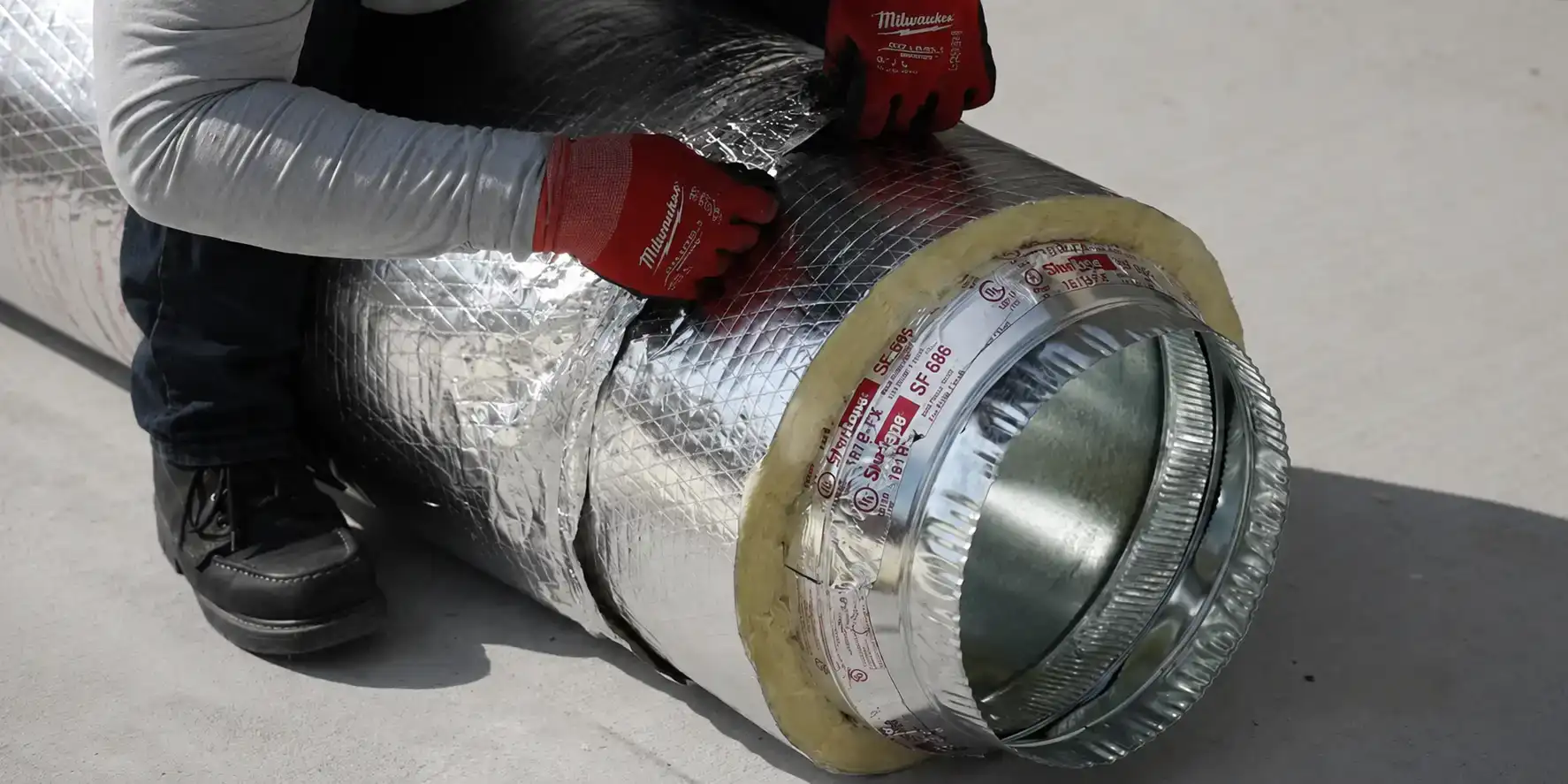
The best AC equipment in the world won't cool your home right if the ductwork is leaking, undersized, disconnected, or poorly designed.
When cold air leaks into the attic, the rooms never get the cooling you paid for. Ducts that are too small make the blower fight to move air. Get the return air wrong and the system runs loud, uneven, and inefficient. Most of the time, the equipment didn't fail. The duct system just isn't doing its job.
A lot of small duct issues get caught during regular annual HVAC maintenance. A tech who's looking at the system every spring sees register issues, attic flex duct problems, and return-air complaints before they turn into the kind of comfort problems that make you call us out specifically for ductwork.
That's why duct problems show up as AC problems: hot rooms, long run times, weak airflow, high humidity, frozen coils, comfort complaints that keep coming back. Sometimes the AC needs a repair. Sometimes the equipment is fine and the air just isn't getting where it needs to go.
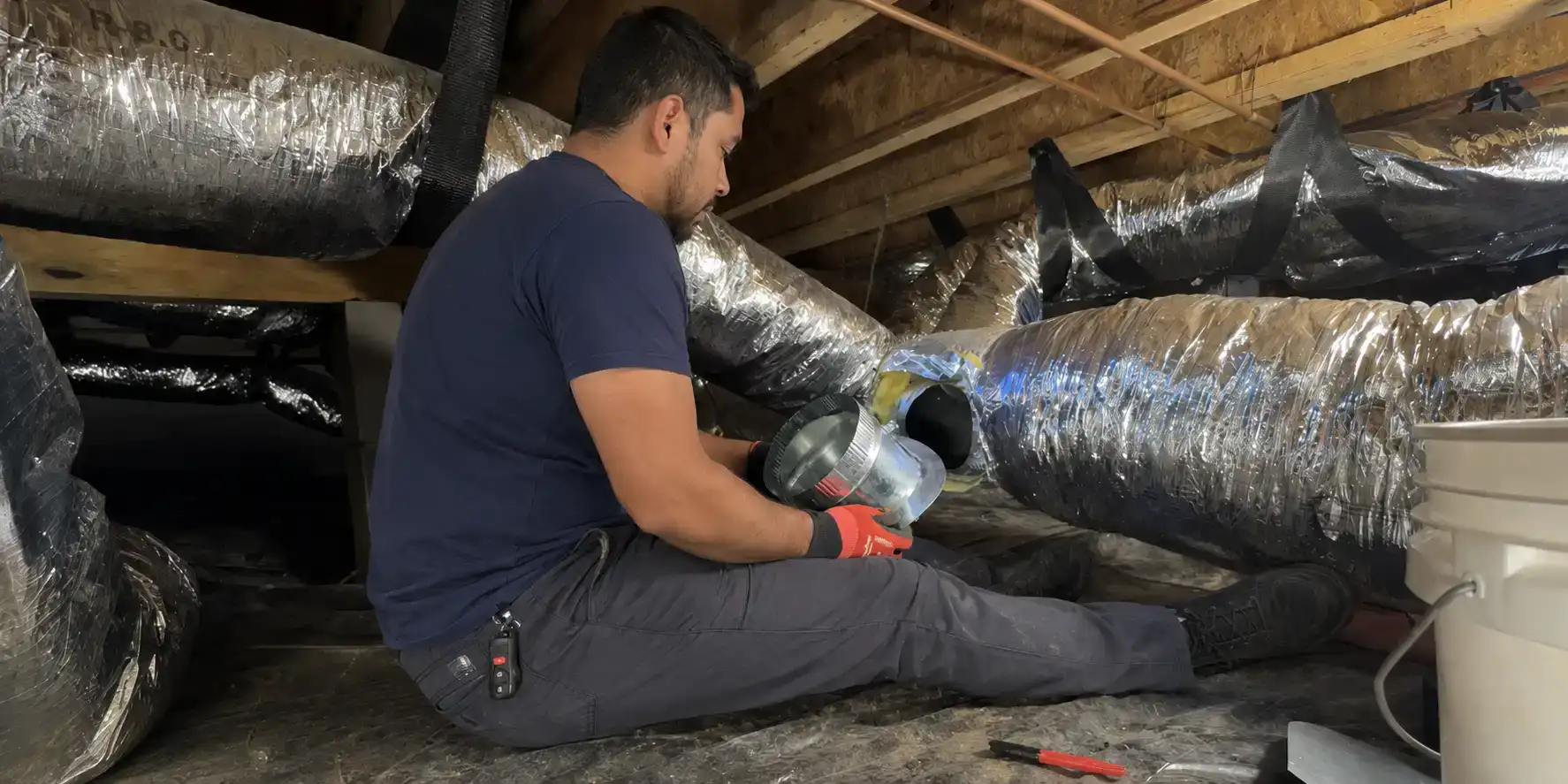
A high-SEER2 AC only delivers its rating if the cooled air reaches the rooms. Homeowners spend a lot of time comparing 14 SEER2, 16 SEER2, and higher-efficiency AC systems. That comparison matters, but only if the air gets where it's going.
In many homes, leaky ductwork loses 20% to 30% of the air moving through the system. A 16 SEER system with serious duct leakage feels and costs about like a 12 SEER system, because a third of what the equipment produced is dumping into the attic before it reaches the living space.
Florida ductwork ages faster than ductwork in cooler climates. Flex duct (what most Florida homes use) comes apart at boots and take-offs over time. Insulation sleeves split. Long unsupported runs sag and pinch. Hot attic conditions accelerate all of it. By the 15-to-25-year mark on most flex installations, a duct system that was tight on day one is losing real air every cycle.
New construction isn't immune. Ductwork goes in last on most builds, after the structural, electrical, and plumbing trades have taken their share of the space. By the time the duct crew arrives, the planned routing often doesn't fit, and the builder makes it work. Sometimes that means too-tight bends, undersized return paths, or compromises that you don't see but that the system fights every cycle. We've inspected newer Florida homes where the duct issues were baked in from move-in.
New equipment alone won't solve hot rooms, weak airflow, or comfort complaints if the duct system is the actual problem.
How Liberty Picks Duct Repair, Replacement, or Sealing
Liberty Air and Electric matches the fix to the duct problem across three different scopes:
Duct Repair
Repair makes sense when the problem is isolated. A disconnected run. Damaged flex. A loose register boot. A crushed section. An obvious air leak at the air handler take-off. Localized issues that don't suggest the whole system is failing.
Duct Replacement
Replacement makes sense when the duct system is old, poorly designed, undersized, badly damaged, contaminated, or causing comfort problems in multiple rooms. Replacement can be partial (a few runs) or full (the whole system). The right call depends on layout, access, duct condition, and how the home is supposed to be cooled.
A few site-specific factors matter on replacement scope:
- Older homes (pre-1990s): sometimes have hard metal ductwork instead of flex. Replacement is doable, just more involved than swapping flex. More cuts, more labor, sometimes more disruption to finished surfaces.
- Condos and homes without attic access: replacing ducts means penetrating drywall to reach the runs. Same job, different scope. Drywall repair becomes part of the project budget, and condo AC and duct work also has to clear the association first.
- Newer homes with builder-grade duct execution: the layout was often compromised at install. Sometimes "replacement" really means redesign, because the original routing is the problem.
Duct Sealing
Sealing makes sense when the duct layout is basically usable but the system is leaking air.
Sealing keeps conditioned air inside the duct system where it belongs, instead of dumping it into the attic. It can also help reduce dirty attic, garage, or wall-cavity air from being pulled into the system through return-side leaks. Sealing won't fix crushed ducts, undersized runs, or design problems. It fixes leaks. Anything beyond that needs repair or replacement.
Liberty Air and Electric can inspect the duct system and explain whether the better path is repair, replacement, sealing, or a combination.
Understanding Ductwork Costs
Liberty Air and Electric prices ductwork from $300 for a single repair to $4,000+ for a full replacement. A small disconnected run is a different project than sealing a whole duct system, replacing multiple attic runs, adding return air, or rebuilding the layout.
The ranges below are real starting points. Final pricing depends on access, duct condition, system size, materials, layout, and whether the work is happening on its own or alongside a larger AC project.
| Ductwork Service | Typical Range | What Changes the Price |
|---|---|---|
| Minor duct repair | $300 to $2,000 | Isolated issues like a disconnected run, crushed flex duct, loose connection, damaged section, or localized air leak. |
| Manual duct sealing | $500 to $2,500 | Number of leakage points, access, duct condition, attic conditions, and how much of the system can be reached by hand. |
| Aeroseal duct sealing | $3,000 to $5,000 | System size, leakage level, setup requirements, duct condition, and whether repairs are needed before sealing. |
| Partial duct replacement | $800 to $3,000 | Number of runs, duct material, attic access, insulation, layout, and whether return air needs to be corrected. |
| Full duct replacement | $4,000+ | Home size, number of systems, duct design, materials, return-air needs, attic access, and permitting requirements. |
Materials matter. Flex duct, ductboard, and sheet metal each change the price, labor, durability, and install approach. The right material depends on the home, access, layout, budget, and what the system is being asked to do.
Permits matter on full replacement projects. If the scope crosses into permit-required territory, we'll explain that and handle the inspection coordination before work starts.
One run damaged? Repair. System leaking heavily? Aeroseal. Layout wrong or system undersized? Sealing won't solve it. You need a redesign.
Pro Tip: Schedule Duct Work in Winter When You Can
If your duct system is leaking but functional, consider booking the work between November and March instead of mid-summer. Two reasons: pricing tends to be better in the off-season because crews aren't slammed with no-cool emergencies, and Florida attic conditions in July routinely push 130°F to 140°F, meaningfully harder for a tech to do their best work.
Real duct failures (a chewed-through run, fire damage, a fully disconnected supply that's flooding the attic with conditioned air) need addressing right away. But most leakage and sealing work isn't urgent. Save it for cooler weather when it benefits everyone.
Want a duct system inspection?
Book a Florida ductwork visit. We'll inspect the system, check airflow, and explain whether repair, sealing, replacement, or Aeroseal makes the most sense.
Aeroseal Duct Sealing for Florida Attics
Liberty Air and Electric uses Aeroseal on duct sealing projects when it's the right fit.
Aeroseal seals leaks from inside the duct system. Instead of just hand-sealing what's reachable from the outside, Aeroseal sends sealing material through the ducts and finds many small leaks that are hard to access. The bigger the system and the more leaks scattered across hard-to-reach runs, the more the math favors Aeroseal.
It's especially useful in Florida homes where ducts run through hot attics, tight chases, dropped ceilings, or other areas that are tough to reach by hand. Hand-sealing is faster and cheaper for visible, accessible leaks. Aeroseal pays off when the leakage is widespread and partly hidden.
Aeroseal isn't magic. Crushed, disconnected, undersized, or physically damaged ducts need repair or replacement first. Sealing on top of that is putting a Band-Aid over a structural problem. During the estimate, we'll tell you whether Aeroseal, manual sealing, repair, or replacement is the better fit.
How Liberty Designs Duct Layout and Airflow
Ductwork decides where the air goes, how much gets there, and how hard the system has to work to move it.
A good duct system needs the right supply ducts, enough return air, smart register placement, proper sizing, solid sealing, and a layout that doesn't fight the blower. Static pressure matters too. Most residential air handlers are rated for 0.5 inches of water column, and a duct system that reads higher than that has the blower pushing against more resistance than it was built for. That cuts airflow and stresses the blower motor.
For remodels, additions, or scratch installs, duct design has to be part of the plan from the beginning. When you're planning a new AC installation, ductwork, electrical, refrigerant lines, and drainage all need to be designed together, not added in sequence.
A common shortcut on additions is to tap the existing system and extend a couple of runs to feed the new space. It's quick and cheap, and it's almost always wrong. The original system was sized for the original load. Adding 800 sq ft of conditioned envelope without rebalancing the duct system means the new room runs hot or the rest of the house runs over-cooled. The right answer is usually a system upsize plus a duct redesign. That's more work upfront, and it's what actually cools the new space.
Ductwork and AC Replacement Performance
A new AC system can only perform as well as the duct system allows. If you're considering a new system, the ducts get checked before the equipment gets picked.
If the ducts are leaking, undersized, poorly balanced, or missing enough return air, replacing the condenser and air handler doesn't solve hot rooms, humidity problems, weak airflow, or long run times. The new equipment shows up with the same comfort issues the old equipment had. And the homeowner spent a five-figure sum to get there.
That's why ductwork gets checked before approving a major system replacement. Sometimes the right answer is a basic equipment changeout. Other times, the home needs duct corrections (partial or full) so the new system actually delivers the comfort it was sized to deliver. We'll lay out both paths during the estimate so you can make the call with full information.
How Ductwork Drives Dust and Indoor Air Quality
Ductwork drives a real share of the dust and comfort complaints in a home. It doesn't drive all of them. Indoor air quality is a related but separate conversation.
Duct sealing and repair reduce air leakage and improve how air moves through the home. If the return side is pulling air from the attic, garage, crawl space, or wall cavity, duct leakage genuinely contributes to dust, odors, and comfort complaints. Fix the duct integrity, and a meaningful chunk of those issues go away.
But if the bigger concern is filtration, UV, humidity control, odors, or allergy-related comfort, that's IAQ territory. Equipment and approaches that work alongside the duct system rather than as a substitute for fixing it.
How Liberty Air and Electric Diagnoses a Duct System
Liberty Air and Electric starts a ductwork visit with a diagnosis. Here's how a visit usually runs:
We Ask About the Comfort Problem
Which rooms are uncomfortable? When does the issue happen? Does airflow feel weak? Is the system running too long? Dust, odors, humidity? What you tell us shapes the rest of the visit.
We Inspect the Duct System
Accessible duct runs, supply connections, return air, air handler connections, registers, visible damage, insulation, signs of leakage or restriction. We look at all of it.
We Check Airflow and System Behavior
Airflow, temperature split, static pressure indicators, filter condition, blower performance, whether the AC equipment looks like it's operating right. The duct system doesn't exist in isolation.
We Explain the Options
You'll know whether the better path is repair, replacement, sealing, Aeroseal, or a larger comfort plan. Tradeoffs in plain English.
We Complete the Approved Work
Once you approve, we handle the ductwork and walk through what changed before we leave.
Liberty Air and Electric Service Area for Ductwork
Liberty Air and Electric repairs, seals, and replaces ductwork across South Florida and Greater Orlando, with the deepest local resources in these areas:
Don't see your area listed? We likely still cover it. Call us to confirm availability.
Why Homeowners Choose Liberty Air and Electric for Ductwork
Ductwork is how the cooling gets delivered.
The Liberty Air and Electric crew looks at duct leakage, return air, static pressure, equipment sizing, and Florida attic conditions on the same visit. We're licensed and insured, and we explain whether repair, sealing, replacement, or Aeroseal makes the most sense before any work begins. No upselling on a sealing project that should've been a redesign, no recommending replacement when a couple of repairs would do.
AC and Ductwork Knowledge Together
Ductwork affects how the AC performs, so we look at the duct system and equipment together.
Flexible Financing Available
Duct replacement, Aeroseal, and larger airflow projects can be meaningful investments. Flexible payment options are available when the right fix is more than a small repair.
Clear Recommendations
We explain whether repair, sealing, replacement, or a combination makes the most sense.
Florida Home Experience
Hot attics, long run times, humidity, flex duct, and return-air issues are common problems we account for.
Questions?
Frequently Asked Questions About Ductwork
Q: How do I know if my ductwork is bad?
A: Bad ductwork usually shows itself through weak airflow, hot rooms, long AC run times, high humidity, high bills, or dusty air. Ducts that are visibly damaged, disconnected, leaking, or poorly insulated are the other tell.
Q: Can bad ductwork make my AC run longer?
A: Yes, bad ductwork can make your AC run longer. If ducts are leaking, undersized, disconnected, or poorly designed, the system may have to run longer to cool the home. Long run times can increase energy use and put more wear on the equipment.
Q: Can leaky ducts waste AC efficiency?
A: Yes, leaky ducts waste real AC efficiency. If 20-30% of the cooled air leaks into the attic before reaching the rooms, a 16 SEER system effectively performs like a 12 SEER system. The equipment rating is real, but the duct system determines how much of that rated efficiency actually reaches the living space.
Q: Is duct sealing better than duct replacement?
A: Duct sealing beats duct replacement when the ducts are basically usable but just leaking. Replacement wins when ducts are damaged, undersized, poorly designed, contaminated, or failing in multiple areas.
Q: What is Aeroseal duct sealing?
A: Aeroseal seals leaks from inside the duct system. Instead of just hand-sealing what's reachable from the outside, Aeroseal sends sealing material through the ducts and catches small leaks scattered across hard-to-access runs. Especially useful in Florida homes where ducts run through hot attics, tight chases, or dropped ceilings.
Q: Does Aeroseal fix crushed or disconnected ducts?
A: No, Aeroseal does not fix crushed or disconnected ducts. It seals leaks. Crushed, disconnected, badly damaged, or poorly designed ducts may need repair or replacement before sealing makes sense.
Q: Can ductwork affect indoor air quality?
A: Yes, ductwork affects indoor air quality. Duct leakage, poor return-air paths, and dirty or damaged duct systems can contribute to dust, odors, and comfort complaints. Filtration, humidity control, and other indoor air quality options may also be part of the fix.
Q: Do I need new ductwork when replacing my AC?
A: You don't always need new ductwork when replacing your AC. If the existing ducts are sized correctly, sealed well, and in good condition, they may be reused. If the ducts are leaking, undersized, or poorly balanced, duct corrections may be worth addressing during replacement.
Q: Do you replace ductwork in attics?
A: Yes, we replace ductwork in attics regularly. Many Florida duct systems run through attics, and attic access, heat, insulation, routing, and layout all matter when planning duct repair or replacement.