
HVAC Coordination for Florida Re-Roof Projects
Multi-family, condo, and commercial AC removal and reinstallation, coordinated to the roofing schedule. Liberty Air and Electric is dual-licensed across HVAC and electrical, code-compliant down to the fastener.
- Dual-licensed HVAC and electrical, one crew handles both
- HVHZ-rated materials, full code compliance
- Pre-bid roof assessment, no surprise change orders

How Liberty Partners on Re-Roof Projects
Liberty Air and Electric handles the HVAC scope on re-roof projects: removal, storage, reinstallation, and electrical handoffs. The roofing GC handles the roofing scope. The property management firm sits in the middle as the resident liaison, coordinating access, communicating timing, and managing resident questions about when each unit will be offline.
Most projects come to us one of two ways. The roofing GC reaches out at the bid stage to bring us in as the HVAC partner, pricing the AC scope alongside the roofing bid. Or the property management firm solicits the AC scope separately and contacts us directly, then coordinates the schedule with their roofing contractor on their end. Both routes work. We run jobs both ways.
Projects run smoother when the roofer or the property management firm brings us in early. A roofer who needs an HVAC bid by tomorrow morning has us scrambling through the site visit. We'd rather take the time to assess each unit, check the structural reality of where stands need to land, and document existing conditions. A tight bid window means less site work, and that's bad for everyone.
Each unit taken offline for the project means a household without AC for the work window. PM is the right party to tell residents when that's happening, and we build our schedule to give them the lead time they need. We never want a resident to find out their AC is being pulled by hearing the truck show up.
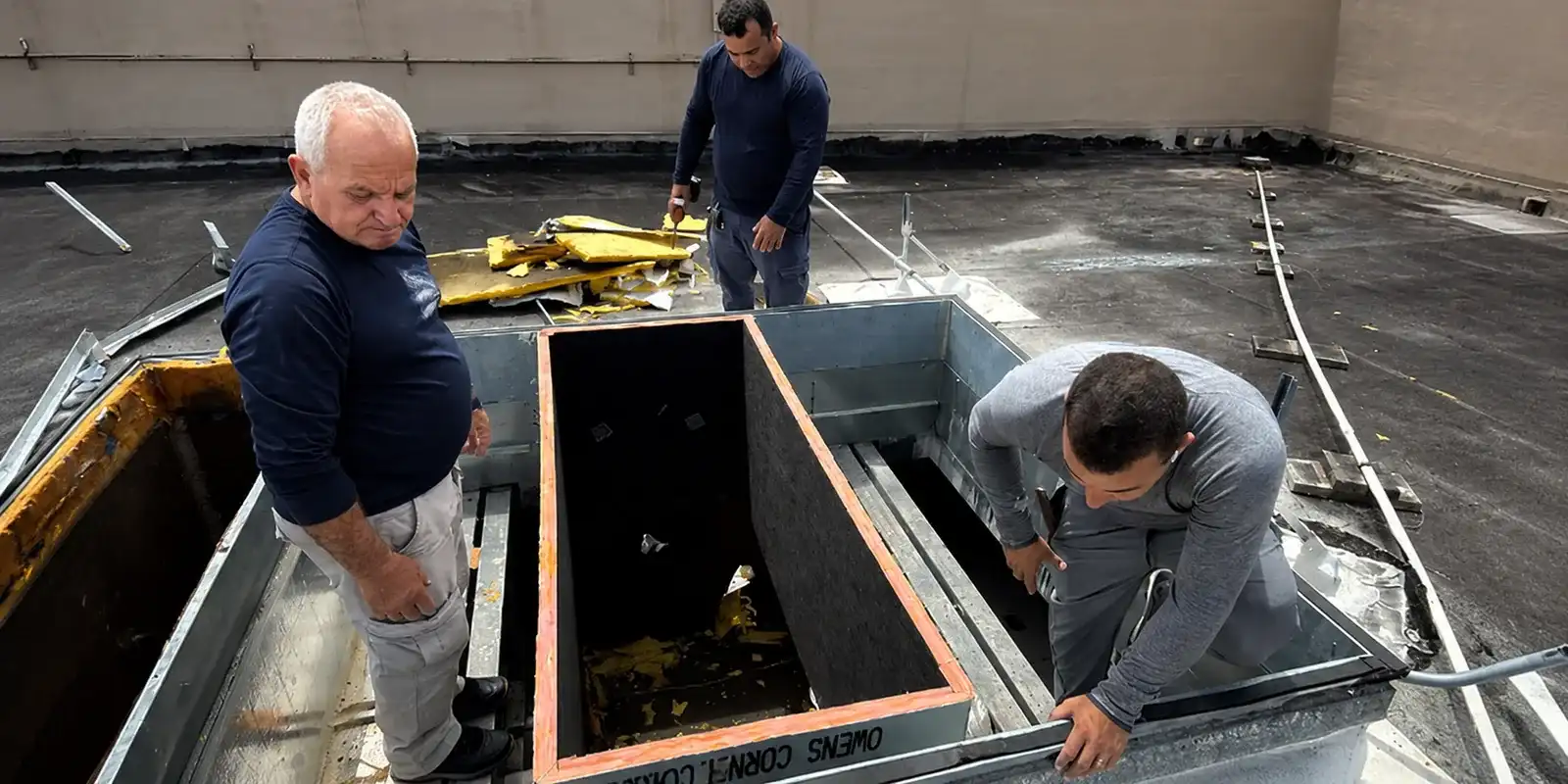
Liberty Air and Electric works re-roof projects with roofing GCs, commercial builders, and property management firms across Florida.
Crews Who've Done This
Dedicated re-roof techs who know the materials, the stand math, and the electrical handoffs. Your project stays on the roofing schedule.
HVHZ-Compliant Throughout
HVHZ-rated stands and fasteners from Miami Tech. Dual-licensed for HVAC and electrical. Permit close-out documentation built in.
Bids That Hold
We assess the roof before we bid, so the price holds. Change orders happen rarely, never without photos and explanation.
Three-Party Coordination
Pre-work inspection reports for all parties. PM gets resident lead time. We protect the roofer's scope.
What Makes Re-Roof HVAC Work Different
Re-roof HVAC work in Florida is structurally and code-driven in ways residential service calls almost never are. Most of what goes wrong happens before a single unit goes back on the roof.
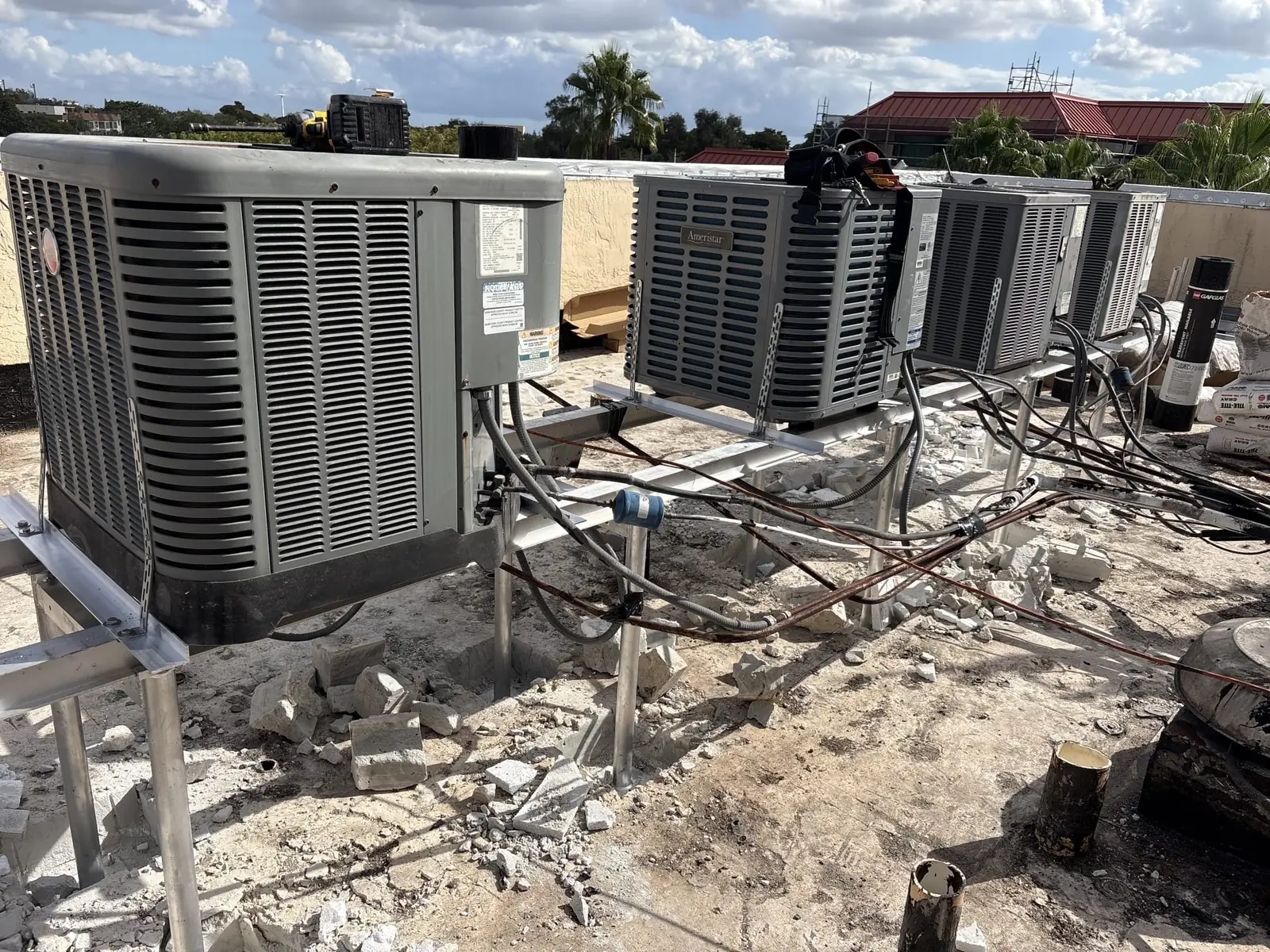
Materials and HVHZ compliance. Stands, fasteners, and supports have to be HVHZ-rated (High Velocity Hurricane Zone) in Miami-Dade and Broward, and many coastal jurisdictions follow the same standard even where the state code doesn't require it. The leading manufacturer for HVHZ-approved roof platforms, stands, and curbs is Miami Tech, based in Miami. We use their products extensively on re-roof projects and have a working relationship with their team. Substitutions outside the HVHZ approval list don't work. Most of the time they get caught on inspection and the work has to be redone.
Stand and rack rules. Stand height, leg width, and rack capacity vary by building height, system weight, and wind zone. Multi-system racks have constraints on system count and spacing. We design rack layouts against the spec sheets for the units going on them and the structural reality of what's underneath the deck. That's usually a different problem than what residential HVAC ever touches.
Dual license matters. Re-installs almost always touch electrical. Disconnects need to be replaced, condenser whips need to be re-run, and high-voltage feeds sometimes need to be extended depending on rack repositioning. With separate HVAC and electrical contractors, this becomes a scheduling and finger-pointing problem. We handle both trades with the same crew on the same day. No second truck roll, no waiting on the other contractor, no "the other trade should have done that" conversations.
We know roofing well enough to protect the roofer's work. Re-roof HVAC and roofing scopes touch each other constantly, and an HVAC contractor that doesn't understand roofing creates problems for the roofer. Armaflex insulation around refrigerant lines can melt during the roofer's flashing process if the lines are routed too close to heat-applied membrane work. We coordinate line routing and timing with the roofing crew to avoid that. Pitch pans and gooseneck penetrations are where line-set work meets the roofer's scope. Those penetration points have to be exactly right or water finds its way in. We plan the penetrations with the roofing crew before anybody cuts the roof. Skip that coordination and the callbacks and disputes come later.
Photo documentation of stand attachments for permit close-out. Stands get secured into the deck during reinstallation, and inspectors sometimes want to verify the underdeck attachment at permit close-out. We photograph every stand mount before the roof membrane goes back over it. When an inspector asks how a stand was secured, the photo is on file. No one has to rip up a new roof to show the work was done correctly. Photographing every mount costs the crew a few minutes per stand during install.
Pricing Built on Real Roof Condition
Liberty Air and Electric prices the AC scope off the roof condition we see at the site visit, because the mid-project change order is the single biggest source of disputes on re-roof HVAC jobs. The HVAC contractor priced one set of conditions, the roof opened up a different set, the schedule slips, and someone is paying for the difference.
We do the roof condition assessment at the bid stage, before the crew shows up. Stands that have to attach into bar joists rather than directly into the roof deck require different hardware, different time, and different cost. We figure that out upfront, document it, and price accordingly. Same for unusual roof penetrations, existing leak conditions visible from below, and rack configurations that need to be modified for the new roof type.
When the bid is accepted, the number holds for everything we could see at site visit. When something genuinely couldn't have been seen at bid time comes up during work (pre-existing damage, conditions only visible once the roof is opened), we document it with photos and explain the change order before any work continues. We don't catch everything at bid stage.
Pre-Work Inspection Reports
Every unit gets documented before it comes off the roof. We deliver an inspection report to the roofing partner and to building management before work begins, covering the condition of each system: age, refrigerant state, any existing leaks, and any pre-existing damage to housings, coils, fans, or fittings.
A 24-year-old condenser with an existing slow leak goes back on the new roof in the same condition it came off. If nobody documented the leak beforehand, the resident sees a leak after the roofing work and assumes the project caused it. Disputes follow. The roofer eats a callback that wasn't their fault, and we can end up eating one too.
The report puts existing problems on the record before the project starts, and anything new that shows up after reinstall is ours to fix.
Dedicated Crews and Optional Resident Replacement
We run dedicated crews on these projects. The techs assigned to re-roof HVAC work have done it many times before. A crew doing this for the first time slows everyone down, so we keep the same people on the roofer's schedule.
Optional unit replacement during the project. Because we're already on-site with each system off the roof, we can replace individual units for a lot less than the same replacement done as a standalone job. Most residents save $1,000 to $2,000 versus a retail replacement when they time the swap with the re-roof. We mention the option to residents during the project and leave it at that. For aging condensers or systems already showing wear, the re-roof window is the best time to upgrade.
Sample Projects
Plantation Forest, with Crest Roofing
Coordinated AC removal and reinstallation for approximately 150 units across the property, in partnership with Crest Roofing and managed in coordination with Loyalty Management Group. Pre-bid roof condition assessment identified bar joist mounting locations for several of the racks, which were priced into the bid upfront. All units reinstalled to spec. Project completed on the roofing schedule with no change orders.
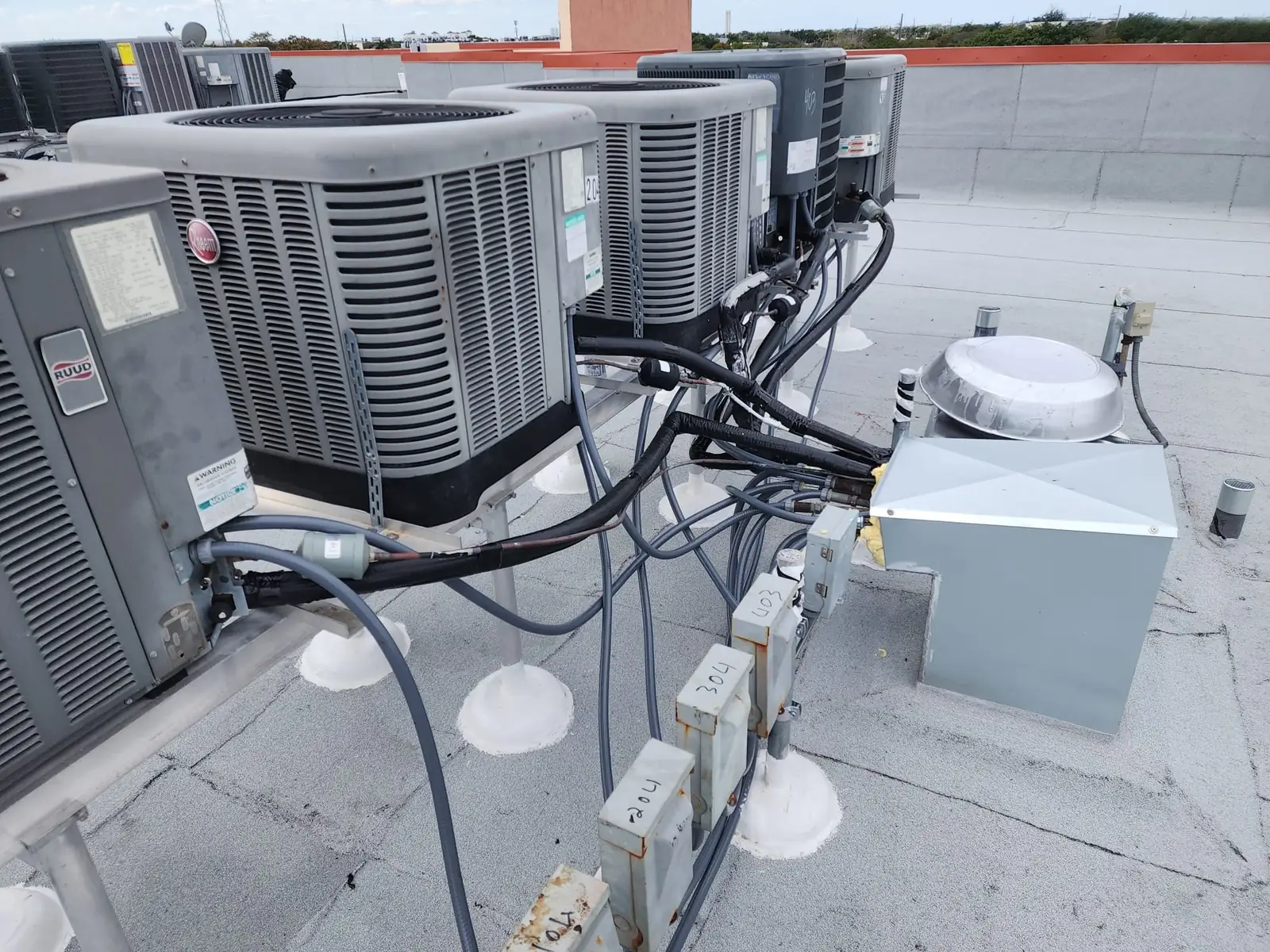
Sun & Surf, with Infinity Roofing
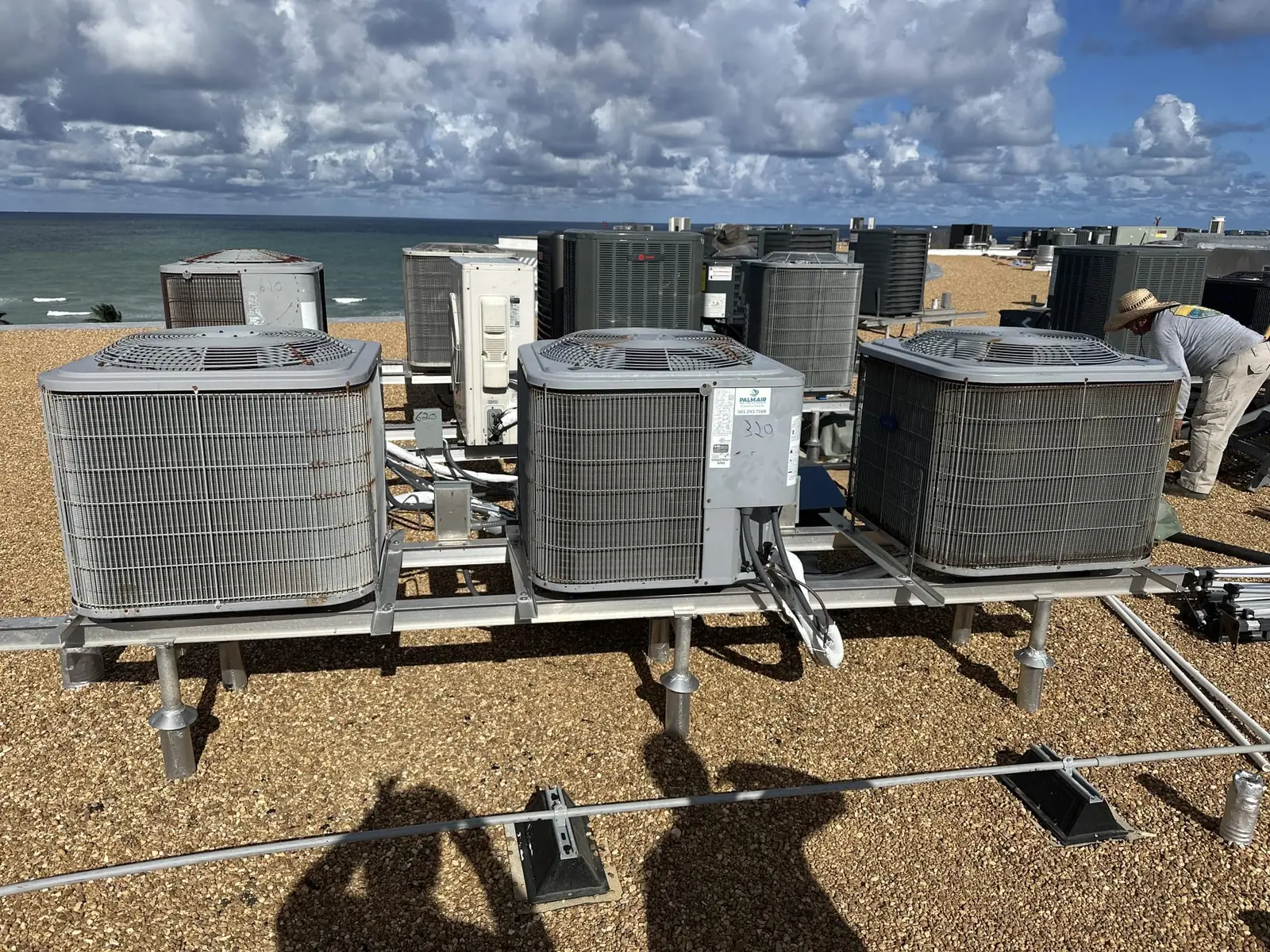
Approximately 250 units reinstalled on this West Palm Beach oceanfront property, in partnership with Infinity Roofing. Condensers on coastal Florida properties get hit hard by salt spray, and many of the existing units showed significant corrosion at inspection. We recommended proactive unit replacement for approximately 20 of the 250 units during the project, because once a unit fails on a coastal property you can't wait a week to apply an aftermarket protective coating. Coating is a third-party spray treatment that shields the condenser from salt and harsh Florida conditions, but it only works on a unit that's still healthy. Replacing proactively during the roof project gives the owner a new unit with corrosion treatment in place from day one. Otherwise the existing system dies mid-hurricane-season and somebody's scrambling for a same-week replacement.