
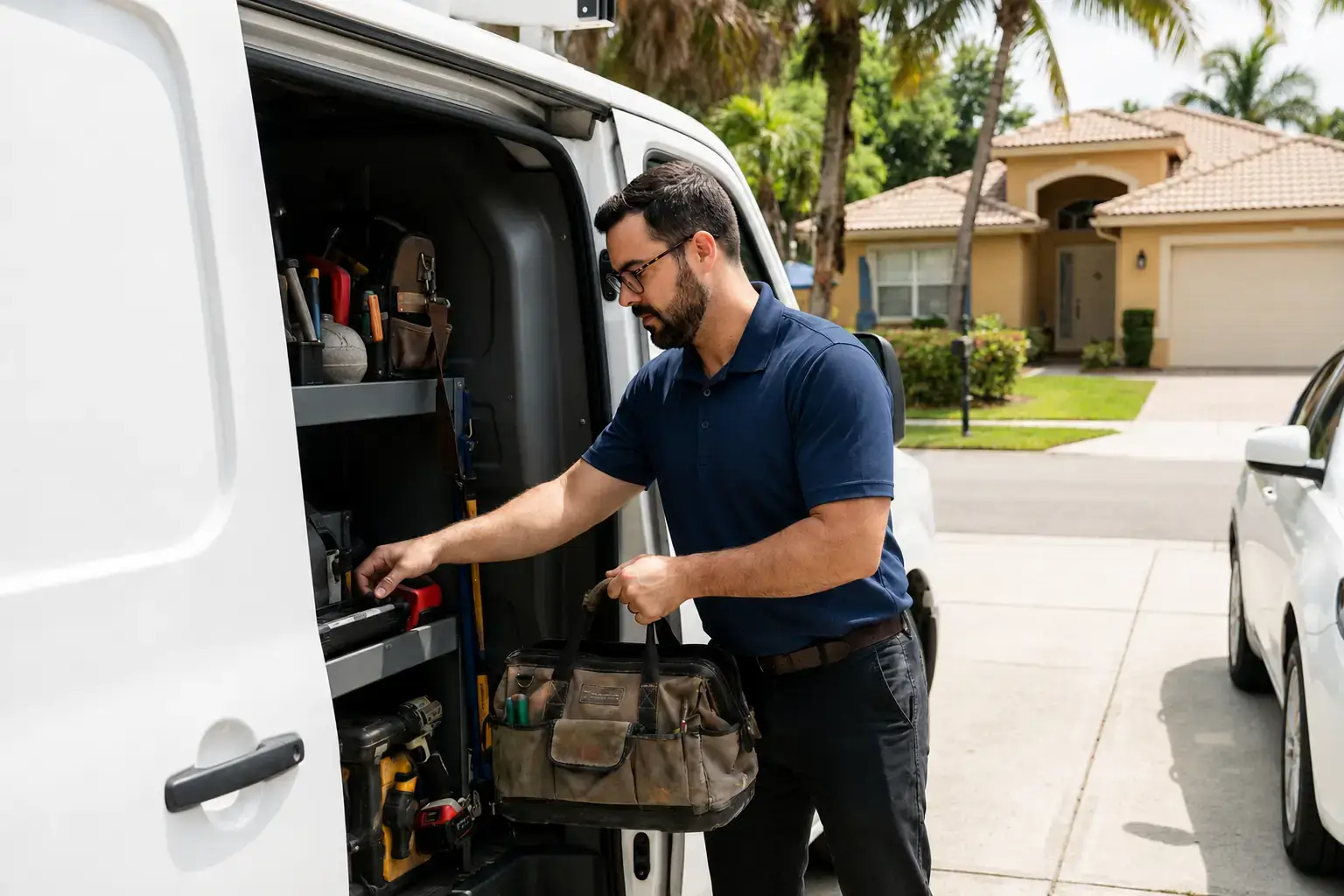
There isn't a single best AC brand. Ask three Florida contractors and you'll get three different answers. They're all right.
Most homeowners want one name. There isn't one, because the right answer depends on a few things. Who's installing it. What kind of system you're getting. What your specific situation is.
Worth knowing what's actually inside the box too. For single-stage and two-stage equipment, the technology is largely a commodity across the major manufacturers. Compressors, blower motors, capacitors, control boards, refrigerant metering. Most of it comes from the same handful of component suppliers and gets badged differently across brands. The indoor coil is the part that's actually unique to each brand. Beyond that, you're mostly comparing assembly quality, control software, and warranty terms.
Why every contractor has a different favorite
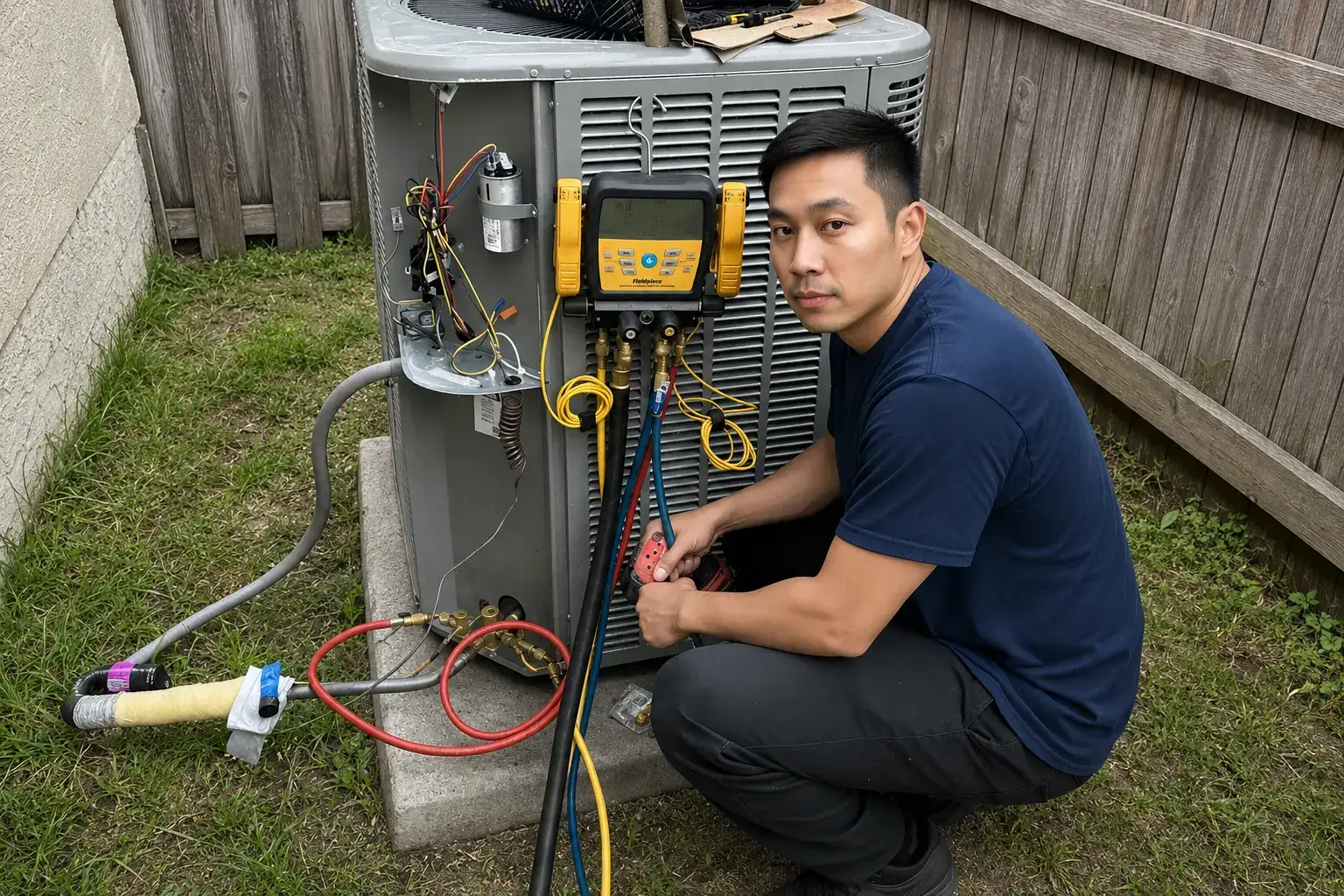
Every contractor has a different favorite brand, and it's usually the one they work with most.
Three real advantages flow to you when a contractor installs the brand they know best.
They know the quirks. Every brand has them. Specific failure modes, install gotchas, which sensors fail first, which control boards have firmware updates, what to check before chasing a refrigerant problem. That knowledge takes years to build per brand. A contractor installing the brand they know cold is generally going to do it faster, cleaner, and more right than a contractor installing a brand they touch twice a year.
The distributor relationship is the second advantage. The contractor's relationship with their primary distributor matters a lot, and most of that value goes to you. Better wholesale pricing flows through to your quote. Faster parts access means a smaller window when your unit is down. And when there's a warranty issue or a backordered part, a strong relationship means your job moves to the front of the line instead of waiting in queue with everyone else.
Expedited warranty support is the third. Manufacturers prioritize their volume contractors when something needs to be expedited. If you're under warranty and something fails in year 4, the contractor with the relationship gets it handled. The contractor without it gets put on hold.
So when a contractor recommends a specific brand, they're not necessarily steering you wrong. Their preferred brand under their hands is often genuinely the best option for your install.
The AC brands to avoid
There's a tier of off-brand equipment worth steering around. It sits below the recognizable mid-tier names. Payne, Ruud, and Ameristar are real brands with real distributor networks, and those are fine.
The brands to avoid are the ones below that tier. The unfamiliar names sold by small regional distributors that most contractors don't have accounts with. The equipment itself is often okay. That's not the issue.
The issue is parts. When something fails in year 6 or year 8, parts availability is what determines whether you're back up in 24 hours or down for two weeks. Off-off-brand parts are stocked at a narrow set of distributors, and few contractors can source them. You're locked into a tiny ecosystem that might not be there when you need it. The savings on the install often disappear on the first major repair.
Same logic explains why most contractors don't love installing units the customer purchased themselves. The contractor doesn't want to be hunting a control board in year 7 from a manufacturer they've never had a relationship with. They'd rather call their rep and have it shipped overnight to a customer they've worked with for years.
The high end is where AC install quality matters most
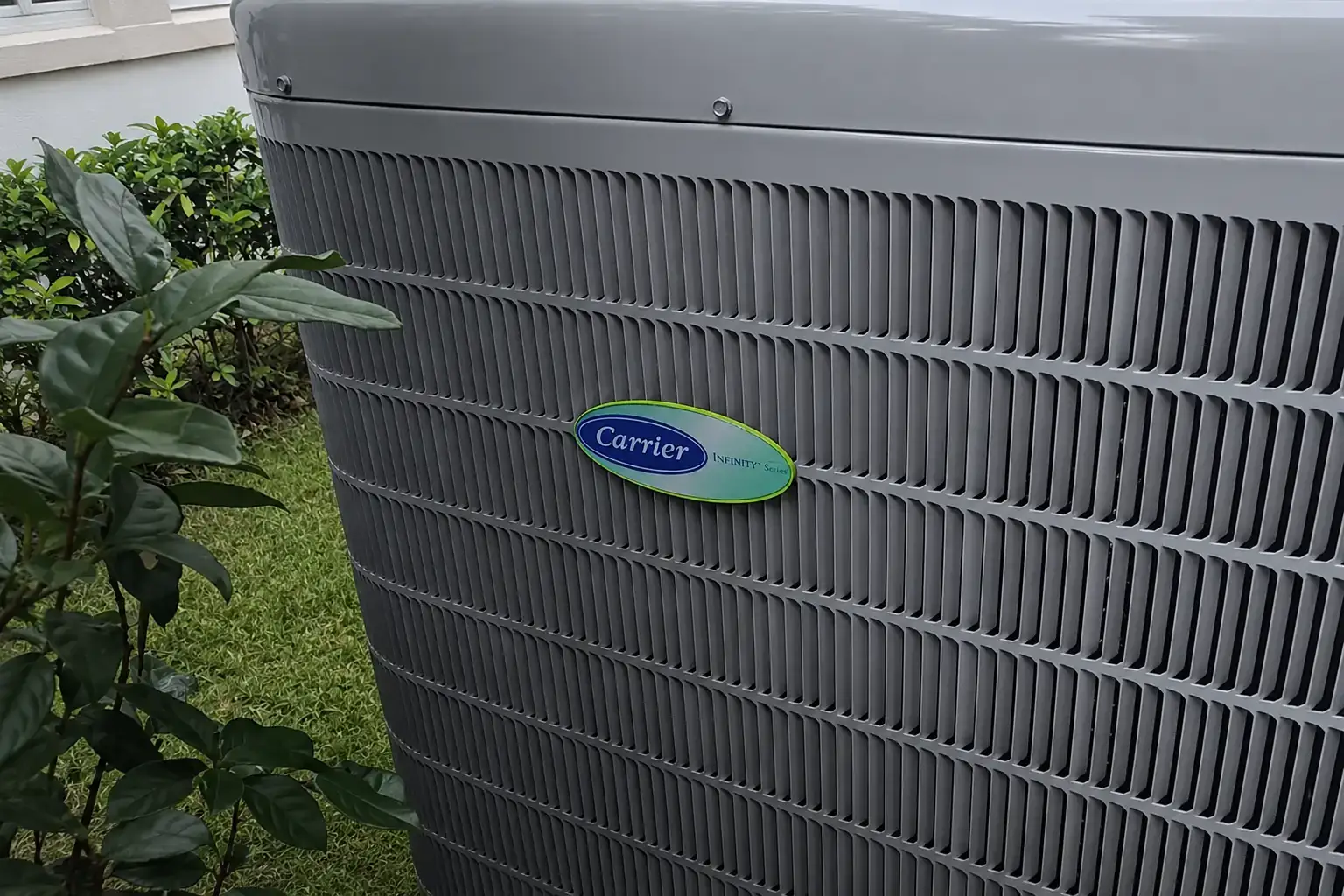
At the top of the market, brands like Daikin FIT, Carrier Infinity, Lennox Signature, and Trane XV deliver real comfort upgrades. Variable-speed compressors. Communicating controls. Exceptional humidity handling, which matters as much as cooling capacity in Florida. The equipment is genuinely good.
But the equipment alone isn't enough.
These systems have more complicated commissioning. They're vulnerable to bad ductwork in ways that cheaper equipment isn't. Drop a high-end variable-speed system onto restrictive or leaky ducts and you'll get short cycling, comfort failures, and in the worst cases, blower motors that burn out years before they should.
Parts are also more specialized. On a single-stage or two-stage system, when a part isn't available, a good contractor can often make a universal part work. Not ideal, but it gets the system running. On a high-end variable-speed unit, that path is much narrower. The control boards, sensors, and inverter drives are proprietary. If a specific part is back-ordered for six to eight weeks, you need that exact part. There's no universal substitute.
This is why distributor relationships matter even more on the premium end. The same contractor who gets a good Carrier price also has visibility into Carrier parts availability. They know what's stocked locally, what has long lead times, and what to spec around.
A high-end unit installed by a contractor without a strong relationship to that brand can be worse than a mid-tier unit installed by a contractor who knows it cold.
What's the best AC depends on you
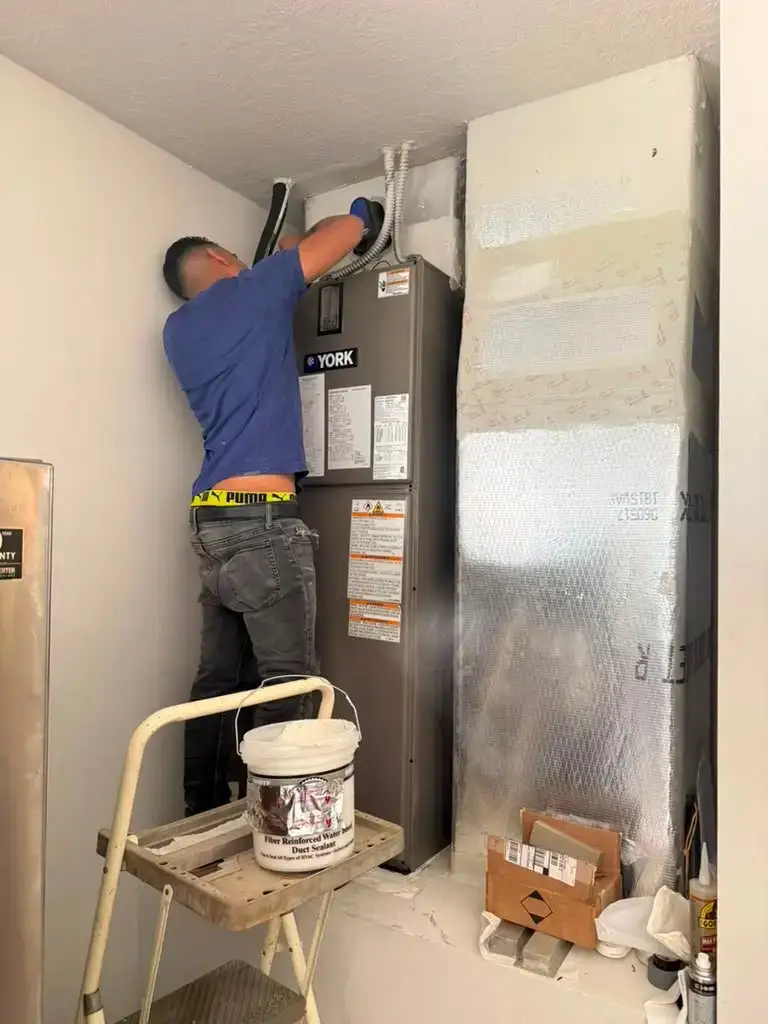
The best AC for you depends on who's living in the home.
A landlord with multiple properties and a tight budget often does well with Goodman. The equipment is reliable for the tier, parts are widely available, and the universal-parts ecosystem is strong. That last part matters because a lot of landlords handle out-of-warranty repairs themselves. Goodman is easy to keep running on aftermarket parts.
For a Florida homeowner with breathing sensitivities or strong humidity preferences and a real budget ceiling, the two we point at are the Daikin FIT and the York HH8 series. Both deliver excellent humidity control without the premium price of a Carrier Infinity or Lennox Signature. You're getting most of the comfort benefit at maybe 60-70% of the cost.
Want the absolute top of the comfort spectrum and have the budget for it? Carrier Infinity and Lennox Signature are both excellent. Both need the install done right.
A standard residential homeowner with no specific sensitivities and no specific budget constraint does well with any of the major brands a good contractor recommends. Rheem, Carrier, American Standard, Trane, York, or Daikin will all serve them right when installed correctly.
How to pick your AC contractor
Find the contractor first. Pick the brand second.
A contractor with strong distributor relationships, deep field experience with your brand, and a good install process beats a weaker contractor on the best brand on the market.
When you're talking to contractors about a new system, useful questions to ask. Which brand do you install most and why? What's your relationship with that distributor? How do you handle parts when something is back-ordered? What's the failure history you've seen on the equipment you're recommending?
The answers should be specific. Generic answers are the ones to worry about.
How Liberty Picks the Brand for Your House
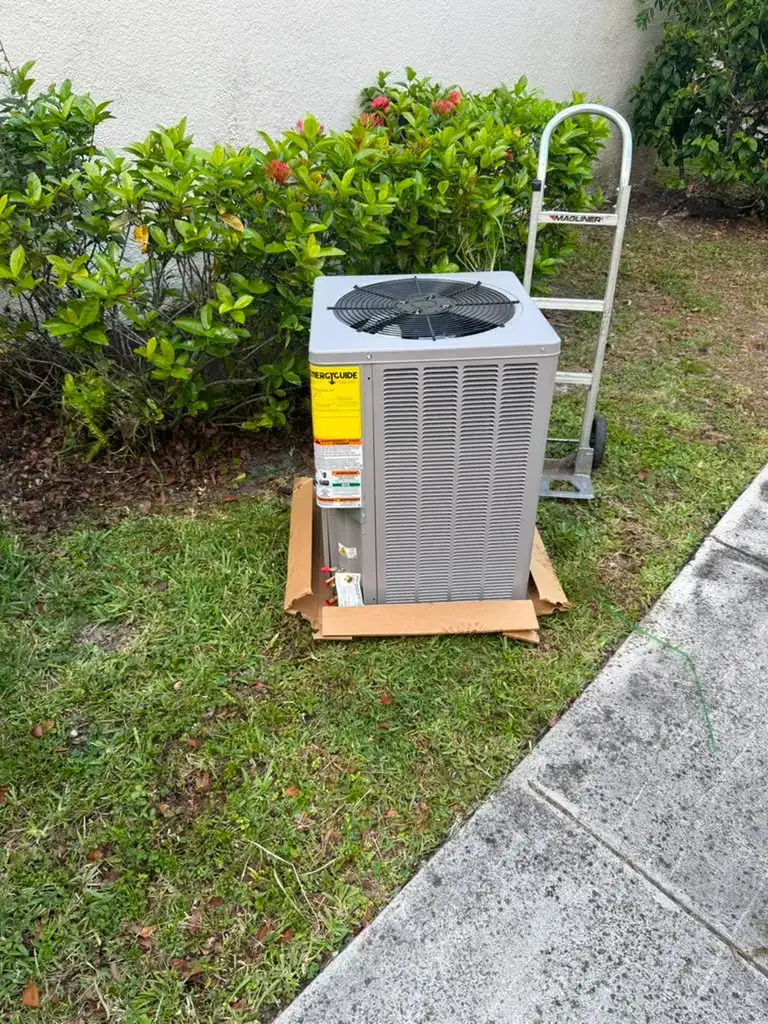
Liberty Air and Electric installs Rheem, Carrier, American Standard, Trane, York, and Daikin across Greater Orlando and South Florida. Six brands, not one. Which of them ends up on your slab comes down to three things. What our crews already work on every week, what our distributors can get parts for, and how the system gets installed.
First, what our crews are already inside every week. A tech who has pulled the same air handler apart fifty times finds the fault in ten minutes and doesn't need the manual to put it back together. Second, what our distributors have on the shelf right now. A brand we can get a control board for by Tuesday beats a brand we can get one for in three weeks, and that's a call we're making on your behalf in year seven whether you were thinking about year seven or not.
Third, the pairing and the install. We spec matched coil-and-condenser combinations listed in the AHRI directory, because the efficiency number on the yellow sticker only holds for the combination that actually got tested. Hang a new condenser on whatever coil is sitting in the attic and that rating stops meaning anything. From there it's line set sized right, charge weighed in, and static pressure read on the existing ducts before we commit to equipment. Done right, any of the six will run out a full fifteen years.
Best AC Brand FAQs
What Homeowners Ask About the Best AC Brand
Q: What is the best AC brand?
A: There isn't a single best AC brand. The best brand depends on who's installing it and who's using it. A contractor does their best work on the brands they know cold and have strong distributor relationships with, and the right brand for you also depends on your situation.
Q: Which AC brands should you avoid?
A: The AC brands to avoid are the off-off-brands that sit below the recognizable mid-tier, sold by small regional distributors most contractors don't stock. Payne, Ruud, and Ameristar are real brands with real distributor networks and are fine. The problem with the off-off-brands is parts availability when something fails in year 6 or 8.
Q: Does the AC brand or the installer matter more?
A: The installer matters more than the AC brand. A high-end unit installed by a contractor without a strong relationship to that brand can be worse than a mid-tier unit installed by a contractor who knows it cold. Find the contractor first and pick the brand second.
Q: What is the best AC brand for a humidity-sensitive Florida home?
A: For a humidity-sensitive Florida home on a real budget, a Daikin FIT or York HH8 series is often the best AC. Both deliver excellent humidity control at roughly 60 to 70 percent of the cost of a Carrier Infinity or Lennox Signature.
Q: What is the best AC brand for a landlord or rental property?
A: For a landlord or rental property on a tight budget, Goodman is often the best AC brand. It's reliable for the tier, parts are widely available, and its universal-parts ecosystem is strong, which matters because a lot of landlords handle out-of-warranty repairs themselves.
Q: Are premium AC brands like Carrier Infinity worth it?
A: Premium AC brands like Carrier Infinity and Lennox Signature are worth it when the install execution matches the equipment. They deliver top-tier comfort and humidity control with variable-speed compressors and communicating controls, but they're vulnerable to bad ductwork and need strong install work to deliver on their potential.