

AC Capacitor Replacement in Florida
Outdoor unit humming, not starting? Liberty Air and Electric reads the capacitor, swaps it same day, finds what killed it.
- Microfarads read before any swap
- The cause found, not just the part
- Same-day fix, no parts order

Signs an AC Capacitor Needs Replacing
Liberty Air and Electric replaces AC capacitors across Greater Orlando and South Florida, and it's an easy fix that happens on the same visit since we keep trucks stocked. A Florida A/C runs close to year-round, which means capacitors give out faster here than anywhere else in the country.
Most houses get three to five years out of one. Shade, run hours, and how the outdoor unit sits have an impact. The part is cheap to be transparent. What you're paying for is a tech's time to test the full system to make sure the cap's failure is ordinary old-age vs. something that requires an additional fix.
The condenser hums but never starts
A low hum with nothing turning means the motor has power but nothing to kick it over. Most common capacitor tell there is, and it looks just like a dead compressor, so we meter it first.
The fan needs a push to get going
The condenser fan sits there until a stick through the grille gets it spinning. That's a capacitor with enough left to run the motor but not start it. Never use your hand, and don't take it as a fix.
The house lights dim when the AC starts
A weak capacitor makes the compressor pull its starting amps longer than it should, and you might see that in the lights. Every long start puts heat into the windings.
The system starts, then quits a minute later
A capacitor out of range lets the motor pull amps past its overload setting, and the overload trips. Short cycling has other causes, so we go by the microfarad reading.
The top of the capacitor is domed or weeping
A good run capacitor has a flat top. Bulged, domed, or weeping oil means it's done. That's the one you can see without a meter, and plenty of failed capacitors still look flat.
It still runs, but the reading has drifted
The system cools, nobody's complaining, and the capacitor reads under its rated microfarads at a maintenance visit. That's the one worth swapping while we're already there.
Four of those also show up with a failing compressor or a pitted contactor. Those repairs aren't near the same money, so AC compressor repair starts with a meter on the capacitor.
If the Quote Says Turbo Cap, Ask What a Matched One Would Have Cost
A universal turbo capacitor covers every common size out of one part, so a tech carries fewer boxes and doesn't have to run to the supply house. It costs a good bit more than the matched dual run capacitor it replaced, and it doesn't run any better. Ask what a matched one would have cost before you approve the quote. Don't let the tech trade his convenience for your money.
Liberty Air and Electric reads the part before replacing the part
- Microfarads checked against the nameplate
- Contactor and voltage checked the same visit
- Early failures traced to their cause
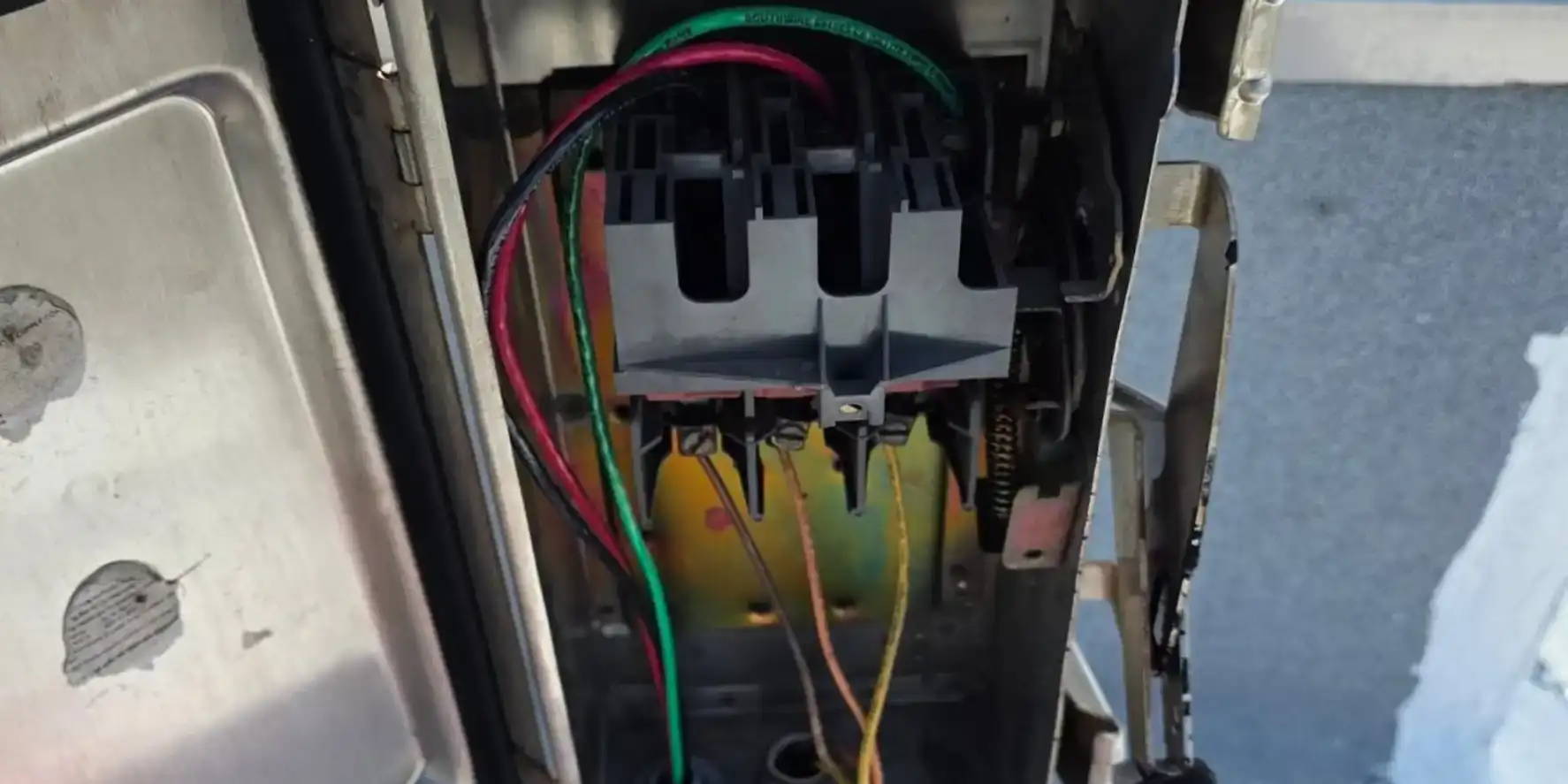
A run capacitor wears out from heat, voltage stress and dielectric breakdown, not strictly calendar age. A Florida system runs cooling in February and most nights in October. In one year it logs more wear and tear than a system up North might see in three.
Three to five years is what Liberty Air and Electric sees most of the time across Greater Orlando and South Florida. A vacation home held at 78 degrees eight months a year goes well past that. A rooftop condenser on a Pompano Beach mid-rise, baking on roof through August, rarely makes five.
A capacitor carries a temperature rating, and the closer the service panel runs to it, the faster the dielectric inside breaks down. One unit can go through capacitors twice as fast as the identical unit next door, and the difference is usually how much clearance it has around it.
Outdoor unit humming and going nowhere?
Book a diagnostic. We'll read the capacitor against its nameplate, check the contactor and voltage while we're in the cabinet, and quote before anything gets swapped.
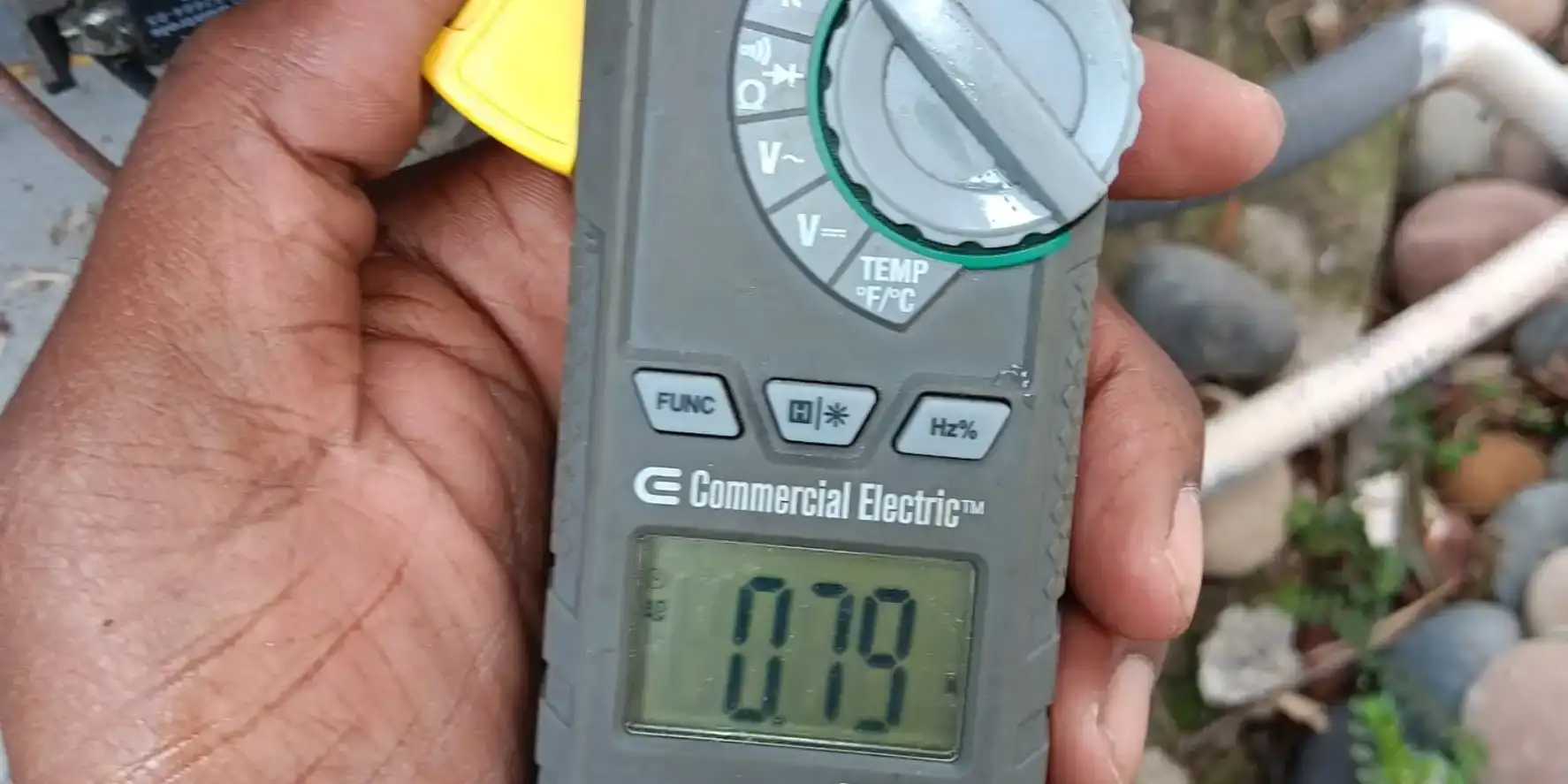
Liberty Air and Electric tests every capacitor with a meter. Every cap is stamped with its rated microfarads, and a meter set to capacitance reads what it's actually putting out. Liberty Air and Electric takes that reading before the part comes out.
Tolerance is usually about 6% either side of the rating. A 45 microfarad section reading 43 is fine. At 38 it's a bad part still limping along, and at zero it's why nothing's turning. We take an amp reading on the compressor and fan while we're diagnosing, because a motor pulling above nameplate amps on a good capacitor points somewhere else, usually airflow or the compressor.
A capacitor that reads low gets replaced on the same visit
A capacitor that has drifted doesn't come back into range, so it's going to fail on some hot afternoon. Swapping it on a visit that's already happening saves you a trip charge and an uncomfortable afternoon.
Getting ahead of these problems is a lot of what seasonal HVAC maintenance buys you on a Florida system.
A Capacitor Failing Early Points at the Condenser
Liberty techs start looking at the condenser when a capacitor gets replaced more often than every three years. Something's making the compressor and fan work harder than they should, and the capacitor is the cheapest thing in that circuit, so it goes first. In Florida that's almost always restricted airflow at the condenser, and it shows up three ways.
Shrubs grown in around the outdoor unit
Landscaping crowds the condenser and blocks needed airflow from cooling it down. Head pressure climbs, the compressor draws more current, and the capacitor wears out faster. Trimming those bushes is the whole fix. Around Wedgefield, where lots back up to palmetto and pine, AC repair calls in that area turn up overgrown condensers often enough that we check clearance first.
A screen or cover laid over the top of the unit
Mesh screens get sold to keep leaves and grass clippings out of a condenser, and used right they do that. The problem is that screen collects everything it stops, and a clogged up screen blocks the air coming out. Pull it and rinse it several times a year.
Rooftop racks that no longer fit the equipment on them
Multi-family and mid-rise buildings mount condensers on shared roof racks. Modern high-efficiency units are bigger, because a lot of that efficiency comes from coil surface area. The problem is that the racks didn't grow with them. A rack built for eight compact units now carries eight bigger ones with almost nothing between them. Each one dumps hot air on the next. So every condenser on that rack runs hotter than its rating and goes through capacitors faster.
All three come back to the same thing. A condenser that can't get rid of heat runs high head pressure every cycle, and that's strain on the compressor. A matted coil makes it worse, so cleaning the condenser coil goes with it. Replacing capacitor after capacitor without fixing the airflow just buys time before the compressor goes.
Dual Run Capacitors, Contactors, and Which One Actually Fails
Liberty Air and Electric replaces the dual run capacitor in the outdoor condenser on nearly every Florida home. One part, two sections, one for the compressor and one for the condenser fan.
Most blower motors sold in the last decade are ECM or variable speed. An ECM runs off an electronic control module instead of a capacitor and a fixed winding, so there's no blower capacitor to fail. The exception is the front-return style air handler, which still usually carries a PSC blower motor and needs a capacitor. Those are all over Florida, so we still change plenty of indoor capacitors. Liberty fits TRADEPRO USA-built run capacitors on both sides, matched to the nameplate.
The contactor gets checked in the same panel
The contactor sits inches from the capacitor and feeds the compressor 240 volts every cycle. Its contacts pit and burn over the same years, and pitted contacts pass less voltage than the motor is rated for, which stretches out starts and wears out the capacitor next to it. A contactor prices in the same range, so on an older condenser that's already open, doing both saves a second trip. Ants are the other contactor killer here. They find the coil, bridge the contacts, and weld it closed. So the compressor runs whether the thermostat calls or not. When it fails open, you get an AC that won't start and no sound at all. Either repair sits inside normal same-day AC repair pricing.
What AC Capacitor Replacement Costs in Florida
AC capacitor replacement around Florida runs about $150 to $400 installed, inside the $75 to $450 band these minor electrical repairs fall in. The capacitor itself is a $15 to $60 part at wholesale, and the rest of the bill is the truck, the diagnostic, and the tech making the call. Manufacturer warranties rarely cover capacitors, contactors, or fuses, so ten-year coverage usually doesn't apply to these smaller electrical parts. The good news is that these are same-day fixes since we keep our trucks stocked. The diagnostic runs $49 to $99 across the Florida market, waived when the repair goes forward.
Replacing a capacitor yourself, and when not to
For a competent DIYer or an electrician, changing a capacitor isn't crazy when the tells are all there. Kill the breaker, pull the disconnect, discharge the capacitor, take a picture of the wiring, move the three or four spade terminals one at a time, strap the new cap in. The part is standard and the sizes are stamped on the old one.
What'll hurt you is the voltage. A run capacitor holds a charge after the power is off, and a condenser electrical compartment carries 240 volts across terminals sitting out in the open. The National Electrical Code which Florida follows requires a disconnect within sight of the equipment.
Just don't make a capacitor your first job around high voltage. If you don't already own a multimeter and use it comfortably, it's better to call a pro. We'd rather handle the electrical side of AC systems than have you guess at it.
Questions?
Frequently Asked Questions About AC Capacitor Replacement
Q: How often do AC capacitors need to be replaced?
A: AC capacitors need to be replaced every three to five years in Florida on most systems. Shade, thermostat settings, and how the condenser sits all impact lifespan. One that quits well inside three years usually means something else in the system is wrong.
Q: How much does AC capacitor replacement cost in Florida?
A: AC capacitor replacement in Florida runs about $150 to $400 installed, inside the $75 to $450 range these minor electrical repairs fall in. The capacitor itself is a $15 to $60 part at wholesale. The rest of the bill is the truck, the diagnostic, and a tech confirming it's the capacitor and not the compressor. A universal turbo capacitor prices higher than a matched dual run capacitor, so ask which one a quote is built on.
Q: What are the signs of a bad AC capacitor?
A: The signs of a bad AC capacitor are a condenser that hums without starting, a fan that needs a push to spin, house lights that dim when the system kicks on, a unit that runs a minute and shuts off, and a domed or oil-weeping top. Only the last one shows without a meter, and plenty of failed capacitors look normal. A contactor or a compressor throws the same symptoms, so we go by the microfarad reading.
Q: Can I replace my AC capacitor myself?
A: Replacing an AC capacitor yourself is reasonable for a competent DIYer or an electrician who already owns a multimeter and uses it. Pull the disconnect, discharge the capacitor, move the three or four spade terminals one at a time, strap the new cap in. The voltage is what makes it a bad first project, because a capacitor holds a charge after the power is off and a condenser panel carries 240 volts.
Q: Should I replace an AC capacitor that still works?
A: Replacing an AC capacitor that still works makes sense once it reads outside tolerance, usually more than 6% under its rated microfarads. A capacitor that has drifted doesn't come back, so it's going to quit on some afternoon. Swapping it on a visit that's already happening saves some money. Waiting costs a second service call plus a couple of days without cooling.
Q: Do variable speed air handlers have a blower capacitor?
A: Variable speed air handlers do not have a blower capacitor, because an ECM motor runs off an electronic module instead of a capacitor and a fixed winding. Older PSC blower motors do carry one, and those are still common on front-return air handlers. So nearly every capacitor we replace on a modern Florida system is the dual run capacitor in the outdoor condenser.