

AC Compressor Repair and Replacement in Florida
Told your compressor is dead? Liberty Air and Electric tests everything around it before that verdict stands.
- Capacitor and voltage tested first
- Root cause identified before any swap
- Straight math on repair vs. replace

Six Problems That Mimic a Dead AC Compressor
Liberty Air and Electric tests every part around a compressor before condemning the compressor itself. A Florida compressor logs close to 3,000 running hours a year, and the cheap parts feeding it fail years before it does.
The compressor is the most expensive part in the system. Copeland, who builds the compressors inside most residential condensers, tears down the ones that come back on warranty claims, and around a third turn out to have nothing wrong with them. Trade-school instructors have been quoting that number for decades, usually as 25 or 30 percent. The unit hummed, the cabinet was hot, and the compressor got condemned without a meter on it. Every one of these looks like a dead compressor from the driveway.
Weak run capacitor
This is the one we find most often. A weak capacitor leaves the compressor humming, clicking off, and looking dead. Liberty tests the microfarads before anyone says the word compressor. Drift past 6% from the rating and the capacitor is the whole problem.
Tripped internal overload
Every compressor carries a thermal switch inside the shell. When it trips, the compressor reads open on a meter, exactly like a dead one, until it cools. That can take hours. So we let the shell cool and read the windings again before condemning it.
Pitted contactor
The contactor hands the compressor 240 volts every start. Pitted or burned contacts eat part of that voltage before it arrives. Read the voltage at the contactor before condemning the compressor.
Low line voltage
A compressor starving on low voltage hums, overheats, and trips. The real problem can be a corroded lug, a failing breaker, or the utility feed itself. None of those are fixed by a new compressor.
Pressure switch lockout
Low refrigerant holds the low-pressure switch open. An overcharged system trips the high side. Either way the compressor won't run, and either way the compressor itself is fine.
Dirty condenser coil
A caked outdoor coil can't reject heat. Head pressure climbs through the afternoon until the system cuts out on its safeties. That looks like a compressor dying under load, and most of the time the coil just needs cleaning.
Warm air inside while the outdoor unit hums along has a list of its own. An AC running but not blowing cold air has six usual causes, and a failed compressor is the least common of them.
Ask What the Capacitor Read Before You Accept a Ten-Minute Compressor Verdict
Anybody condemning a compressor should have three numbers to show you. The capacitor's microfarad reading, the voltage at the contactor, and winding resistance taken after the shell cooled. If a quote for a new compressor or a new system shows up without them, get a second opinion before you spend thousands. Our diagnostic runs $49 to $99, and we've turned plenty of compressor verdicts into capacitor swaps.
Liberty Air and Electric reads the numbers before condemning a compressor
- Every electrical part checked before a verdict
- Replacements quoted with the cause found
- Second opinions welcome on the big call
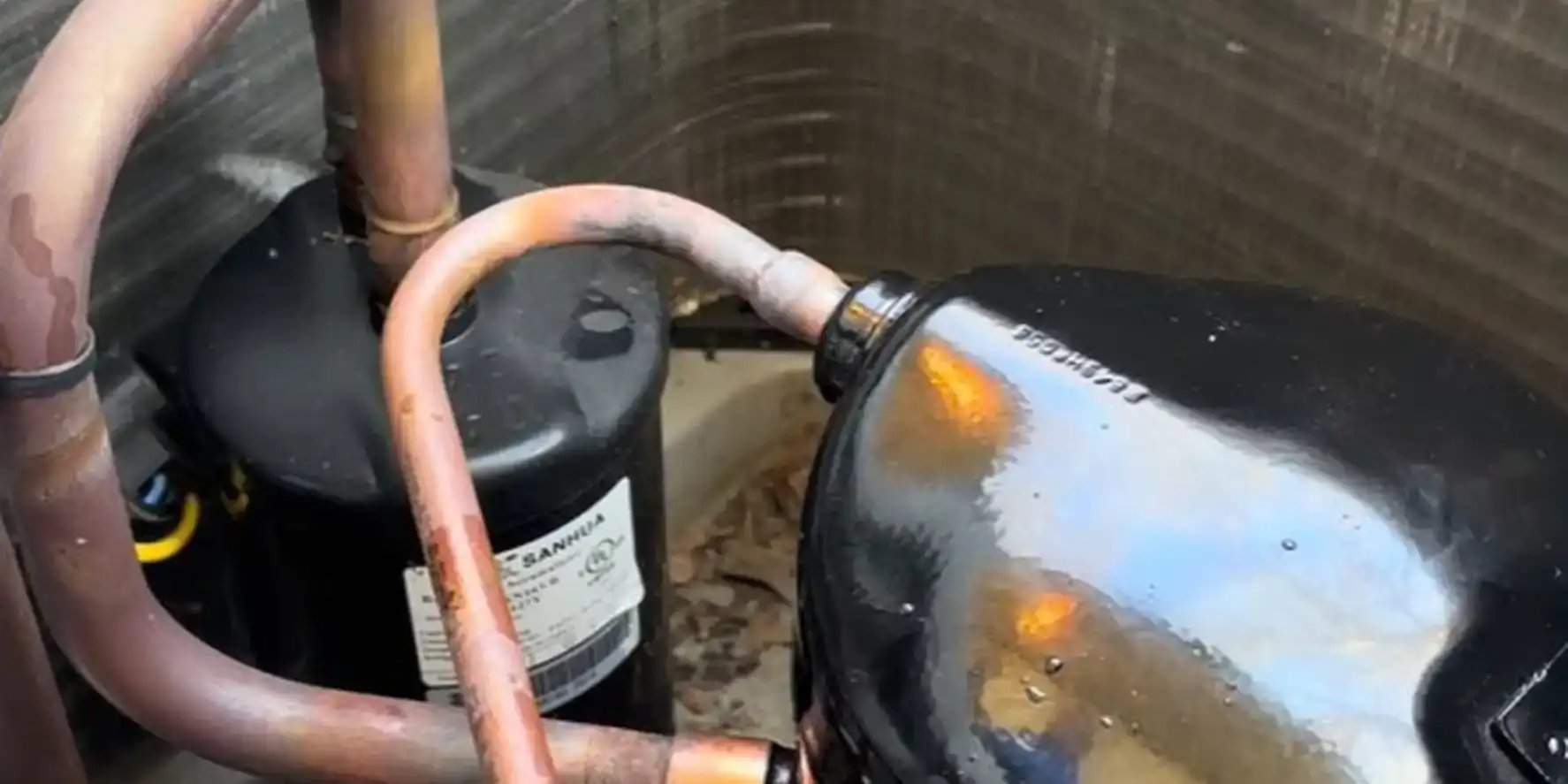
Most dead compressors were killed by something else in the system. That matters because whatever did it is still in there when the new compressor goes in. Swap the compressor without fixing the cause and you'll be doing it again in a couple of years. These are the four ways it happens.
Liquid refrigerant washing back
A compressor pumps vapor. Liquid doesn't compress. When a clogged filter or a dirty evaporator coil chokes airflow, refrigerant stops boiling off in the coil and comes back down the suction line as liquid. Same story with an overcharged system. The liquid washes oil off the bearings and hammers the internal valves. A frozen system left running does this every minute it runs, which is why we tell people to shut an iced-up AC off and not just wait for it to thaw mid-cycle.
Heat
The compressor motor is cooled by the refrigerant returning to it. A system running low on charge sends back less refrigerant, so the motor runs hotter with every degree of superheat. A dirty condenser coil piles discharge pressure on top of that. Push the heat far enough and the oil breaks down, and once the oil cooks the bearings run dry metal on metal. It's a slow way to lose a compressor, and most of it is preventable with a clean coil and a correct charge.
Moisture and acid
Moisture in the refrigerant circuit reacts with the oil and forms acid, and acid eats the varnish insulation off the motor windings until they short. The trade calls that a burnout. It traces back to sloppy service, a system opened without a proper vacuum, or a filter drier that was never replaced after earlier work. A burnout also contaminates the whole circuit, so the cleanup matters as much as the new compressor. Skip the acid test and the flush, and the new compressor is running in the same acid that killed the old one.
Electrical stress
A weak run capacitor looks like a dead compressor, and left in place for months it makes one, which is why a drifted reading gets the capacitor replaced the same visit rather than watched. The compressor hard-starts every cycle, pulling locked-rotor amps longer than it should and heating the windings each time. Chronic low voltage does the same damage, just slower. A lightning surge does it in one afternoon, and the classic aftermath is what techs call a grounded compressor, windings shorted to the shell after a close strike. We see a few of those every summer.
Got a compressor verdict you're not sure about?
Book a diagnostic. We'll test the capacitor, the contactor, the voltage, and the windings, and show you the readings before anyone talks price.
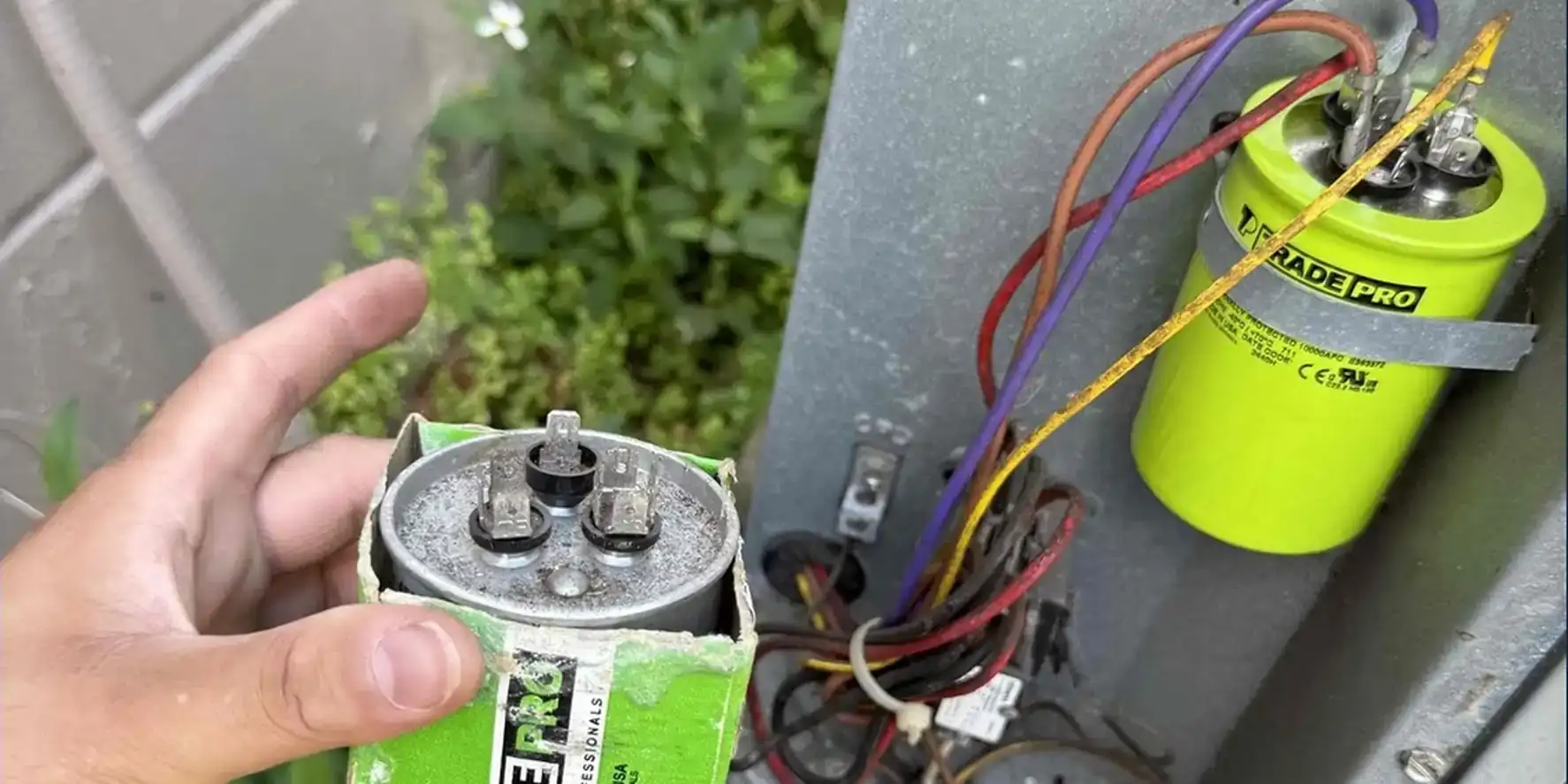
Liberty Air and Electric installs exactly two things on a tired compressor that's still running. Both buy seasons, and neither rebuilds anything, because nobody opens a residential compressor and rebuilds it. The shell is welded shut at the factory. So the two real repairs are about helping an aging compressor start easier and run cooler for as long as it has left.
A hard start kit for the compressor that starts tight
Compressors wear toward tighter tolerances and harder starts. An older one fights pressure at startup, pulls five to eight times its running amps, and sometimes dims the lights doing it. A hard start kit, a start capacitor paired with a relay, gets the motor through that window in 30 to 50 percent less time. Less time at locked-rotor amps means less heat in the windings every single cycle. We install the 5-2-1 Compressor Saver, built by CPS Products down in Miramar, about half an hour from the homes we serve in South Florida. The right candidates are aging compressors starting hard, systems with a TXV holding pressure against the start, and homes with marginal voltage.
A lubricant treatment for the compressor running hot and loud
Some compressors run under-lubricated. Oil migrates out into the line set over the years, or floodback washed the bearings one too many times. The tell is a compressor pulling more amps than its nameplate says it should, running louder than it used to. For those we use A/C Re-New, a Nu-Calgon treatment that cuts friction inside the compressor and frees sticking valves. The trade argues about additives, and some of that skepticism is earned, so we treat it as a measured bet. Amp clamp on the compressor before the injection, amp clamp after. When the draw drops, the treatment is doing its job. When it doesn't move, we tell you that too.
Neither one fixes a compressor that has already failed inside. Shorted windings, a locked rotor, or worn-out internal valves are past what any kit or treatment can reach.
When AC Compressor Replacement Becomes the Only Call
A compressor gets replaced when the failure is inside the shell and the tests prove it. Windings reading shorted to ground after the shell has cooled, the grounded compressor a lightning surge leaves behind. Windings reading open once the internal overload has had hours to reset. A rotor that stays locked with a healthy capacitor and full voltage at the terminals. Internal valves so worn the compressor runs without moving pressure. Those are all failures inside the compressor, and no part swapped around the outside fixes any of them.
Around Florida these jobs mostly run $1,900 to $3,200, covering the compressor, a new filter drier, a full evacuation, and a refrigerant charge weighed to the nameplate. The warranty number is the one people ask about. The manufacturer sends the compressor and nothing else, so even a covered job usually lands between $1,100 and $1,800 all in. Ask whoever quotes you to split part from labor so you can see what the warranty saved.
Age decides the rest. Under 10 years old with a healthy coil and clean electrical history, replacing the compressor is usually the right money. Past 12, you're putting a brand-new compressor into coils and motors carrying 12 years of the same wear, on a refrigerant that's being phased down and climbing in price. At that point the AC replacement math deserves a real look, and we'll run both numbers side by side on the truck. Either way the work sits inside our normal same-day AC repair pricing, quoted before anything comes apart.
How Liberty Protects Florida AC Compressors
Liberty Air and Electric treats the compressor as the part worth protecting at almost any reasonable cost, because everything else on the system is cheaper than it. Three habits and one rule do most of the protecting.
First, a surge protector on the condenser. Central Florida takes more lightning strikes per square mile than anywhere else in the country, and a strike a street away can send a spike through the windings. Our electrical work in Wedgefield includes plenty of these installs for exactly that reason, and the device costs a small fraction of the compressor behind it. Second, condenser coil cleaning when the coil actually needs it, because head pressure is compressor strain. Third, an amp reading logged at every AC maintenance visit. A compressor drifting above its nameplate amps shows a problem years before it fails, and a written trend line is how you catch it.
Give the condenser room to breathe
The outdoor unit needs open air on its coil faces and clear sky above its fan. Keep bushes trimmed a couple of feet back, and don't box it in because you don't like how it looks. One customer had a low brick wall built around the condenser to hide it from the patio. About two years after the install, the compressor died. The wall had been recirculating the coil's own hot discharge air back through it all along, and we ended up pulling our install photos to show the wall wasn't there when the system went in. Nobody enjoyed that conversation.
Questions?
Frequently Asked Questions About AC Compressor Repair
Q: Can an AC compressor be repaired?
A: An AC compressor can't be repaired internally. Residential compressors are hermetic, welded shut at the factory, so nobody opens one in a driveway. What gets sold as compressor repair is really one of three things. Fixing the failed part around the compressor, extending a tired compressor's life with a hard start kit or lubricant treatment, or replacing the compressor outright. Once windings short or internal valves fail, replacement is the only fix.
Q: How do I know if my AC compressor is bad or just the capacitor?
A: A bad capacitor and a bad compressor look identical from outside. The outdoor unit hums, clicks, and shuts back down. The difference shows up on a meter. A capacitor reading more than 6% off its rated microfarads is the culprit, and it's a minor electrical repair. A compressor is only condemned after the capacitor tests good, the contactor delivers full voltage, and the windings still read open or grounded once the shell has cooled.
Q: How much does AC compressor replacement cost in Florida?
A: AC compressor replacement in Florida mostly runs $1,900 to $3,200 when the part isn't covered, and $1,100 to $1,800 all in when a manufacturer warranty covers the compressor itself. Both numbers include a new filter drier, evacuation, and a weighed-in refrigerant charge. Where a job lands in those ranges depends on tonnage, refrigerant type, and access. Labor and refrigerant aren't covered, so a covered compressor still carries a real bill.
Q: Is it worth replacing the compressor on an old AC?
A: Replacing the compressor on an old AC is worth it when the system is under about 10 years old and the rest of it checks out. Past 12 years, the math usually tips the other way. The compressor is the heart of the system, the repair runs well into four figures, and the coils and motors around it carry the same years of wear. Spending $2,500 on a 14-year-old system still leaves you with 14-year-old coils, motors, and line set.
Q: What causes AC compressor failure?
A: AC compressor failure usually starts somewhere else in the system. Liquid refrigerant washing back from a frozen coil or an overcharge, overheating from a dirty condenser coil or a low charge, acid formed by moisture in the refrigerant circuit, and electrical stress from a weak capacitor or power surges. Genuine old-age wear happens too, but when one dies young, something else in the system usually did it.
Q: Do hard start kits extend compressor life?
A: Hard start kits extend compressor life in the right situations. An aging compressor that struggles against pressure at startup, a system with a TXV metering device, or a home with marginal voltage. The kit's start capacitor and relay cut the high-amp start window, so the motor spends less time cooking itself every cycle. On a compressor that's failing mechanically, a hard start kit buys some time and nothing more.
Q: Does A/C Re-New actually work?
A: A/C Re-New reduces friction inside a compressor that's running under-lubricated, and the way to know whether it worked is to measure. Liberty clamps an amp meter on the compressor before the treatment and again after. When the draw comes down, the treatment is doing its job. When it doesn't move, we say so. It extends the life of an aging, over-amping compressor, but it won't save one that's mechanically done.
Q: Will a surge protector protect my AC compressor?
A: A surge protector on the condenser protects the compressor's windings and the electronics that drive them from voltage spikes. Central Florida takes more lightning strikes than anywhere else in the country, and a strike doesn't need to hit the house to send a spike down the line. The device costs a small fraction of the compressor it's guarding.
Q: Why do I have to pay if my compressor is under warranty?
A: A compressor warranty covers the part, not the job. The manufacturer ships a new compressor at no charge, and everything else still has to happen. Recovery of the old refrigerant, brazing, a new filter drier, evacuation, a weighed-in charge, and the labor hours. That's why a warranty compressor replacement still runs into four figures, and it's worth asking any contractor to split the quote so you can see what the warranty actually saved you.