

AC Not Blowing Cold in Florida
Air moving but the house not cooling? Liberty Air and Electric diagnoses it same-day, and tells you first which checks you can do yourself.
- Same-day diagnostic, upfront quote
- Homeowner's help guide
- Two checks before you call a pro

Six Reasons an AC Runs Without Blowing Cold Air
Liberty Air and Electric checks the same six causes on every one of these calls, and puts a meter on the system before quoting any part.
One of the six you can fix yourself in ten minutes for the price of a filter, and one you can take a run at. The other four need a meter and gauges, and two of them get worse the longer the system runs. Start with the one that matches what you're seeing.
The filter is packed with dust
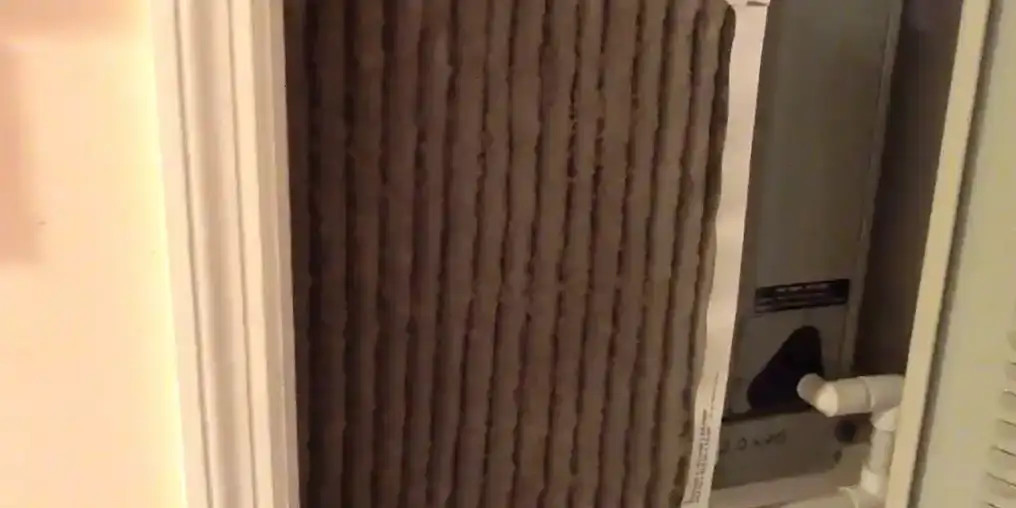
Pull the filter and hold it up to a light. If you can't see light through it, that's your first suspect. A choked filter starves the coil of airflow and cooling fades. This one is free to fix and you can do it yourself today.
You can fix thisThe outdoor coil is caked in dirt
Walk out to the condenser and look through the fins. Grass clippings, pollen, and dryer lint pack that coil solid. A light rinse is a reasonable homeowner job. Dirt heavy enough to actually cost you cooling usually needs real chemistry.
You can try, then callYou see ice and the filter is clean
Ice on the indoor coil or on the copper line, with a clean filter, points at a refrigerant leak more than anything else. Refrigerant doesn't get used up. If the system's low, it left through a hole.
Call a proThe indoor blower isn't spinning
No air at the vents at all, or a system that ices up while the outdoor unit keeps running. A blower that's quit moving air freezes the coil the same way a blocked filter does. Usually the motor, or the low-voltage feed to it.
Call a proThe outdoor unit sounds quieter than usual
Fan spinning, deep hum gone. That's the compressor not kicking on. Could be the compressor itself, could be a weak capacitor, could be an electrical fault upstream. All three sound the same from the driveway. It takes a meter to tell them apart.
Call a proThe air is weak as well as warm
Everything sounds normal, but the air at the vents is soft and cool instead of strong and cold. Weak and warm together usually means the ducts. The AC might be making cold air that never reaches the room.
Call a proLiberty Air and Electric tells you straight which of these needs a technician
- We tell you when it isn't worth a truck roll
- Diagnostic fee waived with an approved repair
- Upfront pricing before any work starts
Liberty Air and Electric would rather you rule two of these out before paying anyone to drive over. Neither takes long, and one of them is the single most common reason a Florida AC stops keeping up.
Start with the filter
Pull the filter and hold it up to a light. If light barely comes through, swap it and give the system a few hours. A packed filter starves the evaporator coil of the warm air it needs to pull heat out of. The coil runs colder, and the air at your vents gets weaker and warmer at the same time. Down here a 1-inch filter needs changing every month through cooling season, not every quarter like the box says. Florida runs its AC most of the year. This is the cheapest fix in air conditioning, and we'd rather you try it than pay for a truck roll to find a $12 filter.
Then look at the outdoor coil
Walk out to the condenser and look straight through the fins. Grass clippings, pollen, and dryer lint pack that coil solid and stop it rejecting heat. Want to take a run at it? Pull the disconnect beside the unit first. Then rinse with a garden hose from the inside of the coil outward, so the dirt leaves the way it came in. Keep the pressure washer in the garage. Those fins fold flat under that kind of pressure, and bent fins block more air than the dirt ever did.
Be realistic about what a rinse gets you. A coil dirty enough to actually cost you cooling has dirt packed between the fin rows where a hose won't reach. That's a professional coil cleaning with real chemistry. Rinse it anyway. It might save you a service call, and worst case you've ruled one out.
Ice gets worse the longer you wait.
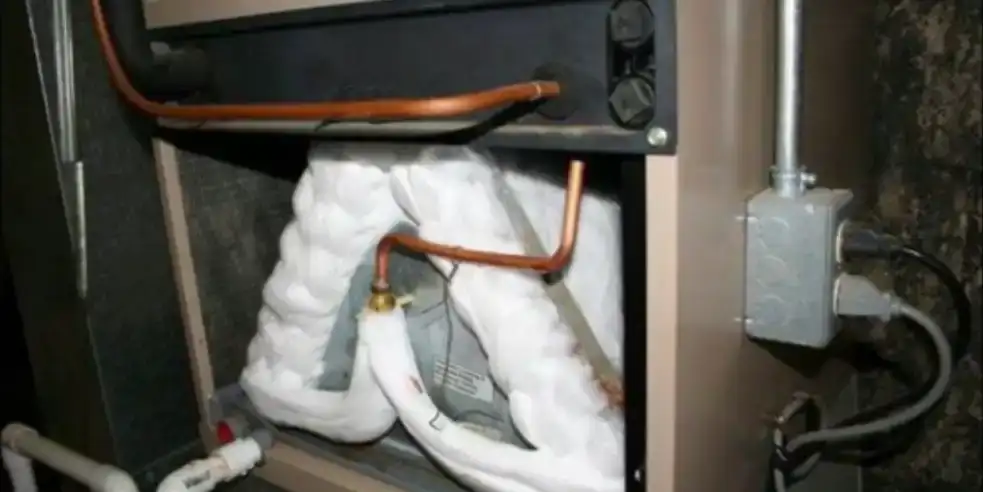
Set the thermostat to cooling off and the fan to on. Running the fan pushes room air across the frozen coil and thaws it in hours instead of most of a day. Two reasons that matters. Running a system iced up is hard on the compressor. And nobody can diagnose a frozen system anyway. The measurements that find the cause can't be taken through a block of ice, so a tech who shows up before it thaws has to come back out anyway.
Check both ends for it. Ice usually starts on the indoor evaporator coil, but it travels. Look at the copper lines running out to the condenser, including where they enter the unit. A frosted or fully iced copper line is the same finding as ice on the coil. What put it there is a separate question with about five answers, and an AC freezing up works through them from the free check to the ones that need gauges.
Ice with a clean filter usually means a refrigerant leak
Ice on the coil with a clean filter points at refrigerant before anything else. Refrigerant doesn't get used up, so a system running low has a hole in it, and topping it off without finding that hole empties the next charge the same way. Refrigerant leak detection is its own job, matched to the system's age. Our techs carry EPA Section 608 certification, which federal law requires of anyone who touches refrigerant.
Ice with no air at the vents points at the blower
A blower that's quit spinning freezes a coil for the same reason a blocked filter does. No air across the coil means nothing carrying heat to it, and the coil drops below freezing. Stand at a vent with the fan set to on. If nothing moves, it's the blower motor or the low-voltage circuit feeding it. Either way it takes a meter. Thaw it first, then book AC repair and tell us you saw ice. It changes what we bring.
Seeing ice, or ruled out the filter?
Book a diagnostic. We measure the system, show you what we find, and quote the repair before any work starts.
When the Outdoor Unit Goes Quiet
Liberty Air and Electric listens for two sounds at a running condenser. The fan up top, and a low hum underneath it. When somebody tells us the unit sounds quieter than normal, that missing hum is almost always what they're hearing. The fan motor and the compressor run independently, so the fan can spin all afternoon while the compressor never starts. From the driveway it looks like the thing is working.
Three things cause that. A weak run capacitor, which is the cheap one and by far the most common, and replacing a run capacitor is a same-day job off a stocked truck. An electrical fault upstream, in the contactor, the disconnect, or the breaker. Or the compressor itself, which is the expensive one. You can't tell them apart by ear. It takes a meter on the terminals.
The spread between a capacitor and a compressor is wide enough that guessing costs real money in both directions, which is why AC compressor repair and replacement starts with a meter on the cheap parts first. Worth knowing before anyone quotes you a compressor over the phone. Liberty Air and Electric handles the electrical side of AC systems under the same license as the mechanical work, so a fault that turns out to sit in the disconnect or the breaker doesn't turn into a second contractor and a second trip.
When Leaking Ducts Lose the Cold Air in the Attic
Leaking ducts are hard to spot, because nothing sounds wrong. The unit starts, the outdoor fan spins, and the vents blow. The air just comes out soft and barely cool. When the air is weak and warm at the same time, the ducts are usually where the trouble is.
About 20 to 30 percent of the air moving through a typical duct system gets lost to leaks, holes, and joints that pulled apart. Up north that mostly shows up as a higher power bill. In Florida the house stops cooling too, because those ducts run through an attic sitting at 130 degrees in July. Cold air leaks out into that attic, and attic heat soaks into what's left, so what reaches the room is warmer and there's less of it. The AC can be perfectly healthy and the house still won't cool.
Sorting it out means testing the duct system. The fix is sealing or replacing the runs that are losing air. Duct repair and sealing is its own job with its own diagnosis. Out in Wedgefield, where a lot of the housing stock runs flex duct through unconditioned attic space, we find it regularly on AC repair calls that started as a cooling complaint.
Questions?
Frequently Asked Questions About an AC Not Blowing Cold Air
Q: Why is my AC running but not blowing cold air?
A: An AC that runs but doesn't blow cold air usually comes down to six causes: a clogged filter, a dirty outdoor coil, a refrigerant leak, a blower motor that's quit spinning, a compressor that isn't starting, or duct leakage. Start with the filter, since it's the only one that's free to fix. If the filter is clean and you see ice anywhere on the system, stop and call a technician.
Q: Should I turn my AC off if it is not cooling?
A: Turn the AC off if you see any ice on the indoor coil or on the copper lines. Set the thermostat to cooling off and the fan to on. That pushes room air across the frozen coil and thaws it faster. Running a frozen system is hard on the compressor, and no technician can measure a system that is still iced up.
Q: How long does it take for a frozen AC to thaw?
A: A frozen AC takes anywhere from two to eight hours to thaw with the cooling off and the fan running. A solid block of ice on an attic coil can take longer. Running the fan alone moves warm air across the coil and cuts that time down considerably compared with shutting the whole system off.
Q: Can a dirty air filter stop an AC from cooling?
A: A dirty air filter absolutely stops an AC from cooling properly. The filter starves the evaporator coil of the warm air it needs to absorb heat, so the coil runs colder and colder until it freezes into a block of ice. In Florida, a 1-inch filter needs changing every month during cooling season, which here is most of the year.
Q: Why is my AC blowing cool air but not cold air?
A: An AC blowing cool air but not cold air is usually losing capacity rather than failing outright. A fouled coil, a slightly low refrigerant charge, or leaking ducts each shave a few degrees off the supply air. We measure the temperature split between return and supply on every visit, because a healthy system drops that air 15 to 20 degrees and the number tells us fast which direction to look.
Q: Can I add refrigerant to my AC myself?
A: You can't legally buy or add most refrigerants without EPA Section 608 certification, and topping off a system without finding the leak is throwing money at a hole. Refrigerant isn't a consumable. A system that's low has a leak, and that leak will empty the next charge too.
Q: Why is my AC not cooling but the outside unit is running?
A: An outside unit that runs while the house stays warm usually means the fan is turning but the compressor isn't. The fan motor and the compressor are separate, and one runs fine without the other. Listen for the low hum underneath the fan noise. If that hum is missing, the compressor isn't starting, and a weak capacitor or an electrical fault is the usual reason.
Q: Does a leaking duct make the AC blow warm air?
A: Leaking ducts make the air at the vents feel both weaker and warmer, because cold air escapes into the attic before it reaches the room. About 20 to 30 percent of the air moving through a typical duct system is lost this way. In a Florida attic that runs 130 degrees in July, the air that does arrive has picked up heat on the trip.
Q: How much does it cost to find out why my AC is not cooling?
A: A diagnostic visit in Florida runs $49 to $99 depending on the season and the day of the week. That fee gets waived with an approved repair. Several of these causes look identical from the driveway, so we measure the system and tell you which one it is.