

AC Freezing Up in Florida
Ice on the coil or the copper line? Liberty Air and Electric finds what caused it and fixes that.
- The filter check is free
- Cooling off, fan on, thaws it in hours
- Diagnostic once the ice is gone

What Makes an AC Freeze Up in Florida
Liberty Air and Electric works a freeze-up from the cheapest cause up, because the two easy fixes cost the price of a filter and the rest need gauges or a multimeter.
Most people find the ice on the indoor coil, or on the copper line running out to the condenser. The system keeps running that way until somebody shuts it off, and running it frozen is what does the damage.
Ice means one of two things. Either not enough warm air is getting to the evaporator coil, or there isn't enough refrigerant in it.
The filter is grey and stiff
Pull it out and look at it against a light. If almost nothing comes through, that's your answer, and it costs the price of a filter. A starved coil keeps getting colder until the moisture on it turns to ice.
You can fix thisYou recently upgraded to a higher-MERV filter
Going from a basic filter to a high-MERV one felt like an upgrade, so most people don't suspect it. The filter can be spotless and still be too restrictive for the equipment behind it.
You can fix thisIce, the outdoor unit running, and no air at the vents
Stand at a supply register with the system on. If you can hear the unit running outside and feel nothing at the vent, the indoor blower has quit moving air. Call before it runs any longer.
Call a proIce with a filter you just changed
A clean filter, a blower still moving air, and ice anyway. That usually points at the charge. Refrigerant isn't consumed, so a system running low has a hole somewhere.
Call a proAirflow feels weaker at the vents
Weak air at the registers, or a room that never keeps up, can mean a supply main has collapsed somewhere in the attic. Everything past the collapse gets less air, and so does the coil.
Call a proIt thawed and has not frozen again
Good news, but nothing has been fixed. Unless the filter was the cause, whatever restricted the system is still there and it will freeze again.
Call a pro anywayLiberty Air and Electric would rather you check the filter first
- A filter costs less than a service call
- Diagnostic fee waived with an approved repair
- Upfront pricing before any work starts
What to Do the Moment You See Ice on the AC
Liberty techs give every caller with a frozen system the same two instructions first. Cooling off. Fan on.
Set the thermostat cooling to off and the fan to on rather than auto. That pushes room air across the frozen coil and cuts the thaw down to a few hours.
Cooling off is what protects the compressor. Running a frozen system sends liquid refrigerant back to a pump built for vapor, and that's how a few hundred dollars of work turns into AC compressor repair.
The other one is scheduling. Nobody can measure anything through a block of ice, so book the visit for later in the day or the next morning so the system can thaw out.
Check the AC Filter Before You Call Anyone
A restricted filter costs nothing to rule out, and it's the first thing to check on a Florida system that ices up. Pull the filter and hold it up to a light. If the light barely comes through, replace it and let the system thaw before you book anything. Plenty of freeze calls end right there.
A brand new filter can freeze a system too
If you normally run a basic filter, went out and bought a much higher-MERV one, and the system started freezing after that, the new filter is the likely reason. It's spotless, and the blower was never sized to pull air through it.
The EPA recommends MERV 13 or as high as the system will accommodate. In Florida the 1 inch filter is the most common size, and most systems can't handle a 1 inch MERV 13, especially 4 and 5 tons. If you want that filtration without choking the airflow, whole-home filtration in Florida means a deeper media cabinet with more surface area.
Put the old style of filter back in and see whether the freezing stops. That test costs one filter.
Filter was clean and it froze anyway?
Book a diagnostic. We measure the system, show you what we find, and quote the repair before any work starts.
Liberty Air and Electric works three causes from here, and you can narrow them down before the truck gets there just by listening and standing at a vent.
The blower has quit, and this one is urgent
Stand at a supply register while the system is calling for cooling. If the outdoor unit is running and no air is coming out, the indoor blower has stopped. Nothing is carrying heat to the coil, so it freezes fast. Don't wait until tomorrow. That job is AC fan motor replacement in most cases.
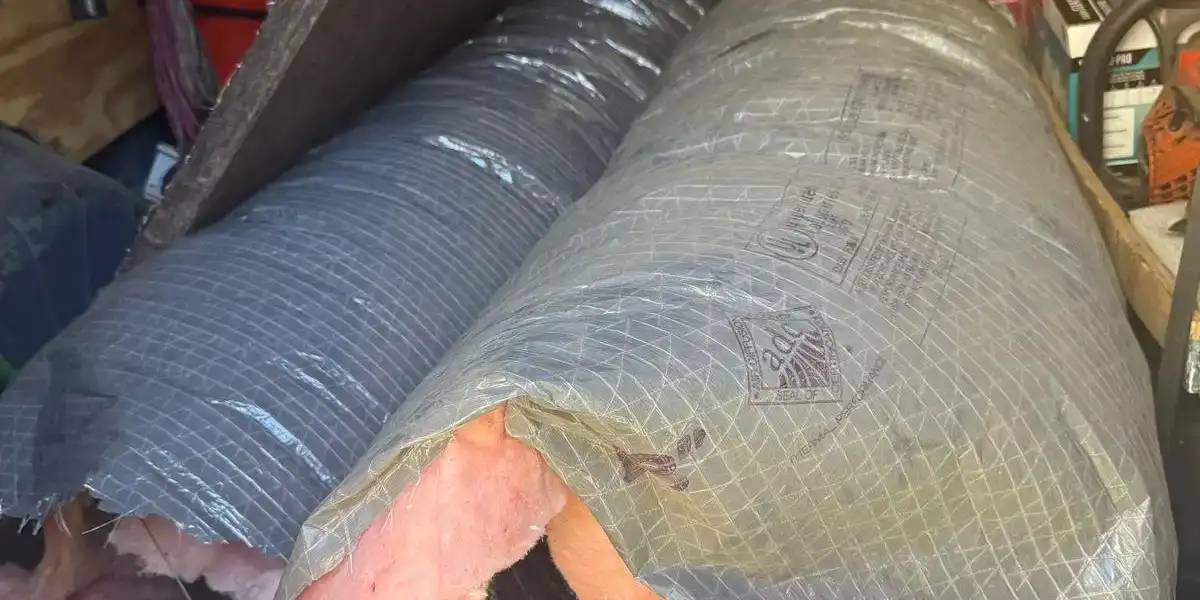
A supply duct has collapsed rather than torn
Most duct trouble is a leak, a hole dumping cold air into the attic. A freeze-up usually goes the other way. A supply duct, usually a main line to the air handler, goes flat and blocks the air. The cold air stays in the cabinet, the coil ices over, and everything past the collapse gets nothing.
Flex is what makes it possible. A run that gets crushed, kinked over a truss, or sags far enough closes off without ever tearing. Ducts get sized against the ACCA Manual D standard our installers design to, and a collapsed main puts the system well under what it was sized for. Out in Wedgefield the ductwork runs through attics that hit 130 degrees, and flex sags and sets in place over the years. A lot of our ductwork in Wedgefield work starts as a cooling call. Reopening or replacing the run is duct repair and replacement work.
A refrigerant leak, and the ice is telling you something good
Ice with a clean filter and a working blower usually means the charge is low. Refrigerant doesn't get used up the way fuel does, so a system running low has a hole in it, and refrigerant leak detection is how we find it.
The ice is good news here. If the system is low enough to freeze, there is still refrigerant moving through that coil. It takes refrigerant still moving to drive it below freezing with moisture condensing on it. You caught it with charge still in the system, and that is the good news.
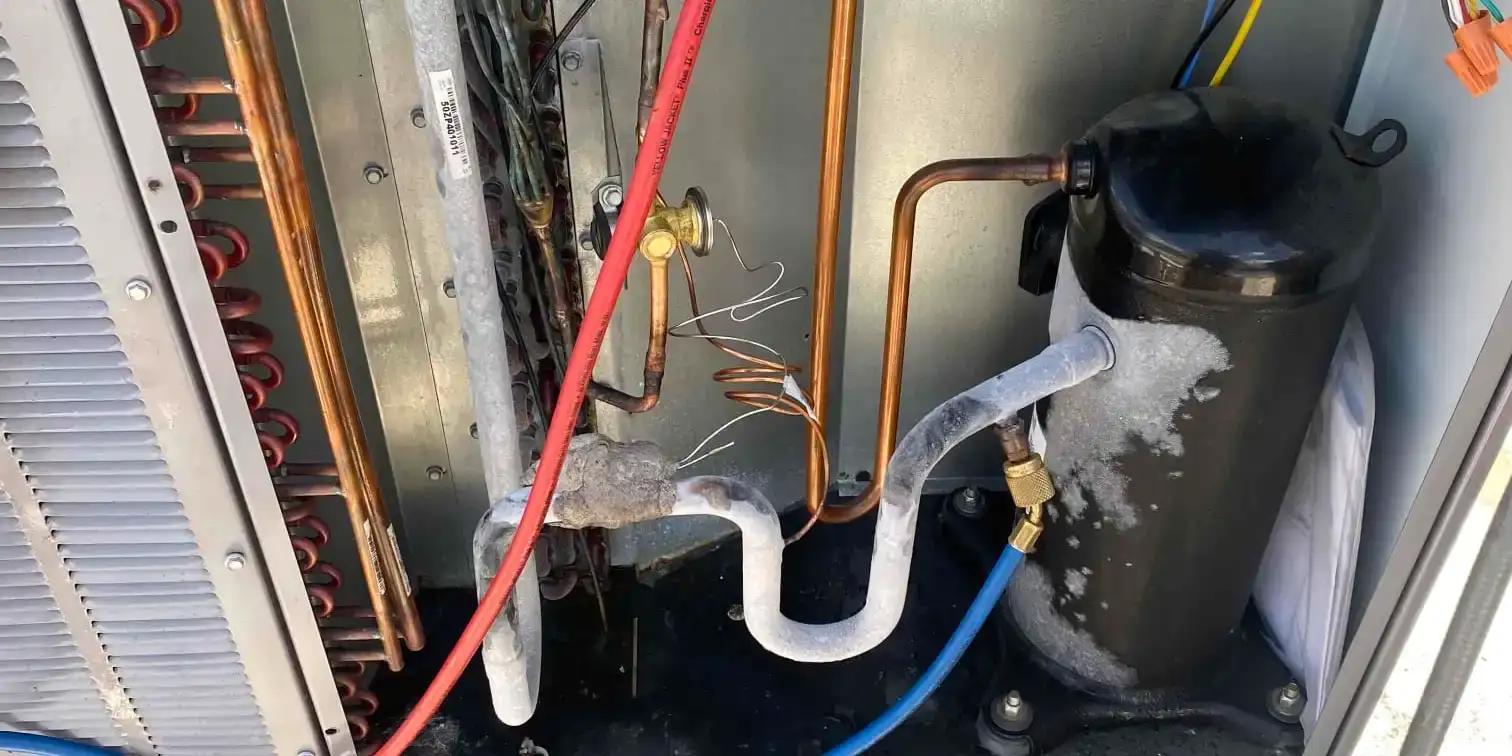
Liberty Air and Electric wants a number before anybody blames the metering device, including when it's one of our own techs. The valve meters refrigerant into the evaporator coil, and when it fails it can freeze a system.
It also gets blamed a lot more often than it fails. The valve usually sits inside the cabinet where nobody can look at it, and it's the last thing left after everything else checks out. Blaming it doesn't take a measurement.
So ask what the superheat measured. Superheat is the reading that says whether refrigerant is metering right, so it has to be out of range before the valve is the answer at all. A tech who diagnosed the valve has that number and will hand it over. If superheat never comes up, he got there by eliminating everything else.
You don't need to know what a good superheat number looks like. Just ask for it.
The AC Thawed and Has Not Frozen Again
A system that thaws and then runs fine for a few days looks like a problem that fixed itself. Usually it didn't.
If the filter was the cause and you replaced it, that's a real fix and you're done. Otherwise the restriction or the leak is still there and the system just hasn't iced up again yet. Overnight is usually when it does, because the cooling load drops after dark and a system already short on airflow or charge drops below freezing. Get a technician out in the next few days rather than waiting on the second freeze.
How Liberty Handles a Frozen AC Call
Liberty Air and Electric books a frozen system for AC repair after it's thawed, because showing up early just means sitting in the driveway. Once the coil is clear, the work is measuring. Airflow across the coil, static pressure across the filter and the ducts, the charge, and the superheat and subcooling that tell us whether refrigerant is metering right.
Those readings sort it out in one visit. Low airflow with a normal charge points at the filter, the blower, or the ducts. A normal blower with a low charge points at a leak. Correct airflow and a correct charge with superheat out of range is what a real metering-device failure looks like, and that's the only time that diagnosis is worth paying for.
A coil that froze because it was filthy gets evaporator coil cleaning. Liberty covers Greater Orlando and South Florida, and freeze-ups run heaviest here from June through September, when the humidity gives a restricted coil plenty of water to freeze.
Questions?
Frequently Asked Questions About an AC Freezing Up
Q: Why is my AC freezing up?
A: An AC freezes up when something stops enough warm air from reaching the evaporator coil, or when the refrigerant charge is low. A clogged filter, a filter that's too restrictive, a blower that has quit, a collapsed supply duct, a dirty coil, or a leak all end up as the same block of ice.
Q: How long does it take for a frozen AC to unfreeze?
A: A frozen AC takes roughly two to eight hours to unfreeze with the cooling switched off and the fan left on. A coil buried in a solid block of ice can take most of a day. Running the fan alone moves room air across the coil and cuts that time way down.
Q: Should I keep running my AC if it is frozen?
A: Don't keep running an AC that's frozen. A frozen system sends liquid refrigerant back toward a compressor built to pump vapor. That turns a repair worth a few hundred dollars into one worth a few thousand. Set cooling to off and the fan to on.
Q: Can a dirty air filter make an AC freeze up?
A: A dirty air filter makes an AC freeze up regularly, and it's one of the two causes a homeowner can fix without a technician. The filter starves the evaporator coil of the warm air it needs to absorb heat, so the coil keeps dropping until the condensation on it turns to ice.
Q: Can a MERV 13 filter make my AC freeze?
A: A MERV 13 filter can make an AC freeze if the system was never built for that much resistance. Filtration ratings describe what a filter catches, not what your equipment can pull air through. A one-inch high-MERV filter dropped into a system built around a basic one can restrict airflow enough to ice a coil.
Q: Why does my AC freeze up at night?
A: An AC freezes up at night because the cooling load falls after dark while the system keeps running. Lower outdoor temperatures and less going on in the house mean less heat reaching the coil, so a system already marginal on airflow or charge drops below freezing overnight and looks fine by afternoon.
Q: Does a frozen AC always mean a refrigerant leak?
A: A frozen AC does not always mean a refrigerant leak, though a leak is one of the common causes. Airflow is the other half of it. A clogged filter, a restrictive filter, a failed blower, a dirty evaporator coil, or a collapsed duct will do it too. A technician separates the two by measuring airflow and charge, because the ice itself looks the same either way.
Q: Is a bad metering device a common cause of a frozen AC?
A: A bad metering device is a genuine cause of a frozen AC but a less common one than airflow or refrigerant problems. It also gets blamed more often than it fails, because it's what a technician reaches for after ruling other things out. Ask what the superheat measured before accepting that diagnosis.
Q: Can a frozen AC damage the compressor?
A: A frozen AC damages the compressor when it's left running. Liquid refrigerant that fails to boil off in an iced coil travels back down the suction line to a compressor built to handle vapor only. Shutting the cooling off at the first sign of ice is what prevents that.