

AC Fan Not Spinning? Fan Motor Replacement in Florida
Liberty Air and Electric tests the capacitor first, then finds out what killed the motor.
- Capacitor tested before any motor is condemned
- Static pressure checked, not just the part swapped
- Warranty and conversion math shown side by side

Six Signs an AC Fan Motor Is Failing
Liberty Air and Electric tests the cheap parts around a fan motor before condemning the motor. A stopped fan is a bad capacitor at least as often as a bad motor.
Two motors move air through a Florida system. The condenser fan motor sits on top of the outdoor unit and pushes heat off the coil. The blower motor sits inside the air handler and moves conditioned air through the house. A bad blower gets caught almost immediately since airflow disappears, while a bad condenser fan can run unnoticed for weeks, and that's the one that turns into a compressor bill.
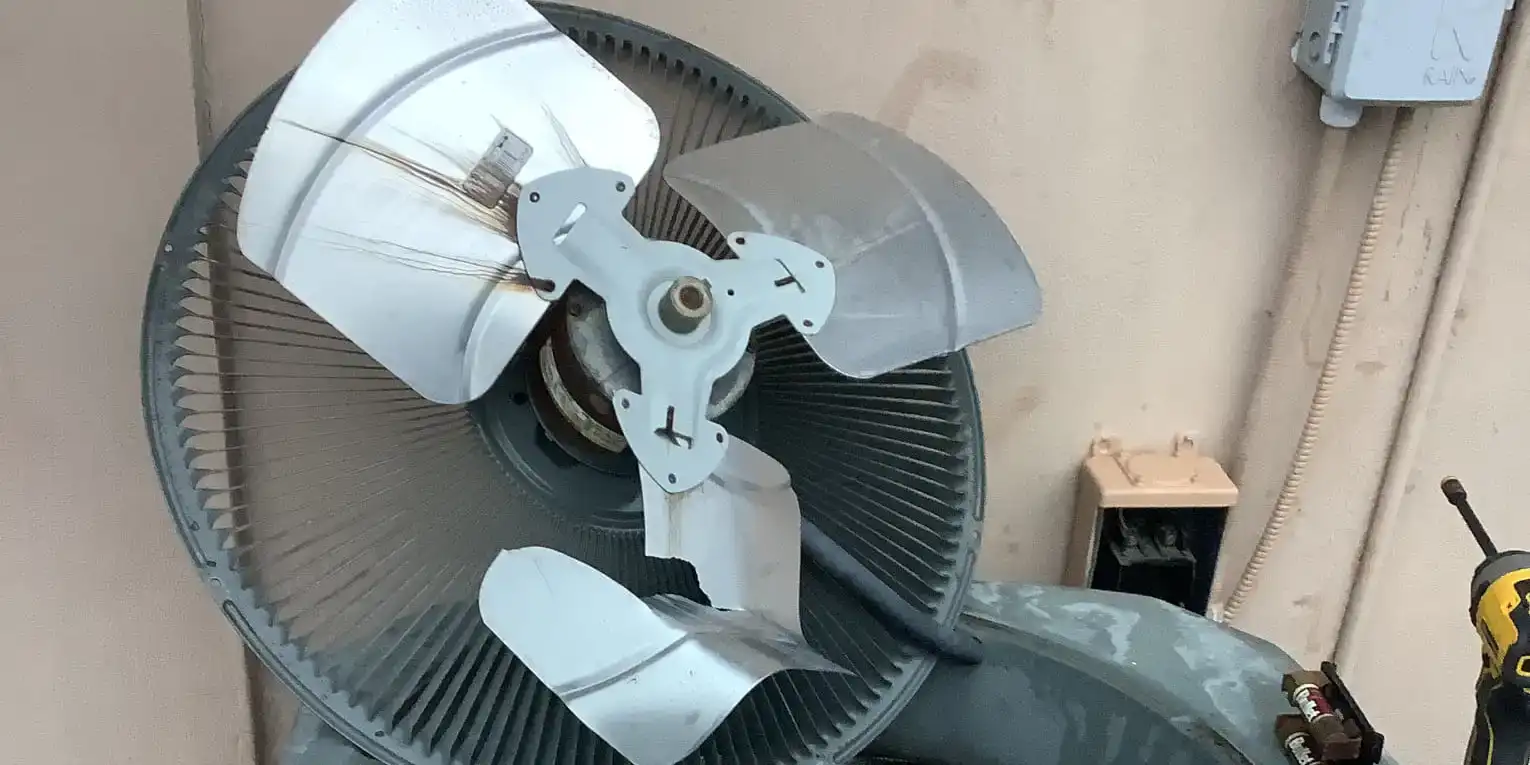
Outdoor fan sitting still while the unit hums
The condenser hums, the compressor is trying to start, and the fan on top never moves. Liberty tests the run capacitor first, because a drifted capacitor does the same thing and costs a lot less to fix.
Fan turning the wrong direction
Air should blow up and out of the top of the outdoor unit. If it's pulling air down into the cabinet instead, the blade is spinning backwards, and that usually comes back to the capacitor.
Fan that only starts after a push
A motor that needs a push to get going has worn bearings or a weak capacitor. Either way it won't last much longer.
Weak air at every vent in the house
Blower motors rarely die all at once. They slow down first, and the house takes hours to recover after a door has been open.
Ice on the line set or the air handler
A blower moving too little air lets the evaporator coil drop below freezing. Ice on the line set is what finally gets people to call.
Burning smell or a hot motor housing
Windings cooking give off a distinct hot-electrical smell. A motor too hot to touch after shutdown is drawing more current than it should, usually because it's fighting static pressure.
When the outdoor unit is dead and nothing moves at all, there's more to check than the fan. An AC that will not turn on has a handful of usual causes.
Watch Which Way the Air Moves Before You Accept a Motor Quote
Stand next to the outdoor unit while it runs. Air should blow up and out of the top. If you feel it pulling down into the cabinet instead, the blade is turning backwards, and on a PSC motor the capacitor is what to check. A weak capacitor lets that style of motor start in either direction, and once it starts backwards, airflow across the coil collapses and the system trips out on high pressure. Most condenser fan motors are PSC, so the check is worth making on almost any outdoor unit. A variable-speed ECM is the exception. It's electronically commutated and can't start the wrong way.
Liberty Air and Electric finds the cause before quoting the part
- Capacitor and contactor read before any verdict
- Airflow checked on every motor call
- Warranty split out so you see what it saved
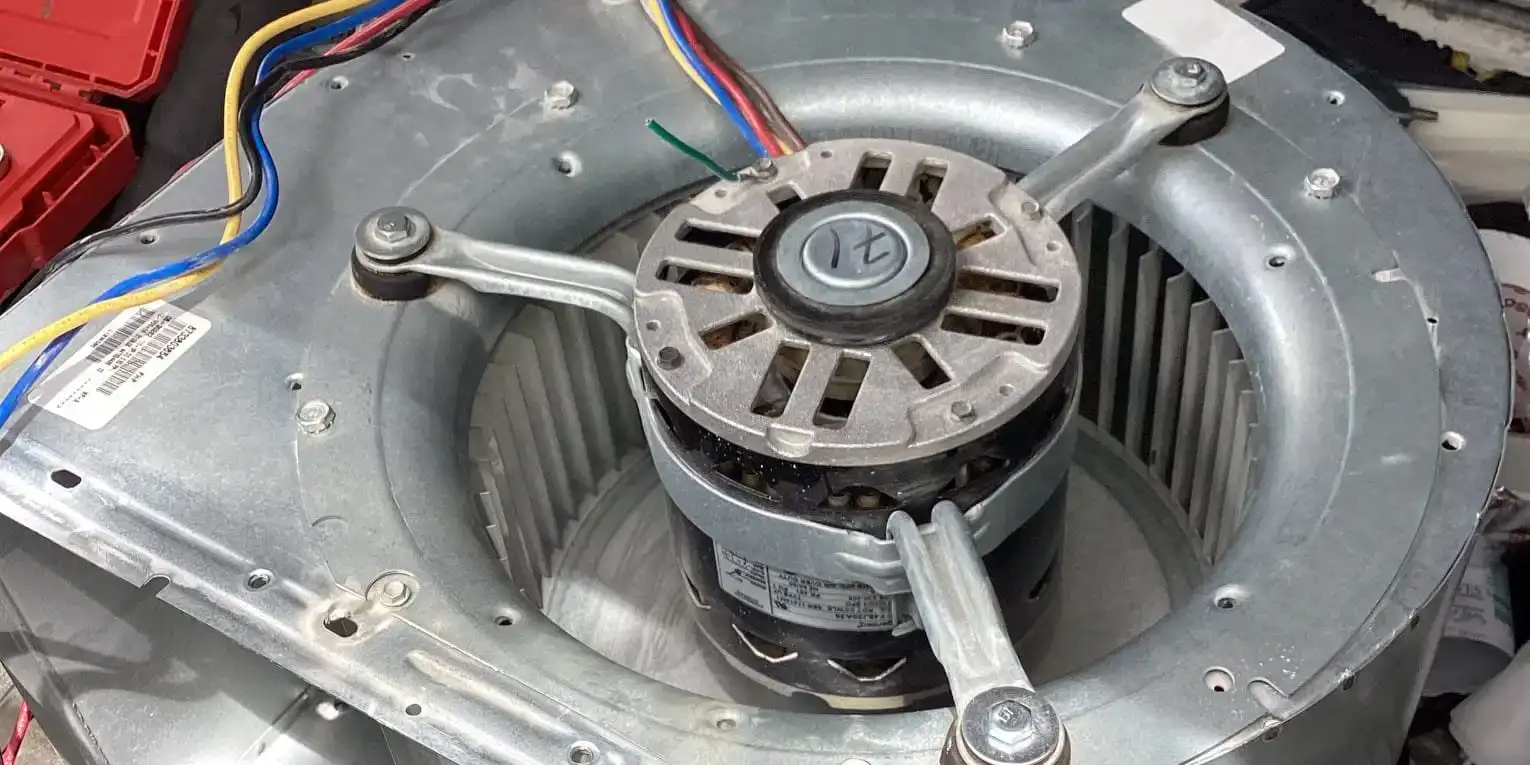
Variable-speed ECM blower motors, the ones that come in high-end equipment, come back for replacement more often than the simple PSC motors they replaced. Nothing's wrong with the equipment or the motor. Most of the time it's static pressure.
Static pressure is the thing doing the damage
Static pressure is the resistance a blower pushes against to move air. A variable-speed motor is built to hit an airflow target, so when resistance goes up it works harder to keep hitting it. A single-speed PSC motor on the same ductwork moves less air and lasts longer, and the house stays uncomfortable.
Ducts cause most high static pressure
Undersized returns, crushed flex, and long restrictive runs are where most high static pressure comes from, and duct problems in Florida attics are common enough that we look there first. The trade's duct-sizing standard, ACCA Manual D, predates variable-speed equipment, and most of the systems we open were never sized against it. The filter is next. Then a dirty evaporator coil, and then a blower wheel caked with the dust that got past a bad filter. All four are fixable.
Replacing the part without looking for the cause
Liberty looks at the ducts, the filter, the coil, and the blower wheel on a motor call instead of swapping the part and driving off. We're not putting a new motor into the same conditions that killed the old one without telling you what we found.
Why a fan motor failed is not always knowable
Motors also fail without a cause anyone can point to. A lightning surge takes out the run capacitor and the motor with it. Bearings wear out. Two identical motors leave the same line and one runs nine years while the other runs four.
We can tell you which part failed, because the meter shows it. Why it failed we can't always answer, but it's always worth investigating. A system reacts to everything around it, from the power on the street to the filter somebody picked up last month. We tell you what the readings show and stop there.
If you are buying high-end equipment
Any real quote on a high-efficiency system should include a look at the ducts it's going to run on.
Fan stopped, or spinning the wrong way?
Book a diagnostic. We test the capacitor, read the airflow, and tell you which part actually failed before anyone talks price.
Liberty quotes the same motor two different ways depending on whether the part is covered. The labor is about the same either way.
Under warranty, take the whole set
Most ECM motors come apart into a motor and a control module, and the two are sold separately. When the part is covered, Liberty replaces both even when only the module tested bad. The manufacturer would rather we replaced just the module. It's still the right call, because a module bolted onto a motor with years of wear brings us back inside a season, and that trip costs you more than the part saved. Under warranty a PSC motor and an ECM motor cost you about the same anyway.
Out of warranty, two cheaper repairs open up
Once you're paying for the part, a module-only repair can be cheaper and worth doing when the motor itself tests healthy. The bigger move is a conversion, and that only comes up on blowers. Condenser fan motors are mostly PSC already, so there's nothing to convert out there. A non-warranty ECM blower replacement runs around $1,400 in the Florida market, while converting the system to a PSC motor runs closer to $1,000, because a PSC motor plus the run capacitor it needs still comes in around $400 under the ECM. You lose the variable-speed comfort and efficiency the system was sold with. On a budget and thinking about replacing soon anyways, it's worth a conversation.
None of that applies to a variable-speed air handler still inside its parts warranty, where the covered motor is the obvious answer.
AC Fan Motor Replacement Cost in Florida
Condenser fan motor replacement around Florida mostly runs $600 to $1,400 when the part isn't covered, and $500 to $1,100 when it is. Blower motors run wider, roughly $600 to $2,800, depending on the kind of motor in the air handler. A simple PSC blower sits near the bottom of that range and a variable-speed ECM with its control module sits at the top. A compressor, a coil or a capacitor follows the same split in Florida AC repair pricing: one price with the part covered, a higher one without.
The condenser fan motor is the easier of the two AC repair jobs. There's room to work on top of an outdoor unit, and the motor comes out with the blade and the grille. A blower motor sits down inside a cabinet built around it, and that's where the labor difference comes from.
The question to ask on a non-warranty condenser fan motor
Ask what the compressor looks like. When a condenser fan motor has been dead a while before anyone noticed, the compressor has been running with no way to reject heat, and that takes years off it. The motor can be the cheap part of a bigger future bill, since you might be into a compressor conversation before you know it. That's why a flat dollar rule gives the wrong answer on whether to repair or replace an AC.
How Liberty Keeps the Next Motor Alive
Liberty techs fix whatever caused the failure while the motor is out.
Get the filter off one inch
Any variable-speed system should be running a 2-inch filter rack at minimum, and a 4-inch media cabinet if the air handler has the room. Running a high-MERV 1-inch filter on one of these systems is asking for that motor to go bad. More surface area at the same rating gives you the same filtration without the pressure drop, and that's what matching the filter to the system actually means.
Clean the coil and the blower wheel
Buildup on the evaporator coil and on the blower wheel raises static pressure over years. Neither shows up as a symptom until the motor is straining, and both are ordinary maintenance items. A coil that has been cleaned properly and a clean blower wheel take real load off the motor.
Have the ducts looked at once
A look at the ducts tells you whether the system has been fighting high static pressure since the day it went in. Liberty checks that on AC repair calls around Wedgefield and across the rest of the service area, where 1980s and 1990s houses in ZIP 32833 often have modern equipment on return ducts sized for a much smaller load. Unpaved roads out there load filters faster too.
Questions?
Frequently Asked Questions About AC Fan Motor Replacement
Q: Why is my AC fan not spinning?
A: An AC fan not spinning is most often a failed run capacitor rather than a failed motor. A weak capacitor leaves the motor humming, drawing locked-rotor current, and sitting still. Less often it's a burned-out motor, a pitted contactor not passing full voltage, seized bearings, or a high-pressure lockout. Liberty meters the capacitor and the contactor before anyone quotes a motor.
Q: How much does AC fan motor replacement cost in Florida?
A: AC fan motor replacement in Florida runs $600 to $1,400 for a condenser fan motor out of warranty, and $500 to $1,100 when the part is covered. Blower motors run wider, roughly $600 to $2,800, from a simple PSC blower at the bottom to a variable-speed ECM with its module at the top. Warranty covers the part, never the labor.
Q: Can you replace just the module on an ECM motor?
A: You can replace just the module on most ECM motors, since the module and motor are sold as separate parts. In practice Liberty usually replaces the set, because a module bolted onto a motor with worn bearings brings us back within a season and that trip costs more than the part saved. Out of warranty a module-only repair can be cheaper.
Q: Is it worth converting an ECM motor to a PSC motor?
A: Converting an ECM motor to a PSC motor is worth it when the system is out of warranty and money is the deciding factor. A non-warranty ECM blower replacement lands around $1,400 in the Florida market. The same job as a PSC conversion lands closer to $1,000, because the PSC motor and its run capacitor come in around $400 under the ECM. Under warranty the conversion saves nothing.
Q: Why do variable-speed AC motors fail more often?
A: Variable-speed AC motors fail more often because they're the motors most exposed to high static pressure. An ECM ramps up to hit its airflow target, so restrictive ducts, a filter too small for it, a dirty evaporator coil, or a caked blower wheel all make it work harder every hour. The motor is usually the first part to show an airflow problem.
Q: What filter should I use with a variable-speed system?
A: A variable-speed system should run a 2-inch filter rack at minimum, and a 4-inch media cabinet if the air handler has room. A high-MERV 1-inch filter is the most common filter mistake Liberty sees, because it looks like an upgrade and chokes the airflow. More filter area at the same MERV rating gives the filtration without the pressure drop.
Q: Can a bad condenser fan motor damage the compressor?
A: A bad condenser fan motor can damage the compressor, which is why this repair gets quoted differently than a blower. The fan moves heat off the condenser coil, and without it the compressor keeps pumping into rising head pressure and cooks itself. A bad blower shows up fast, in warm rooms and an iced coil. A condenser fan can fail and go unnoticed.
Q: How long should an AC fan motor last in Florida?
A: An AC fan motor in Florida should last 8 to 15 years, and Florida sits at the short end because systems here run most of the year. Run hours matter more than calendar age. A motor on a system with clean ducts, a correctly sized filter, and a clean coil reaches the top of that range. The same motor fighting high static pressure can be gone in five.
Q: Should the ducts be checked when a motor is replaced?
A: The ducts should be checked when a motor is replaced, because whatever killed the first motor is still there when the second goes in. Liberty looks at the ducts, the filter, the coil, and the blower wheel on these calls. Sometimes the cause is obvious and sometimes it isn't, and we'd rather say so than invent one.
Q: Does a lightning strike cause fan motor failure?
A: A lightning strike causes fan motor failure indirectly, usually by taking out the run capacitor first. Central Florida leads the country in strikes, and a surge doesn't need to hit the house to reach the equipment. On a PSC condenser fan motor a weak capacitor lets the motor start in either direction, and starting backwards collapses the airflow until the high-pressure switch trips.