

AC Won't Turn On in Florida
AC completely dead? Liberty Air and Electric works the same short list every time, and the first three checks are free.
- Three free checks before you call
- Same-day diagnostic, upfront quote
- Most no-start calls are cheap repairs

Six Reasons an AC Won't Turn On in Florida
Liberty Air and Electric would rather find a dead AC than a warm one. A system that quits all at once almost never quits for an expensive reason.
An air conditioner is a chain of switches wired in series. Power comes off the breaker, through the disconnect, into the contactor. A separate 24-volt circuit runs from the thermostat through the safety switches. Break one link and everything past it quits at once.
So a dead system usually means one cheap link opened. Switches, fuses, batteries, breakers. Compressors and coils sit at the far end of the chain, and when they go parts of the system keep running.
The system is dead and the float switch has water under it
Water under the float switch on the drain line, nothing running. The drain line backed up and the float switch cut power. The AC didn't break. It shut down to keep water out of your ceiling.
You can check thisThe thermostat screen is dark
No display, no backlight, nothing when you press a button. A dead thermostat never sends the call for cooling, so nothing downstream ever starts. Batteries are the first thing to try, and they cost about four dollars.
You can fix thisThe breaker sits in the middle position
AC breakers rarely snap all the way to off. They land halfway, which still looks like on from a few feet away. Push it hard to off, then back to on. Reset it once. If it trips again, something downstream is pulling too much current.
You can fix this onceIt starts, runs a few minutes, then quits
On, running, shut down, then another go a few minutes later. A safety switch is cutting the system off and then resetting itself. Worth catching early, because the board eventually locks out for good.
Call a proThe outdoor fan is spinning the wrong way
Stand over the condenser. Air should blow up and out at you. If the blade turns the other way and pulls air down into the cabinet, a weak capacitor let the motor start backwards. Head pressure climbs from there.
Call a proAll three checks passed and it is still dead
Float switch dry, thermostat lit, breaker holding, still nothing. That leaves the contactor, the capacitor, the low-voltage side, or the compressor. All four need a meter.
Call a proLiberty Air and Electric would rather you fix this one yourself
- Three checks that cost you nothing
- Diagnostic fee waived with an approved repair
- Upfront pricing before any work starts
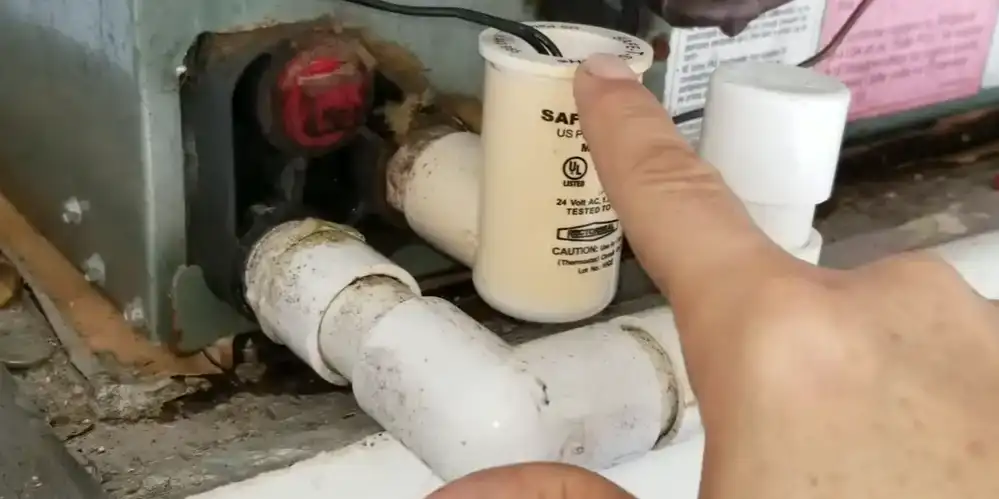
Liberty Air and Electric rolls a truck to plenty of dead systems that needed a four dollar battery or a breaker pushed back on. Nobody wins on that visit. Run these three first, in this order, cheapest and most likely first.
First, check the float switch
Find the float switch on the drain line at the air handler. Pull the top of the float out carefully and put a finger in. Water under it with a dead system means the float switch did its job, and the AC never broke. In Florida that's the most common reason a healthy system quits, because a drain line here runs year round. Clearing it brings the system straight back. A wet/dry vac sealed over the outside end of the line clears a clogged AC drain line when the clog is soft.
If a tech offers to jumper past a float switch to get you cooling again, say no. That switch is what keeps a clogged drain out of your drywall. Bypassing it turns a $200 drain call into a ceiling repair the first time nobody's home.
Second, look at the thermostat
A dark screen never sends the call for cooling. Fresh batteries first. If it stays dark on new batteries, the low-voltage side lost power somewhere. A thermostat that is not working has its own usual suspects, and one of them is the float switch you just checked, since that switch often cuts the same 24 volts the thermostat runs on.
Third, check the breaker, once
Find the AC breaker and look closely. A tripped breaker sits halfway, which doesn't look popped from a few feet away. Push it firmly to off, then back to on. One reset is fair. Storms and momentary outages here cause plenty of one-off trips.
If it trips a second time, stop. A breaker is sized to its circuit under NFPA 70, the National Electrical Code, so a second trip means something downstream is pulling more current than it should. Shorted compressor, failing fan motor, damaged wiring. Resetting into that fault just puts heat into it. Leave it off and get a tech out.
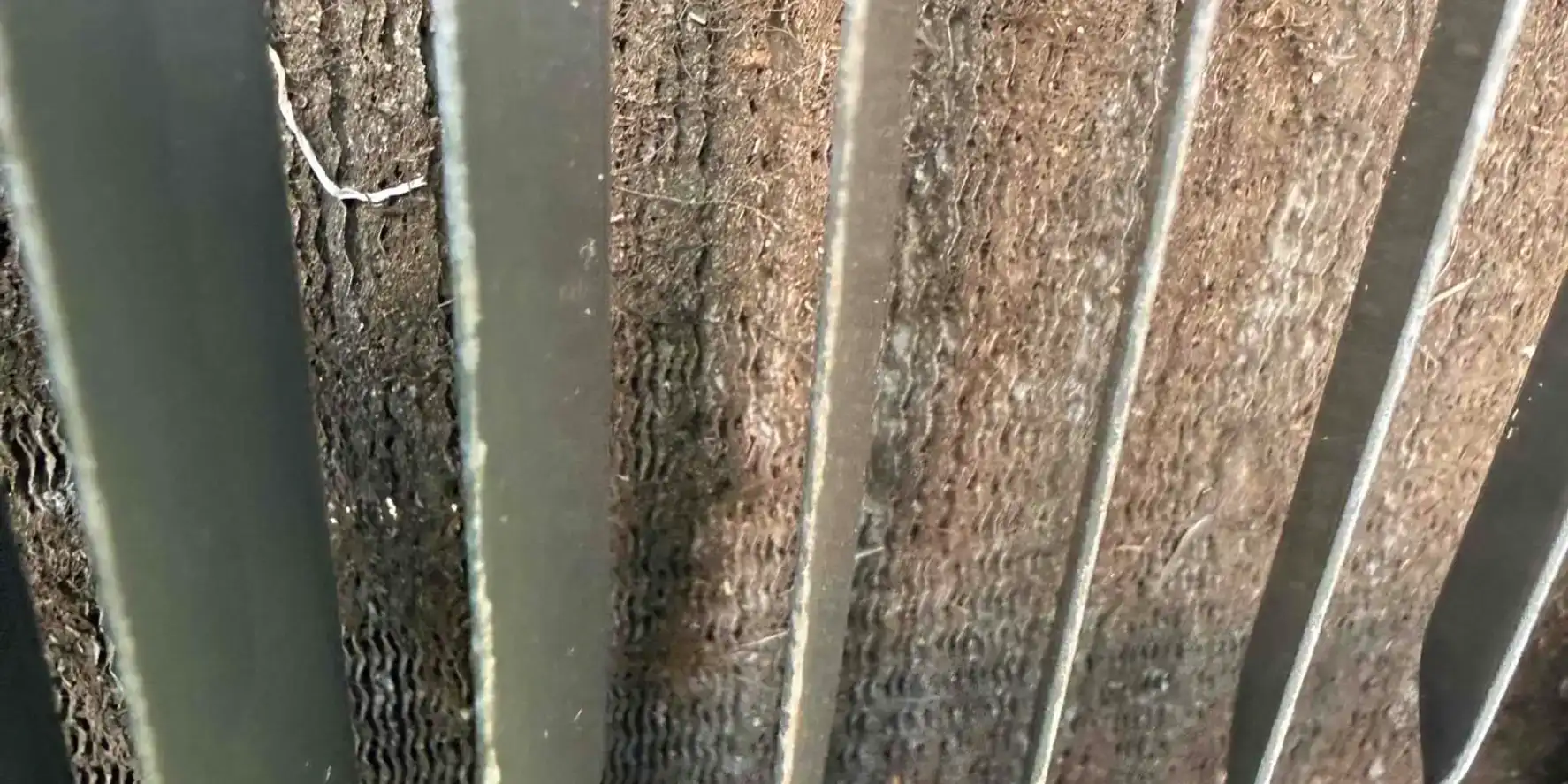
A system that starts, runs a few minutes and quits has a safety switch shutting it down, over and over.
Most people call this the AC not turning on, but the causes are different. A pressure switch watches the refrigerant circuit, and when pressure runs past what the equipment can take, it opens and drops the system out. Most of these switches reset themselves once pressure falls, which is why the system keeps having another go.
Control boards count those trips, and after a certain number they go full lockout. So if you see the stop-start twice, keep the unit in fan only until a tech gets there. Keeps some air moving through the house, and avoids expensive damage to the compressor.
A dirty condenser coil is the usual reason
High head pressure almost always traces back to the outdoor unit not dumping heat. Walk out and look at the condenser. If the fins are packed with debris, that's your likely answer. If you're comfortable with a garden hose, rinse it before you call anybody. A coil dirty enough to lock a system out is usually past what a hose can do, and it needs professional AC coil cleaning.
A condenser fan turning the wrong way
A backwards fan is easy to miss, because from the driveway the unit looks fine. Stand over the condenser while it's running. Air should be blowing up into your face. If it's pulling air down into the cabinet instead, the blade is turning the wrong way and moving almost no air across the coil, so head pressure climbs. On a unit nobody has just worked on, the usual cause is the run capacitor. A surge weakens it, and a fan motor that takes its rotation direction from that capacitor can start either way. Florida gets a lot of lightning, so we see it more than most. The fix is the capacitor, sometimes the fan motor with it, and AC capacitor replacement is a same-day job off a stocked truck.
Low pressure trips the safeties too
Pressure can fall too low as well, and the safeties catch that. On higher end systems that safety can be a transducer or a mechanical switch, depending on the manufacturer, and either way the system goes quiet and the board posts a fault code. Restricted airflow drags suction pressure down, and a packed filter does it on its own, so pull the filter and hold it to a light first. Most of the time though, a low-pressure trip is a leak, not a filter. Refrigerant doesn't get used up, so a system running low has a hole in it. Refrigerant leak detection settles that instead of another top-off.
Ran the three checks and it's still dead?
Book a diagnostic. We measure the system, show you what we find, and quote the repair before any work starts.
How Liberty Finds Why an AC Won't Start
Liberty Air and Electric works a dead system in chain order with a meter on an AC repair call, starting at the cheap end. Burnt contactor points stop everything downstream. The contactor still pulls in, but nothing crosses it, so there is no hum at the condenser. A weak run capacitor leaves the condenser humming and going nowhere, and replacing a run capacitor is how most no-start calls end. A blown low-voltage fuse makes the whole system act like it's unplugged. A meter usually sorts them quickly, and all three are cheap.
The compressor is the expensive one, and the least likely. It rarely sits silent either. A shorted compressor trips the breaker the instant it tries to start. A seized one hums, then drops out on its own overload and tries again. That's where the second trip matters, and AC compressor repair and replacement starts by testing everything around the compressor first, because plenty of condemned compressors turn out to be the capacitor or temporary lockout.
Florida breaks these parts faster than most places, for two reasons. The state records more lightning than anywhere else in the country, with the Orlando corridor in the most active stretch, and a surge takes capacitors and control boards first. The second is plain wear. Equipment here runs most of the year, so a contactor closes and a compressor starts far more often than the same unit up north. Contacts erode by how many times they close.
Because a no-start fault lands on the electrical side so often, we hold both licenses and the call stays one visit. Out in Wedgefield, air handlers sit inside the house more often than in the garage, and attic air handlers are rare because the houses are big enough not to need attic placement. The float switch still takes down plenty of them, and AC repair in Wedgefield is often a drain clearing with a service call attached. Elsewhere it's more often the electrical side of the AC system, in a breaker, a whip, or a disconnect corroded through by salt air.
Questions?
Frequently Asked Questions About an AC That Won't Turn On
Q: Why won't my AC turn on?
A: An AC that won't turn on usually comes down to a tripped float switch on a clogged drain line, a dead thermostat, or a tripped breaker. The system is a chain of switches in series, so one cheap link opening kills everything downstream at once. That's why a completely dead AC is more often a cheap repair than a compressor.
Q: What should I check first when my AC stops working?
A: Check three things first when your AC stops working. Pull the top of the float switch on the drain line and feel for water under it, which means the float switch shut the system off. Check that the thermostat screen is lit and set to cool. Then check the breaker, which usually lands halfway instead of all the way off. All three are free.
Q: Why does my AC keep tripping the breaker?
A: An AC that keeps tripping the breaker has a real electrical fault. One reset is fair, since Florida storms and momentary outages cause plenty of one-off trips. A second trip means something is drawing more current than the circuit allows, usually a shorted compressor, a failed fan motor, or damaged wiring. Leave it off after that.
Q: Should I keep resetting the breaker on my AC?
A: Don't keep resetting the breaker on your AC. A breaker is a safety device, and repeated resets force current back into whatever fault opened it. Reset once. If it holds, the trip was a one-off. If it trips again, leave it off and let a technician find the fault.
Q: Can a clogged drain line stop an AC from turning on?
A: A clogged drain line stops an AC from turning on all the time, and in Florida it's the most common reason a working system goes completely dead. Water backs up, the level rises in the pan, and a float switch opens the control circuit before the pan overflows. Nothing is damaged. Clearing the line brings it straight back.
Q: Why does my AC start then shut off after a few minutes?
A: An AC that starts then shuts off after a few minutes is tripping a pressure safety switch. High head pressure is the usual reason, from a dirty condenser coil or a fan that isn't moving air. Most of these switches reset themselves, which is why it keeps trying. Set the thermostat to fan only and book a diagnostic.
Q: Why is my outside AC unit not turning on but the inside is?
A: An outside AC unit that won't turn on while the indoor blower runs points at the outdoor half of the system. A failed contactor, a dead run capacitor, a tripped pressure switch, or a compressor that can't start will all do it. Listen at the condenser for a hum with no motion. That narrows it down.
Q: Why did my AC stop working right after a thunderstorm?
A: An AC that stops working right after a thunderstorm almost always took a surge or a momentary outage. Florida records more lightning than any other state, and the Orlando corridor sits in the most active part of it. Surges take capacitors and control boards first. Check the breaker before assuming the worst.
Q: How much does it cost to find out why an AC won't turn on?
A: Finding out why an AC won't turn on costs $49 to $99 in Florida, depending on the season and the day of the week, and that fee gets waived with an approved repair. The repairs behind a no-start call are on the cheap end for air conditioning. Drain clearing runs $150 to $300, and the small electrical parts run $75 to $450 installed.