

AC Drain Line Clearing and Water Leak Repair in Florida
Puddle under the air handler, or an AC that went stone dead? Liberty Air and Electric clears Florida drain lines and finds why they clogged.
- Cleared without stressing the line
- We find why it clogged
- Prevention is the real secret

Where the Water Comes From When an AC Leaks
Liberty Air and Electric clears clogged AC condensate drain lines across Greater Orlando and South Florida, and we don't call the job done until we know why it clogged.
In Florida humidity, a running AC pulls 5 to 20 gallons of water out of the air every day. All of it leaves the house through one PVC pipe, the condensate drain line, and that pipe can get less attention than it deserves. When water shows up outside that path, or the system shuts itself off, it usually comes down to one of six things.
Clogged condensate drain line
The most frequent of the six. Algae and bacterial slime build up inside the PVC until the line plugs, the drain pan fills, and water goes over the rim.
Float switch shut the system down
A float switch on the drain line, or in the pan at the coil, shuts the AC off before the pan overflows. The indoor fan stops, cooling stops, and you won't even hear it try to start. This is the most common cause behind calls about an AC that quit entirely. Most of the time the switch itself is fine, and the only repair is a $200 drain clearing.
Rusted or cracked drain pan
Older air handlers have metal drain pans, and those rust through. Water leaks through the pan before it reaches the drain line, so the line tests clear. The fix is a new pan.
A trap problem
A condensate line needs exactly one trap. With none, the air handler's blower pressure holds the water in the line. With two, the line air-locks. Either one makes the line drain slow and clog sooner, and those clogs get blamed on slime.
A frozen coil thawing out
When ice on the evaporator coil melts, some of the water runs off outside the drain pan, and that's easy to mistake for a clogged drain. What needs fixing is whatever froze the coil, usually an airflow or refrigerant problem.
A failed condensate pump
Systems that can't drain by gravity use a small condensate pump to push the water up and out. When the pump fails, the water stays in the system. They're less common in Florida than up north, because there are no basements here and an air handler below grade is rare. If yours sits far from any exterior wall, you may have one, even if you didn't know it was there.
If you've got water and weak cooling at the same time, look at the coil. Several days of warm air before any water shows up means the coil iced over and then thawed. There are six reasons behind an AC not cooling, and a thawing coil is the one that makes water.
A Dead AC With a Full Drain Pan Is Usually Just a Clogged Drain
The float switch shuts down the whole system to keep water off your floor, so a tripped switch looks like a major breakdown. That's why a system that won't turn on at all often turns out to be a drain problem. Before you brace for a repair quote, check the float switch on the drain line. Pull the top of the float out carefully and feel for water under it. If there's water, you're most likely looking at a drain clearing and a float switch reset, which runs $150 to $300 in Florida. You can find that out yourself before paying for a visit.
Liberty Air and Electric clears the line and the reason it clogged
- Low-pressure clearing that spares the pipe
- Float switch and trap checked every visit
- The self-care routine, taught before we leave
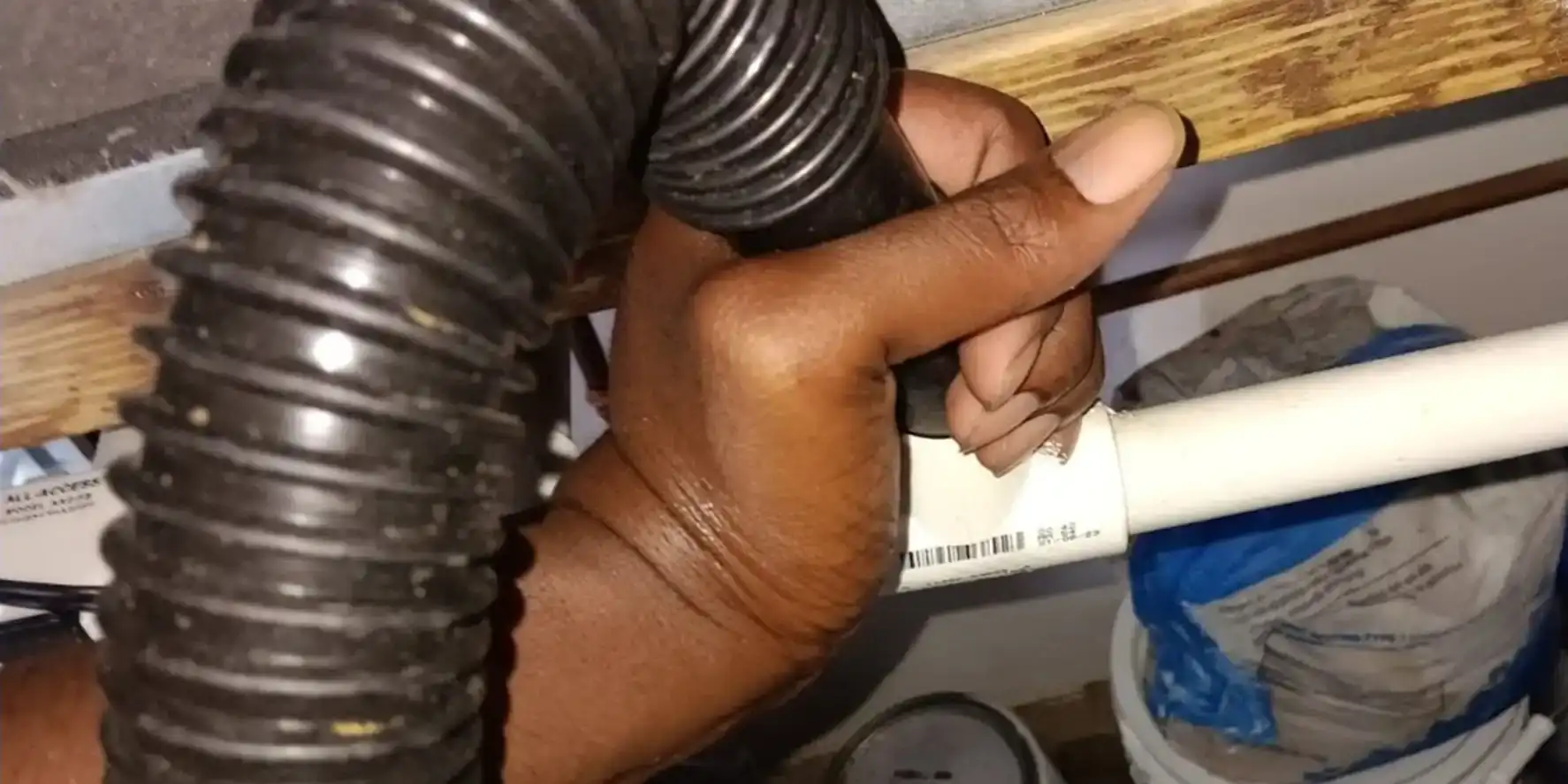
Liberty Air and Electric clears the clog on most Florida drain lines with a shop vac and then warm water, and we do it that way on purpose.
A lot of homeowners expect something with more force. Nitrogen puts a lot of pressure on glued PVC joints, and older PVC out of a hot Florida attic sometimes doesn't hold up. Crack a fitting inside a wall and you're worse off than you were with the clog.
A drain clearing in Florida mostly runs $150 to $300. While we're there we also reset and test the float switch, check the trap, and follow the water out to where the line ends outside.
When a line keeps clogging, we inspect the run. Sometimes the slope is wrong in a section nobody can get to or fix, like inside a slab or a wall. In those cases we sometimes put in a condensate pump instead, and the backups stop. A condensate pump install in Florida costs $500 to $900, depending mostly on access, and an attic install is at the high end.
All of this falls under normal AC repair pricing, and we give you the price before we start any work.
Water where it shouldn't be?
Book a visit. We'll clear the line without stressing it, reset the float switch, and show you the routine that keeps us from coming back.
The Drain Line Routine Florida Homes Need at Every Filter Change
In Florida, take care of the drain line every time you change the air filter. Our humidity keeps the line warm and wet nearly all twelve months, so slime grows year-round. Tie it to the filter change and it actually gets done.
Step one: at each filter change, pour a cup of half warm water, half white vinegar into the drain line's access opening near the air handler. The vinegar knocks back the growth before it builds into a clog. Don't use bleach. It weakens glued PVC joints over time, and it corrodes copper, including the refrigerant lines that often run in the same chase as the drain. Vinegar costs little, and a line damaged by bleach needs resealing.
Step two: put a time-release pan tablet in the drain pan every one to three months. A tech does this at a maintenance visit, but that's once or twice a year, and a Florida pan needs it more often. Condensate sitting in the pan can turn into slime, and that slime breaks loose into the line and starts the next clog.
Step three: go outside and find where the drain line ends. Mulch, grass, or dirt over the outlet can plug it from the outside end. Thirty seconds of clearing it away keeps the line draining.
If your line has no access opening for the pour, it should get one. That's a capped cleanout tee near the air handler, and it's a small job when a tech's already there. We add them during an AC maintenance visit.
We get far fewer clog calls from homes that keep up this routine, and we'd rather you keep it up than need the call.
Why New AC Systems Clog Drain Lines More Than Old Ones
Liberty Air and Electric gets more drain clog calls on newly installed systems than we did on the older systems they replaced.
First, modern systems remove more humidity from Florida air than older ones, and all of that added moisture flows through the same drain pipe.
Second, evaporator coils used to be copper, and copper resists the slime that grows in drain lines. The EPA has registered copper alloys as antibacterial. For decades, condensate coming off older copper-tubed coils carried a little of that effect down to the drain. Newer coils are all aluminum, so there's none of that, and zoogloea, the slime colony that blocks drain lines, grows faster in condensate off an aluminum coil. Our interpretation: that's why technicians pull clogs from young systems while thirty-year-old units drained with far less trouble.
Variable-speed systems are the exception in our calls. They remove the most humidity of any system type and clog the least. It's hard to know exactly why this is the case, but our experience tells us it's a combination of things. It could be more careful installs, owners who keep up the maintenance when they buy high-end equipment, or the long, low-speed cycles they run nearly all the time, which keep condensate moving through the pan and line.
Traps, Slopes, and the Drain Lines That Keep Clogging
When a drain line keeps clogging, it's usually how the line is run, not slime. A condensate line needs exactly one trap. We find lines with no trap, where the air handler's blower pressure pushes against the water as it drains. Then there are lines an earlier repair left with two traps, which air-lock and drain very slowly. Vinegar won't fix a piping mistake.
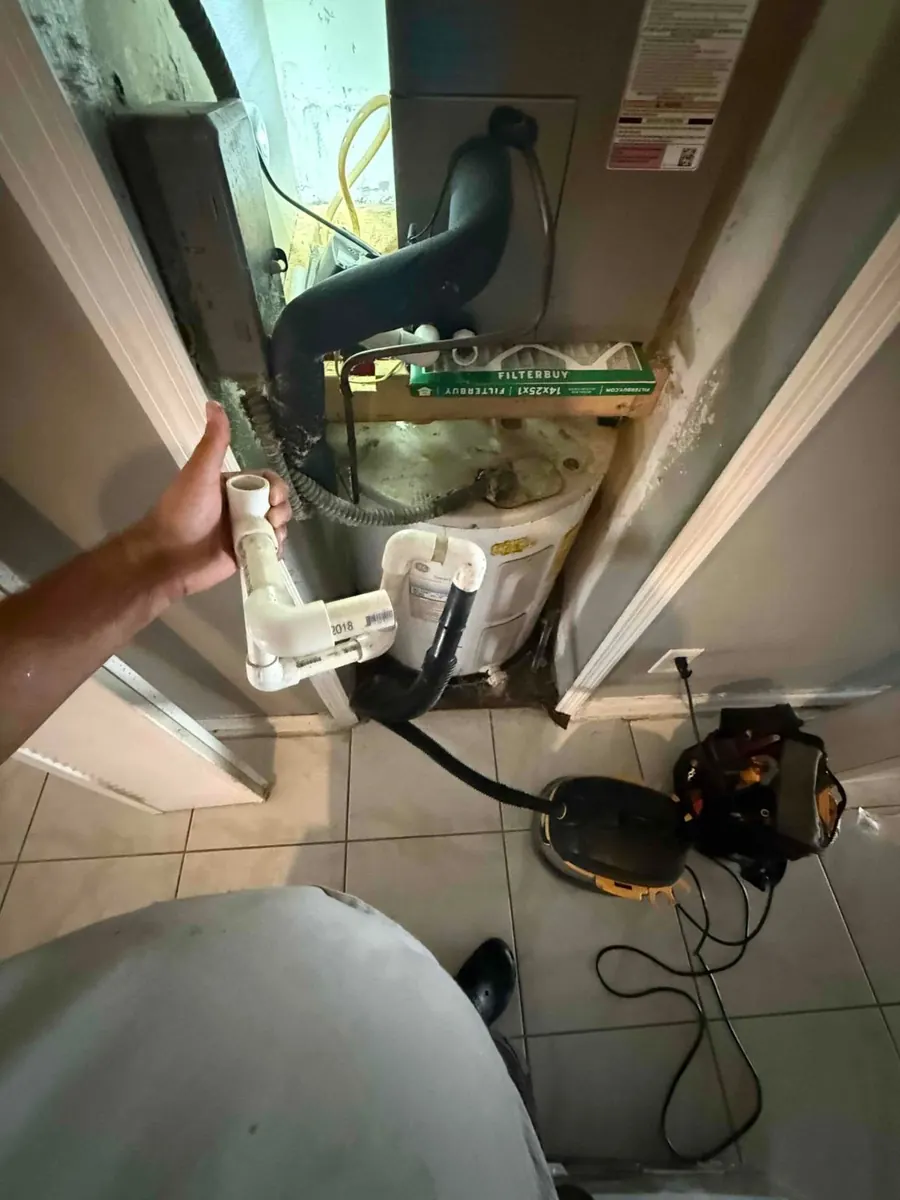
The other common cause is a long horizontal section. A line with little slope holds more standing water, and that's where clogs start.
Mid-rise condos, where AC drain lines are shared between units
Mid-rise condo buildings (three-to-five-story) generate more drain clog calls to us than any other building type. Many drain several units into shared condensate piping, so your own line can be clean while the shared line is blocked. When it backs up, the water comes out in the lowest unit on that run, and that owner gets the bill for a building problem. With shared drains, a condo AC job depends on the building's piping as well as the unit.
High-rise buildings cause us fewer drain problems. Our theory is that high-rises are more often recent builds, and their drain lines drop farther straight down. If a condo clog keeps coming back, the condo association needs to get involved.
Attic units, where a drain clog costs the most
The attic gives a drain line the best gravity flow of any air handler location, and the drop drains it quickly, so attic lines clog no more often than others. The exception is an unusually long attic run, which can sag and hold water, and those aren't common in Florida. The difference is what an overflow costs. From an attic unit, the water comes through the ceiling, so now you're paying for drywall, insulation, and paint on top of the $200 drain call. That's why the Florida Building Code requires overflow protection for attic units, which in practice usually means a secondary drain pan, and that pan's float switch is the final protection against a ceiling leak.
If your air handler's in the attic, do the vinegar pour at every filter change, no exceptions. A maintenance plan costs a lot less than a ceiling repair.
In Wedgefield, air handlers sit in garages or inside the living space far more often than in attics, so for our Wedgefield customers the same clog usually costs a floor cleanup.
Questions?
Frequently Asked Questions About AC Drain Lines and Water Leaks
Q: Why is my AC leaking water?
A: When your AC is leaking water, the cause is most often a blocked condensate drain line. A Florida AC pulls gallons of water out of the air every day, and all of it leaves through one PVC line. Algae and slime plug that line, the drain pan fills, and the water ends up on the floor or through the ceiling. Less often it's a rusted drain pan, a missing or doubled trap, a frozen coil thawing out, or a failed condensate pump.
Q: How do I unclog my AC drain line myself?
A: To unclog your AC drain line yourself, seal a wet/dry vac over the outside end of the line, and it'll pull out a soft clog. To keep it from clogging again, pour a cup of half warm water, half white vinegar into the line's access opening at each air filter change. If there's no access opening near the air handler, a tech can add a capped tee. It's a small job.
Q: Can I pour bleach down my AC drain line?
A: No, you shouldn't pour bleach down your AC drain line. Bleach weakens glued PVC joints over time and corrodes the copper refrigerant lines that often share the chase, and its fumes rise back out of the access opening next to the air handler. Vinegar mixed half and half with warm water breaks down the organic slime and leaves the glued joints intact. It's also safe on the drain pan's coating and on whatever is around the outlet outside.
Q: Why did my AC shut off completely with water in the pan?
A: When your AC shuts off completely with water in the pan, the float switch shut it off. The switch sits on the drain line or in the pan at the coil and cuts the system before the water reaches the floor. Most people with a dead unit figure the compressor or control board went, but check the float switch first. If there's water under the float, you need a drain clearing and a float switch reset, and you're not looking at an equipment repair.
Q: How much does AC drain line cleaning cost in Florida?
A: AC drain line cleaning in Florida mostly costs $150 to $300. That covers finding the clog, clearing it with low pressure, resetting the float switch, and checking that water flows from end to end. A line that keeps clogging can need more than a clearing, like a trap correction, a cleanout retrofit, or a condensate pump. We quote those after we inspect the run and before any work starts.
Q: How often should an AC drain line be cleaned in Florida?
A: In Florida, an AC drain line should be cleaned at every filter change with the vinegar pour, a cup of half warm water, half white vinegar. That means monthly, and never longer than every three months, whatever filter you run. Florida drain lines stay warm and wet nearly all twelve months, so slime builds faster here than up north. We get far fewer clog calls from homes that do the pour at each filter change than from homes that skip it.
Q: Do AC drain pan tablets actually work?
A: Yes, AC drain pan tablets work, and they treat the drain pan, which the vinegar you pour in the line never reaches. Condensate sits in the pan first, and standing water there grows a gel that breaks loose and starts the next clog. A time-release tablet keeps that growth down between filter changes.
Q: Why do condo AC drain lines clog so often?
A: Condo AC drain lines clog so often mostly because a lot of buildings run several units' condensate into shared piping. Your unit's line can be clean while the shared line it feeds is blocked, and a clog in the shared line below you can push your neighbors' water out through your unit. Mid-rise buildings, three to five stories, have it worst. Clearing one unit's line there doesn't fix the shared line, so the condo association usually has to get involved.
Q: Does an attic AC unit need more drain line care?
A: Yes, an attic AC unit needs more drain line care than any other install location, because when it fails the water comes through a ceiling instead of onto a garage floor. Florida code requires overflow protection under attic units for that reason, usually a secondary drain pan with a shutoff switch. Attic lines clog at about the same rate as others, since gravity drains them well, unless the run is unusually long and sags. An attic clog costs much more when it happens. Do the vinegar pour every time, put the system on a maintenance plan, or both.