

Condo AC Repair and Replacement for Florida Buildings
Liberty Air and Electric works condo AC across Greater Orlando and South Florida, from garden-apartment splits to high-rise water-source heat pumps. We handle the association, the access and the schedule alongside the equipment.
- Association, management and permit paperwork handled
- Water-source heat pump and split system experience
- Access planned before the truck rolls, crane included

What Makes Condo AC Different From a House
Liberty Air and Electric replaces and repairs condo air conditioners across Florida, and the equipment is rarely the hard part. In a house, a dead AC means a homeowner, a permit and a truck. In a condo it's the homeowner, the association and the management office, and sometimes a crane company on top of that.
Four parties have to agree on a date, and the job waits on whoever takes longest to answer.
Approval comes before the work
Most associations want paperwork before anyone touches equipment. Some want the permit in hand first, and some want a security deposit check.
The equipment has to physically arrive
A service elevator to the roof adds nothing to the price, but stairs or a crane do. The building decides which one you get, and we find out at the site visit.
Your unit shares systems with the stack
In high-rises with water-source units, drain lines, refrigerant chases and a pressurized water loop all run vertically through every unit above and below you. Work on yours can mean shutting something off for all of them.
The exact unit may not exist right now
Water-source ACs are built for the closet it sits in, and manufacturers are running behind on the refrigerant transition. Sometimes no distributor has the spec your building needs.
So we ask the building all of that before we write the estimate.
Liberty Air and Electric handles the building, not just the equipment
- Association requirements confirmed before the estimate
- Access and crane needs assessed on site
- Stack shutdown scheduled with building management
How Liberty Coordinates a Condo AC Job
Liberty starts a condo job with what the building requires. That's what the association has to approve, how equipment gets in and out, and in a high-rise, what has to be shut down and for how long. We ask all three before we put a date on anything.
Every building sets its own requirements. Some want a certificate of insurance and a work window. Others won't approve anything until the permit is physically in hand, which is backwards from how a job usually goes. We pull the Florida Building Code permit for the work either way. A few want a security deposit check held against damage to elevators and corridors. How long they take to answer is all over the map.
Building management is a separate party from the association, and they control the service elevator, the loading area, and who can shut a water stack down. Add a crane and that's a fourth schedule to fit.
Liberty gives a date the building can actually hold. It's usually later than you'd get on a house, and we book it that way so you're not rescheduling around the elevator and the association a second time. The same AC replacement work happens either way.
Condo AC out, and the building has its own process?
Book a visit. We'll tell you what your association needs, what access is going to cost, and what the realistic date is.
Water-Source Heat Pumps and Why the Building Drains the Stack
Liberty Air and Electric services water-source heat pumps throughout Florida high-rises. A lot of the water-source equipment in South Florida buildings was built in South Florida. FHP Manufacturing in Fort Lauderdale has been building these for decades, and they ship under the Bosch FHP name now. Above roughly ten stories it's almost always a water-source system, because refrigerant line sets have manufacturer limits on vertical rise and there's nowhere to put one outdoor condenser per unit. The building runs a pressurized water loop up through the structure instead, each unit dumps its heat into that loop, and a cooling tower at the roof gets rid of it.
Central chillers are another way to cool a high-rise, common in commercial buildings and rare in residential ones. Probably comes down to who pays.
Two separate vertical pipe systems run through a stack. The condensate drain carries the water your AC pulls out of the air, and it moves by gravity. The condenser water loop is pumped and pressurized. Most of the time the shared condensate piping is why condo drain lines clog more often than the ones in houses, and a clogged drain is a nuisance. The loop is a bigger problem, because there's no drip stage on a pressurized connection. The water keeps coming until somebody kills the pumps.
That's why a building drains an entire stack to let one unit get replaced, and they aren't being difficult. The cabinet in your closet has factory-installed ball valves that are supposed to isolate your unit, but those valves depend on the valve out on the stack line, and that one isn't part of your unit. It usually went in with the building, and it has very likely never been closed since. Nobody knows whether it holds until they close it, and with thousands of gallons moving through that riser, no building manager is going to risk it. Draining the stack means that valve doesn't matter, and the prep usually runs a couple of days.
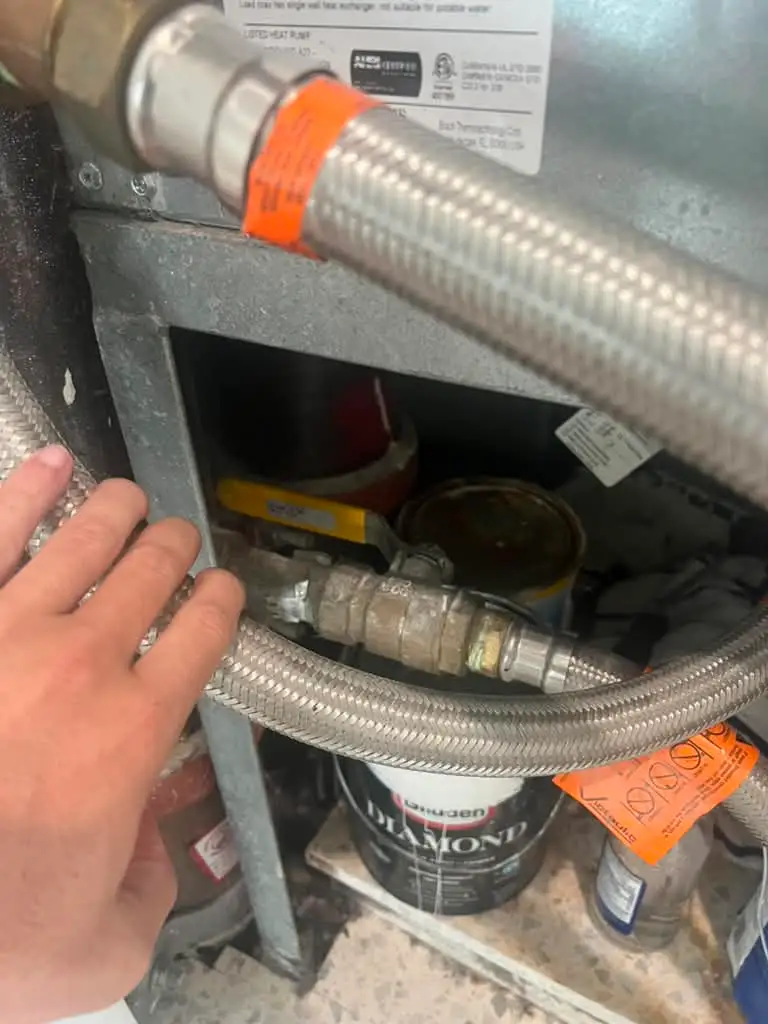
Liberty plans condo work around that. We ask about the shutdown process early, because the building's answer sets the date. We don't have much pull with a building, and you do. So if the date the building gives you is further out than you can live with, call the management office yourself and ask about moving it up. They answer an owner differently than they answer us. Refrigerant work has its own condo problem, because copper line sets share chases between units.
Getting Equipment In and Out of a Condo
The same equipment prices differently from one building to the next, and it comes down to how it gets in and out. Roof access usually decides whether we need a crane, so Liberty looks at that on site before pricing a replacement.
In condo buildings that aren't water-source, we need a crane 60 to 70 percent of the time. Those buildings run split systems, so every unit has its own outdoor condenser, and that condenser has to get to the roof and the old one has to come back down. A water-source building doesn't have an outdoor condenser at all, so there's nothing to crane.
The equipment goes up the stairs or a crane lifts it, and that runs roughly $500 more around Florida. It's also the charge most often left off a quote that looks cheaper than everybody else's. Once in a while a building has a service elevator that runs to the roof, and access adds nothing.
In a condo there's no attic to work in, so getting to duct runs means opening drywall, and the drywall repair becomes part of the project scope. We put that in the estimate before the job starts.
Why Water-Source Repairs Follow Different Math
Water-source equipment costs more to buy than a comparable split system, and the major parts are expensive on their own. Liberty repairs these systems as well as replacing them. The warranty generally runs shorter, commonly around five years where a residential split runs ten. Repairs cost more too, because the compressor sits down inside a closet chassis and a tech can't just easily access it.
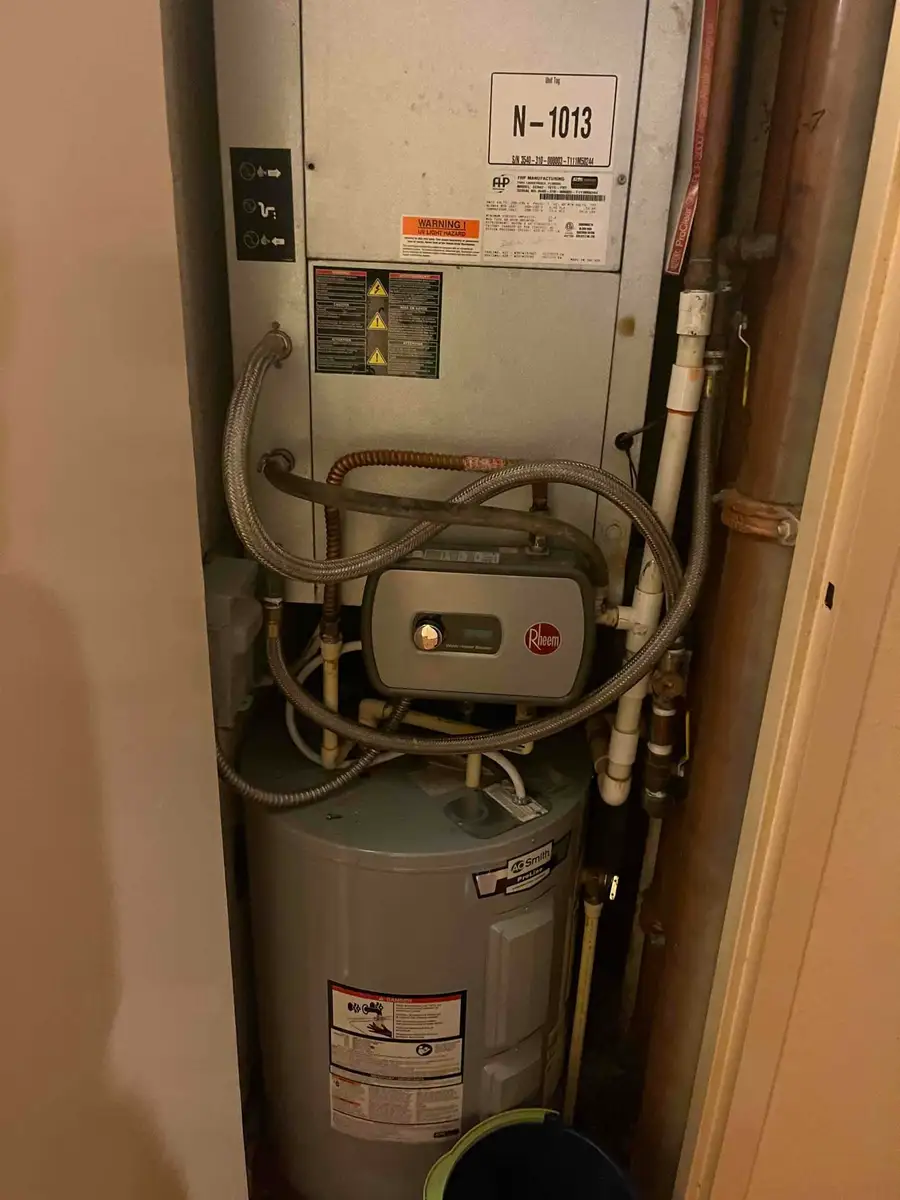
When a building's cooling tower loop is poorly maintained, scale and sediment settle on the water side of the heat exchanger and the unit can't dump its heat into the loop. That can create problems slowly or all at once, but the call almost always comes when the system shuts itself down on high pressure, and to you it looks exactly like an AC that will not turn on at all.
The fix is usually a backflush, not a replacement. A new heat exchanger is very expensive. The short warranty means most of these land on units already out of coverage, so the backflush is usually the cheaper move and the only practical one.
We don't publish price ranges for water-source work, and that's on purpose. What one of these jobs costs depends on building access and whether a crane is involved. The stack shutdown adds to it, and so does whether the unit is still under warranty. A number that ignored all that would be wrong by the time we got to your building. We quote the job in front of us. For a straightforward split system in a low-rise condo, normal AC repair pricing applies.
Sometimes the Unit You Need Is Not Available
Liberty runs into shortages on vertical stack heat pumps. A lot of that is manufacturers running behind on the industry's federally scheduled move to A2L refrigerants, and sometimes we can't get the exact unit a condo needs.
Stack equipment is built for its closet, which means it's “handed,” so it comes in a left and a right hand return configuration. Say your building needs a three-ton left-return. When no distributor has that configuration, the date moves until one does.
So Liberty checks availability before promising a date. We'd rather tell you the unit isn't out there, even when that costs us the job, and we're not taking a deposit on equipment that doesn't exist.
Where Liberty Works on Condo AC
Liberty Air and Electric covers condo AC across Greater Orlando and South Florida. The South Florida coast has the tall buildings, so water-source heat pumps, riser shutdowns and cranes are routine. Greater Orlando runs more toward mid-rise and garden-style buildings, where the equipment is usually a conventional split system and what holds things up is access and association approval. We're licensed for HVAC and electrical in both metros, so panel and disconnect work that turns up during a replacement doesn't need a second contractor and a second approval.
Questions?
Frequently Asked Questions About Condo AC
Q: Why does replacing a condo AC take longer than replacing one in a house?
A: Replacing a condo AC takes longer than replacing one in a house because more than one party controls the schedule. A condo needs the association, building management, sometimes a crane company, and in a high-rise a decision about shutting down the water riser serving the whole stack. Those waits run one after another.
Q: What is a water-source heat pump in a condo?
A: A water-source heat pump in a condo is an air conditioner that rejects heat into a building-wide water loop instead of an outdoor condenser. A pressurized loop runs up through the building, your unit trades heat with it, and a cooling tower at the roof gets rid of that heat. Above roughly ten stories it's the only practical option.
Q: Why does my building have to shut water off to the whole stack?
A: Your building shuts water off to the whole stack because the valve that isolates your unit isn't part of your unit. It sits on the riser, went in with the building, and has usually never been closed since. Nobody knows whether it holds until they close it, and a pressurized loop keeps feeding if it fails. Prep runs a couple of days.
Q: Does an HOA have to approve a condo AC replacement?
A: An HOA or condo association almost always has to approve a condo AC replacement before work starts, and requirements vary more than any other part of the job. Some want a certificate of insurance and a work window. Others want the permit in hand before approving, plus a security deposit check against damage to common areas. Liberty asks what yours requires.
Q: Does it cost more to replace an AC in a high-rise condo?
A: Replacing an AC in a high-rise condo costs more only when getting equipment in and out is hard. A service elevator to the roof adds nothing. Carrying a unit up stairs or renting a crane adds roughly $500 around Florida. A lot of owners are surprised a fifteenth-floor job prices like a normal one. Water-source equipment itself is the bigger factor.
Q: Are water-source heat pump repairs more expensive?
A: Water-source heat pump repairs generally cost more than the same repair on a split system, and most of that is access. On a split system the compressor sits in an outdoor cabinet a tech walks up to, and on a water-source unit it's buried in a closet chassis, so reaching it is most of the labor. Liberty quotes before starting.
Q: How long is the warranty on a water-source heat pump?
A: The warranty on a water-source heat pump generally runs shorter than on residential split equipment, commonly around five years where a split runs ten. A water-source owner is more likely to be out of warranty when a major component fails, and those parts are expensive, so more of that repair comes out of your pocket.
Q: Can a clogged heat exchanger be cleaned instead of replaced?
A: A clogged heat exchanger can usually be cleaned instead of replaced, and a backflush is the normal first move. The water side fouls when a building's cooling tower loop is poorly maintained, and flushing costs a fraction of a new heat exchanger. The short warranty means these often happen out of coverage, so the backflush is frequently the only practical option.
Q: Why can I not get the exact condo AC unit I need?
A: You may not get the exact condo AC unit you need because stack equipment is built to one configuration and the industry is behind on the A2L refrigerant transition. A vertical stack unit is handed to its closet, so a three-ton left-return won't substitute for a three-ton right-return. When distributors are short that spec, scheduling can't fix it.