

AC Coil Replacement in Florida: Evaporator and Condenser
Coil leaking, or quoted for one? Liberty Air and Electric replaces evaporator and condenser coils across Florida.
- All-in quotes, refrigerant included
- Warranty math run first
- Coil vs. system, answered straight

Which AC Coil Is Failing, and How It Shows Up
Liberty Air and Electric replaces AC coils across Greater Orlando and South Florida. Most come in as a no-cool or blowing-warm call. So the first job is finding which coil is leaking. Then we decide whether replacing that coil makes sense, or whether it's time for a new unit. The warranty usually settles that one.
Your AC has two coils. The evaporator coil sits inside at the air handler and pulls heat out of your air. The condenser coil wraps around the outdoor unit and dumps that heat outside. Six things point at a leak.
Ice on the coil or copper line
The clearest leak sign, as long as air still comes out and it's just warm. A packed filter freezes a coil too, so check that first.
Cooling that faded over weeks
A leak drains capacity slowly. Your house takes longer to pull down each week. When a part quits you notice it that day, so a slow fade points at the refrigerant charge instead.
A recharge every season
Refrigerant doesn't get used up. A system that needs gas every spring has a hole in it, and the coil is the most common place we find it. A yearly top-off just buys time until the next refill.
An oily stain on the coil
Refrigerant carries oil, and the oil comes out with it. A dark greasy patch on the coil or a fitting is where it's getting out. On an older system that stain is usually all we need.
The refrigerant sensor tripped
Air handlers built for the new A2L refrigerants carry leak sensors. The system shuts cooling down on its own and keeps the fan running. When one trips, the coil is the first place we look.
Salt-eaten condenser fins
Salt air near the coast eats fins and pits tubing all year. The system stops keeping up on hot afternoons. That's a condenser coil problem, and it gets quoted differently.
You can sort a coil problem from a blower problem before you call anybody. Put your hand at a supply vent with the system running. Weak or warm air points at the coil or the charge. No air at all and you're looking at the blower or an electrical issue. An AC that stopped blowing cold air has six possible causes, and the coil is only one of them.
If the Coil Quote Doesn't Include Refrigerant, It Isn't the Whole Quote
A coil replacement opens the refrigerant circuit, and a system that leaked down flat can need its whole charge replaced. That gas has a real cost, and so does the filter drier. Some quotes leave both out so the number sounds smaller on the phone. Ask for the all-in number with refrigerant, the drier, and labor in it. That's the number to compare against another quote.
Liberty Air and Electric runs the warranty math before the coil math
- Leak confirmed before any coil is condemned
- Replacement coils matched against the AHRI listing
- All-in pricing before work starts
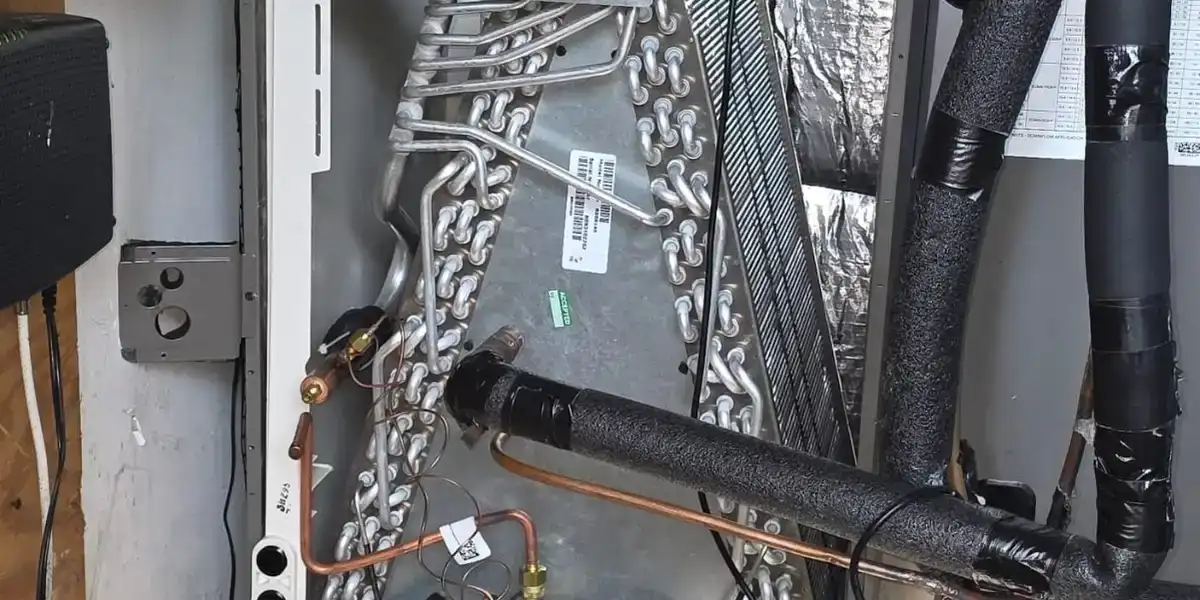
Liberty techs replace evaporator coils about four times as often as condenser coils. The evaporator is the more fragile of the two. The tubing is thinner, it sits wet nearly twelve months a year here, and every hour the system runs it pulls household air across it. Moisture plus whatever is in that air can create pinholes. The textbooks call that formicary corrosion. You don't feel it until the refrigerant is already going.
Unfiltered air leaves a film of dust on the coil, and that dust holds condensate against the tubing. A filter that fits right and a sealed return are cheap next to a coil replacement. Almost always, what loads an evaporator coil with dirt is bypass air getting around the filter.
A2L refrigerants put a leak sensor in the air handler
The refrigerants replacing R-410A are rated mildly flammable, so new air handlers carry refrigerant leak sensors. Equipment built to UL 60335-2-40 shuts the compressor down when the sensor picks up a leak and keeps the blower running to clear the refrigerant out. This is good news. Safety measure and you can catch the leak sooner because the unit actually shuts off.
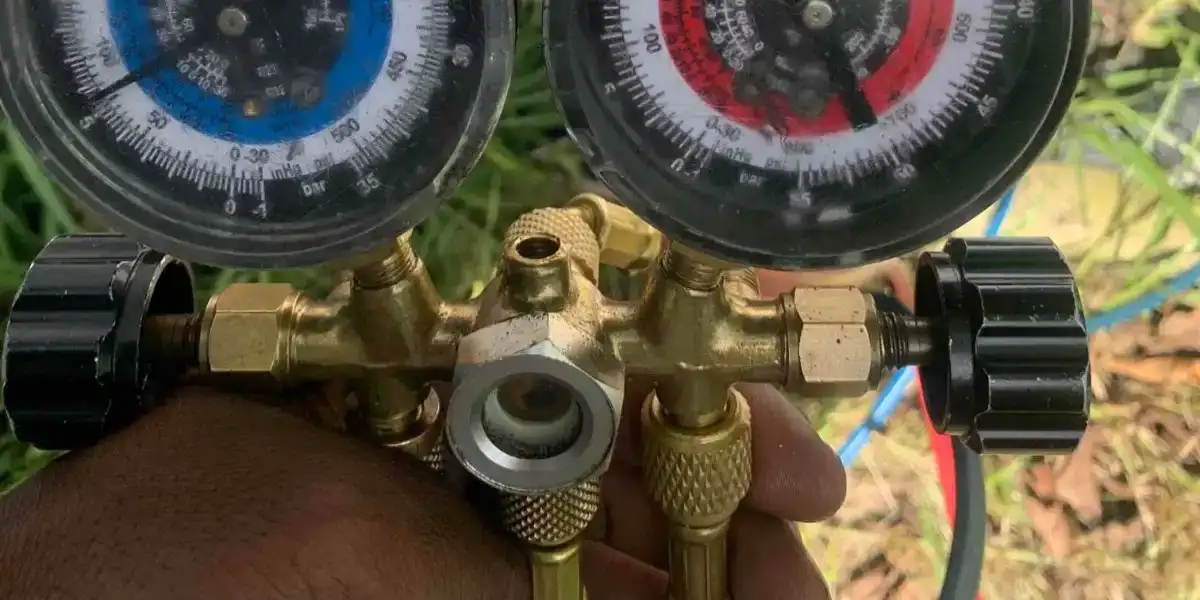
Warranty status decides most coil jobs. With the coil under parts warranty the manufacturer covers the part, and you pay labor, refrigerant, and the filter drier. In Florida that runs around $900 to $1,500, and on a system that otherwise checks out it's usually money well spent.
Out of warranty a new evaporator coil runs $1,800 to $3,000, and that's hard to justify against putting the same money toward replacing the system. Aftermarket coils cost less and Liberty doesn't install them. That job still costs enough that if something fails afterward, you're into a second big repair on a unit no manufacturer stands behind.
Refrigerant cools and lubricates the compressor on its way through, so a system that ran flat for weeks ran that compressor hot and dry. Putting a new coil on a 15-year-old compressor that just spent a month running starved is betting $3,000 on a part that's just been through a lot of stress. We don't want to take that bet.
Coil repair mostly isn't a practical thing. You can braze a coil in theory, but that braze sits on a part running under pressure and vibration all day, so we generally won't do it. On an older system you want one or two more seasons out of, a stop-leak product on a pinhole is the one patch worth trying. We run a real leak search first so everybody knows what's getting patched.
Quoted for a coil?
Book a diagnostic. We'll confirm the leak, run the warranty math, and give you the all-in number, with a straight answer if the system deserves the money more.
What a Complete AC Coil Replacement Includes
Liberty Air and Electric opens the sealed refrigerant circuit on every coil replacement. Swapping the coil is the part you see, and the circuit work around it is what makes the repair last.
We recover the leftover refrigerant into a recovery tank, never vent it. Then the old coil comes out and the new one goes in, matched to the condenser it runs with. We check that pairing against the AHRI directory, because a coil and condenser that aren't a listed combination can cost you capacity and efficiency even when both parts are fine. A new filter drier goes in every time the circuit gets opened. It catches the moisture and debris that get in while the lines are open, and skipping it is how acid ends up circulating through a brand-new coil. Then we pull the system down to a deep vacuum to prove the circuit is tight and dry. Then charge to superheat, subcool, or weigh in depending on what the system calls for.
A system that leaked down flat needs a full charge, and on today's refrigerants that's a real chunk of the bill. It's the biggest reason two coil quotes on the same house can land far apart. One priced the gas and the other one brings it up after the work starts. We give you the whole number before we start, the same way every AC repair on our board is quoted, and the coil numbers sit with what every common AC repair costs in Florida.
Coils Are the Part the AC Brand Actually Makes
Most of a modern air conditioner is built by companies whose name never shows up on the cabinet. The compressor in a typical condenser comes from a supplier like Copeland, and the motors, boards, and valves get sourced the same way across competing brands. Coils are still usually designed and built by the manufacturer itself, so the coil is where one AC brand actually differs from the next.
A brand's coil can be the best thing about it, and the same brand can turn out a bad run of coils for a stretch of years. The manufacturer doesn't put out a notice when that happens, so contractors find out from the warranty calls.
That's why a contractor's brand pick is worth more than a review score. A company replacing coils every week across thousands of local systems knows which coils have been holding up. And when a bad coil year does show up, an installer with volume can lean on the distributor and the manufacturer to get warranty coverage approved. A homeowner calling in alone usually can't.
Condenser Coil Replacement Is Usually a Different Conversation
Liberty replaces condenser coils far less often than evaporator coils, and quotes them differently. The outdoor coil is tougher by design since it sits outside. But outside in South Florida means near the coast, so salt air eats the fins and pits the tubing years faster than it does inland. Around Greater Orlando it's more often physical damage, debris, and age.
A condenser coil replacement runs $1,100 to $2,200 under warranty and $1,900 to $3,500 without, and past ten years old that spend rarely beats a new system. We quote the coil when the warranty and the system's condition support it, and we'll say so when the same money does more somewhere else. The ranges and what moves them sit with the condenser coil numbers in the Florida repair pricing rundown.
Questions?
Frequently Asked Questions About AC Coil Replacement
Q: How much does AC coil replacement cost in Florida?
A: AC coil replacement in Florida costs $900 to $1,500 for an evaporator coil under parts warranty and $1,800 to $3,000 without coverage. Condenser coils run $1,100 to $2,200 under warranty and $1,900 to $3,500 without. Refrigerant and access impact every one of those numbers, so get the all-in number before you compare two quotes.
Q: Can a leaking AC coil be repaired instead of replaced?
A: A leaking AC coil almost never gets repaired instead of replaced. Brazing a leak shut is possible, but that joint runs under pressure all day, so Liberty generally won't do it. The exception is a stop-leak product on an older system a homeowner wants one or two more seasons from. Everything else gets a new coil.
Q: Should I replace the evaporator coil or the whole AC unit?
A: Replace the evaporator coil when the parts warranty covers it and the rest of the system checks out. Replace the whole AC unit when the coil is out of warranty, because $1,800 to $3,000 on an aging system rarely beats putting that money toward replacement. A compressor that ran low on charge tips the call further toward the system.
Q: How long do evaporator coils last in Florida?
A: Evaporator coils in Florida last anywhere from a handful of years to the life of the system. The coil sits wet nearly all twelve months here, so corrosion works faster than it does up north. Filter set up and habits, coil chemistry, and plain manufacturing luck decide which end of that range a coil lands on.
Q: What is the difference between the evaporator coil and the condenser coil?
A: The evaporator coil sits inside at the air handler and pulls heat out of your air. The condenser coil wraps around the outdoor unit and dumps that heat outside. In Liberty's own calls the indoor coil fails about four times as often, because it's thinner, wetter, and more fragile than the outdoor one.
Q: Why did my evaporator coil fail early?
A: An evaporator coil that failed early usually took on unfiltered air, and years of dust plus constant condensate opened pinhole leaks in the tubing. Some early failures are the coil itself. Manufacturers turn out a bad run of coils once in a while, and contractors only find out which brand and which years after the failures start.
Q: Do the new A2L refrigerants change coil replacement?
A: The new A2L refrigerants change coil replacement in two ways. The replacement coil has to match the refrigerant the system runs, and air handlers built for A2L carry a leak sensor that shuts the compressor down and keeps the blower moving air until the refrigerant clears. Neither changes what a complete coil job includes.
Q: Why does an AC coil quote include refrigerant and a filter drier?
A: An AC coil quote includes refrigerant and a filter drier because the job can't be done right without them. Opening the circuit means recovering the charge and weighing a fresh one back in, and a system that leaked out flat can need a full charge. The drier catches the moisture that opening the lines lets in.