
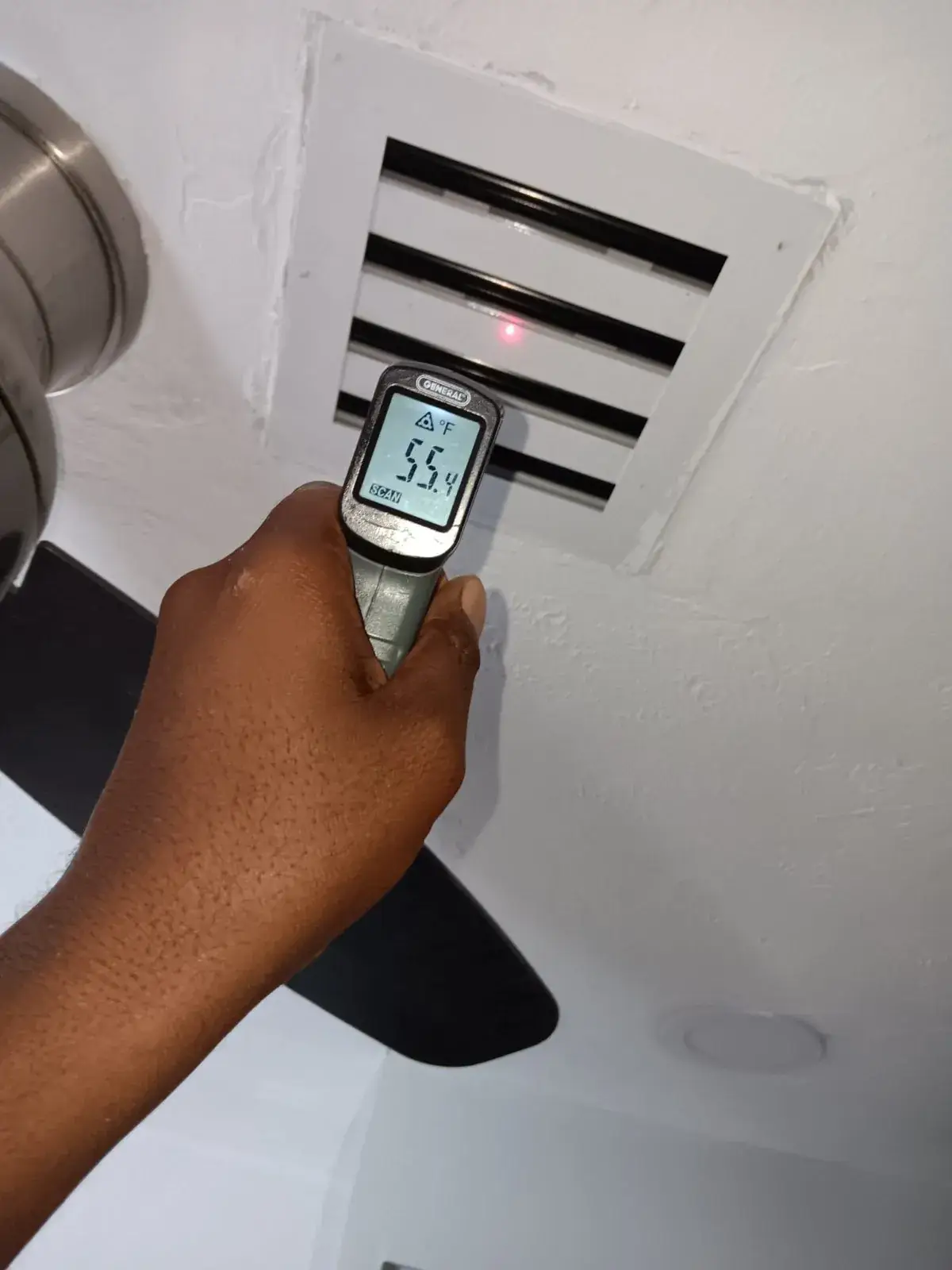
The number that actually matters is not on your thermostat
You set the thermostat to 74, the thermostat says 74, and the house still feels clammy. The towels never quite dry. What you're feeling is the water in the air. In Florida the AC has to hit the temperature and pull the humidity out, and it can do the first one and still miss the second.
The EPA's guidance on moisture and mold says hold indoor humidity below 60 percent, ideally between 30 and 50. In Florida, 45 to 55 percent is the realistic target all year, and that's what we measure against on a sticky-house call. Sit above 60 percent for long stretches and dust mites and mold usually follow, which is where the musty closet comes from.
Your AC only pulls water out of the air as a side effect of cooling. Warm household air hits a cold indoor coil, water condenses on the coil and runs out the drain. That only happens while the compressor is running. Outdoor dew points sit in the low-to-mid 70s most of the summer here, so moisture is pushing into the house through every gap and every open door. So the system has to run long enough to pull that water out, and moisture can't be coming in faster than it goes out.
Two free things before any equipment conversation. Set the thermostat fan to AUTO instead of ON. A fan running all the time blows air across the wet coil between cooling cycles and re-evaporates the water you just paid to remove. Then check that the condensate side is clear, because the system can only take moisture out if the water actually leaves. Then four mechanisms, in the order we work them on a call, free checks first.
Mechanism 1: Stop letting the moisture in
Whatever moisture you keep out of the house, the AC never has to pull it back out. The fixes run from free to expensive, and most sticky houses get handled at the free end.
The free end. Keep doors and windows closed during the day, and make sure they seal when they're shut. Run the bath fan during and after every shower, and the kitchen hood when you cook. Then check that both of those actually vent outside, because a lot of Florida bath fans just dump wet air into the attic.
The middle. Weatherstripping, door sweeps, and sealing the obvious penetrations. Cheap, and it works.
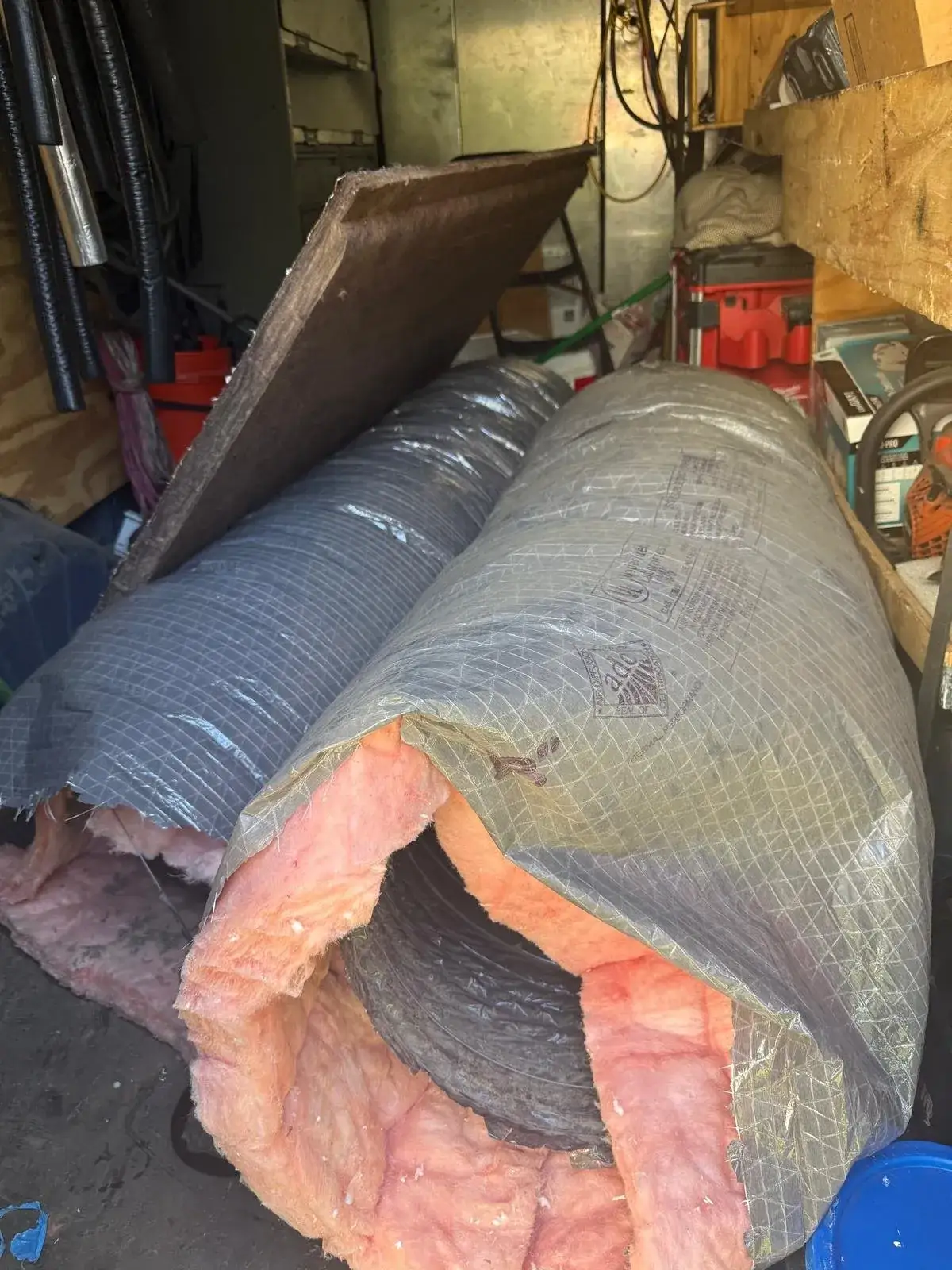
The Florida-specific one we check on every sticky-house call: return duct leaks. Return ducts run through an attic sitting at 95 to 120 degrees with outdoor-level moisture all summer. A leaky return doesn't just waste energy. It pulls that hot, wet attic air into the system and blows it through the house, so the AC spends all day pulling out moisture it brought in itself. If the house got sticky gradually over a few years instead of all at once, duct condition is worth ruling out early.
The expensive end. Whole-house air sealing with blower-door testing. That's real money, and in an older Florida home it drops the moisture load everything else has to work against.
Mechanism 2: Confirm the AC was sized right in the first place
Sizing is the hard one, because nobody can change it after the system is in.
An oversized AC cools the air fast and shuts off. A lot of people hear that and think it's a good thing. Pulling moisture out takes runtime. The coil has to stay cold and wet long enough for the water to condense and drain instead of re-evaporating when the cycle ends. An oversized system hits the temperature target in eight minutes and short cycles all day. You end up with a cold, clammy house.
Bigger-is-better upsells have been going on in Florida for a long time, and this is what they produce. One customer got upsold from 4 tons to 5 by a previous contractor, the ducts were sized for 4, and the system short cycled and never dehumidified from day one. No gadget was going to fix that house.
Right-sizing comes from a Manual J load calculation based on square footage, insulation, windows, and orientation. Matching whatever tonnage was there before doesn't count, and neither does rounding up to be safe. If you're collecting quotes on a new system, ask each contractor how they got to that size. Anybody who ran a real load calculation can walk you through the numbers, and if you can't get that answer out of them, nobody measured.
Mechanism 3: Variable-speed equipment, at replacement time only
A single-stage AC has two settings, full blast and off. A variable-speed system runs at 30 to 40 percent capacity for long gentle cycles. Instead of running full blast to 74 and shutting off, it runs for hours at low speed and pulls moisture the whole time. A lot of them pair with a thermostat that has a dehumidify mode, which slows the blower down further when the house is humid but already at temperature.
Variable-speed usually gets sold on the efficiency numbers. In Florida the reason to buy it is the humidity. That's also why stepping up past a mid-range system is a comfort buy. The energy savings usually don't cover the extra cost on their own. Drier air might be worth it to you anyway.
Variable-speed systems are more sensitive to duct problems than the old single-stage units, so premium equipment on bad ducts is money wasted. That's the duct problem again. And this only makes sense at replacement time. Nobody should scrap a working six-year-old system to chase humidity. When you do replace, the install matters more than the brand badge, because a well-installed mid-tier variable-speed system will usually out-dehumidify a sloppy premium install.
Mechanism 4: A dedicated whole-home dehumidifier
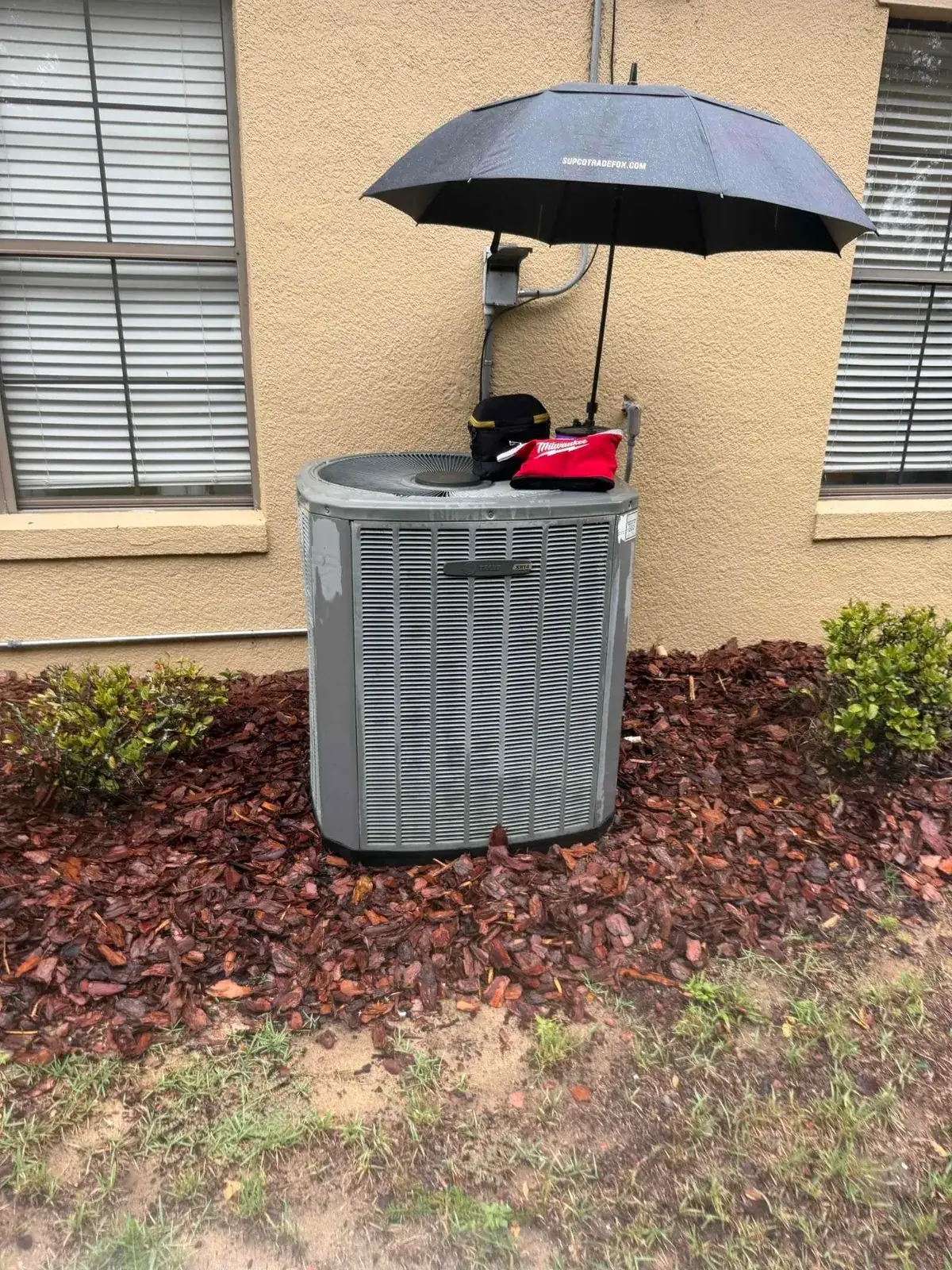
Sometimes the AC can't get there on its own, even sized right and running variable-speed. The classic Florida case is a mild rainy stretch. It's 78 degrees and pouring for three days, so the AC barely runs. No runtime means no moisture removal, and the outdoor air is sitting near saturation. Indoor humidity climbs into the 60s while the thermostat reads right at the set point.
Tightly sealed newer homes hit this more often than older leaky ones. The tighter the envelope and the more efficient the equipment, the less the AC runs, and the less moisture comes out along with the cooling.
A dedicated unit handles that, meaning a real dehumidifier ducted into the system, not a rolling box with a bucket. It has its own humidity sensor and runs on relative humidity whether or not the AC is calling for cooling, and it drains into the condensate line instead of a tray somebody has to empty. We install Santa Fe dehumidifiers on these jobs. They've been building for humid climates for decades. The cost comes down to the equipment, where it goes, and how it ties into ducts that were never sized for it, and a whole-house dehumidifier installation in Florida costs $3,500 to $6,000.
A portable unit from the hardware store is a legitimate experiment. If running one in the problem room makes a clear difference over a couple of weeks, that's real evidence the whole-home version will too. Just know what you're signing up for as a permanent answer. Emptying a bucket every day, forever, for one room.
Which of the four does your house actually need?
Work the list in order. Sticky house with the fan set to ON and a bath fan venting into the attic? Fix the free things first. If the house is sticky and the system short cycles, that's a sizing problem, and no dehumidifier fixes it. Cold and clammy with an older single-stage unit near the end of its life? Variable-speed, at replacement. A tight newer home that goes humid every rainy week no matter what is where the dedicated unit is worth the money.
The mechanisms stack, which is why the order matters. Put a dehumidifier on a house with leaky return ducts and it dries out your attic all day. Holding 45 to 55 percent is also the best thing you can do about mold and dust mites in a Florida house, which is why humidity sits at the center of indoor air quality here.
How Liberty handles it
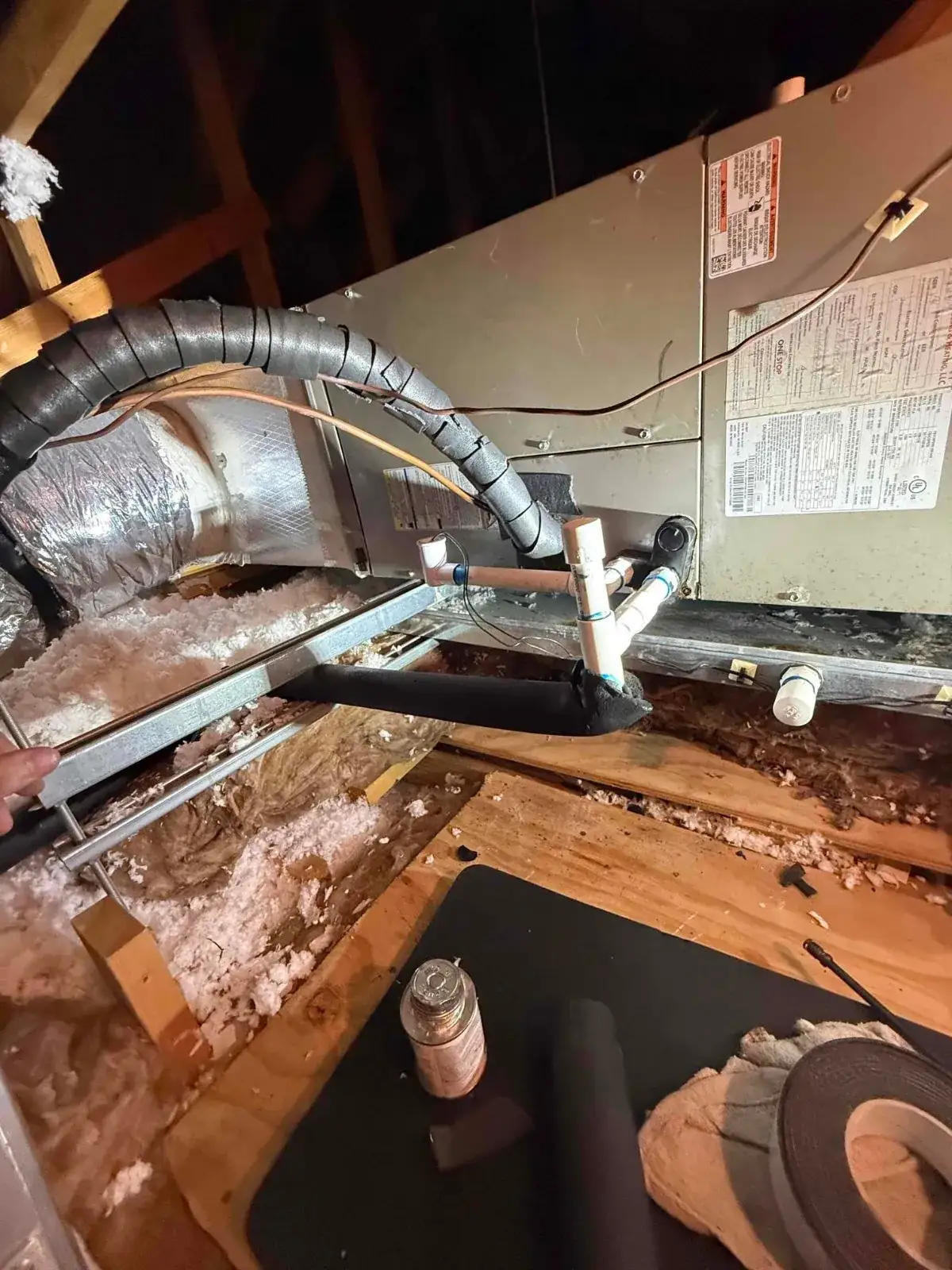
Liberty Air and Electric runs a sticky-house call as a diagnostic, not a sales call, walking the same four mechanisms in order. We check the fan setting and the drain first, because those are free. Then the duct system, especially the return side in the attic. We watch how the equipment cycles, which is what shows up a sizing problem, and we put a meter on the indoor relative humidity and see where it lands against 45 to 55 instead of guessing.
Most humidity complaints we see come down to settings or ducts, and those get fixed for a fraction of what a dehumidifier install costs. When it's sizing, we tell you that, and sizing usually waits for replacement, because nobody can shrink a system that's already in. When a home really needs the dedicated unit, we say so and show you the readings that make the case. Florida shop, owner led, and nobody here gets a commission spiff for selling the biggest box on the truck.
Humidity FAQs
What Homeowners Ask About Florida Humidity
Q: What should indoor humidity be in a Florida home?
A: Indoor humidity in a Florida home should sit between 45 and 55 percent relative humidity year round. Past 55 percent the house starts to feel sticky. Past 60 is where musty smells, dust mites, and mold risk start, which is where the EPA puts its line. Below 40 percent is achievable here and rarely worth paying for.
Q: Why is my house humid even when the AC is running?
A: A house stays humid with the AC running for a few common reasons, in the order we usually find them: the thermostat fan set to ON instead of AUTO, leaky return ducts pulling humid attic air into the system, an oversized AC that short cycles before it can remove moisture, and mild rainy stretches when the AC simply is not running enough to dehumidify.
Q: Should my AC fan be set to AUTO or ON in Florida?
A: Set the AC fan to AUTO in Florida. When the fan runs constantly, it blows air over the wet indoor coil between cooling cycles and re-evaporates moisture back into the house, undoing dehumidification you already paid for. It is the first free thing we check on a sticky-house call.
Q: Do I need a dehumidifier if my AC works fine?
A: You may not need a dehumidifier even if the AC works fine. A correctly sized system, especially a variable-speed one, handles humidity on hot days as a side effect of cooling. A dedicated dehumidifier matters on mild rainy days when there is little cooling load, and in tightly sealed newer homes where the AC does not run enough to dry the air.
Q: How much does a whole-home dehumidifier cost installed in Florida?
A: A whole-home dehumidifier costs $3,500 to $6,000 installed in Florida. The equipment is the smaller part of that. Attic access, how much duct the job needs, the length of the electrical run, and the length of the drain line move the number more than the size of the unit does.
Q: Can I just use a portable dehumidifier instead?
A: A portable dehumidifier is a good experiment and a bad permanent fix. Running one in the problem room for a couple of weeks is a legitimate way to confirm humidity is the issue before anybody quotes equipment. As the permanent answer it means emptying a bucket daily, forever, for one room.
Q: Does an oversized AC cause high humidity?
A: An oversized AC does cause high humidity, and it is the reason a cold house can still feel clammy. Moisture removal needs runtime. An oversized system hits the temperature target in eight minutes and shuts off before much water has condensed and drained, so the house gets cold air and keeps its moisture.