

AC Keeps Turning On and Off in Florida
AC keeps kicking on and off? Time the cycle. A quick one is usually a drain line, and a long gap usually means a lockout that needs a tech.
- How long it runs tells you which problem it is
- Same-day diagnostic, upfront quote
- Told straight when it's a drain line you can clear

Time the Cycle Before You Call
Liberty Air and Electric diagnoses and repairs ACs that keep turning on and off in Greater Orlando and South Florida. In the trade it's called short cycling.
How long it runs, and how long it stays off, points to the cause. When it runs less than five minutes, it's usually a clogged drain line. When it stays off 15 minutes or more between runs and never reaches the set temperature, it's usually in a high-pressure lockout.
Short cycling wears parts out fast.
It runs less than five minutes, shuts off, and starts again
In the majority of cases it's a clogged drain line tripping the float switch. It's an easy fix, and you can check it yourself if you can get to the air handler.
It shuts off and stays off for 15 minutes or more
This is usually a high-pressure lockout, and the house doesn't reach the set temperature. A lockout takes longer to reset than a float switch does.
The outdoor unit hums but its fan isn't spinning
The compressor is running without its fan, so the outdoor unit can overheat. Turn the system off at the thermostat.
The house hits the setting fast and the AC keeps starting and stopping
An oversized system can short cycle, and the house often feels sticky.
Liberty Air and Electric finds the cause before it costs you the compressor
- One timing check before you call
- Diagnostic fee waived with an approved repair
- Upfront pricing before any work starts
A Quick Cycle Is a Drain Line in Most Cases
Liberty Air and Electric finds a clogged drain line behind an AC that turns on and off in the majority of cases. The cycle is usually under five minutes.
When water backs up in the drain line, or in the pan attached to the coil, a float switch shuts the system off. When the water drops, the float switch lets it start again.
If you can get to the air handler, find the float switch on the drain line. Pull the top of the float out carefully and put a finger in. Water under the float means it's tripping.
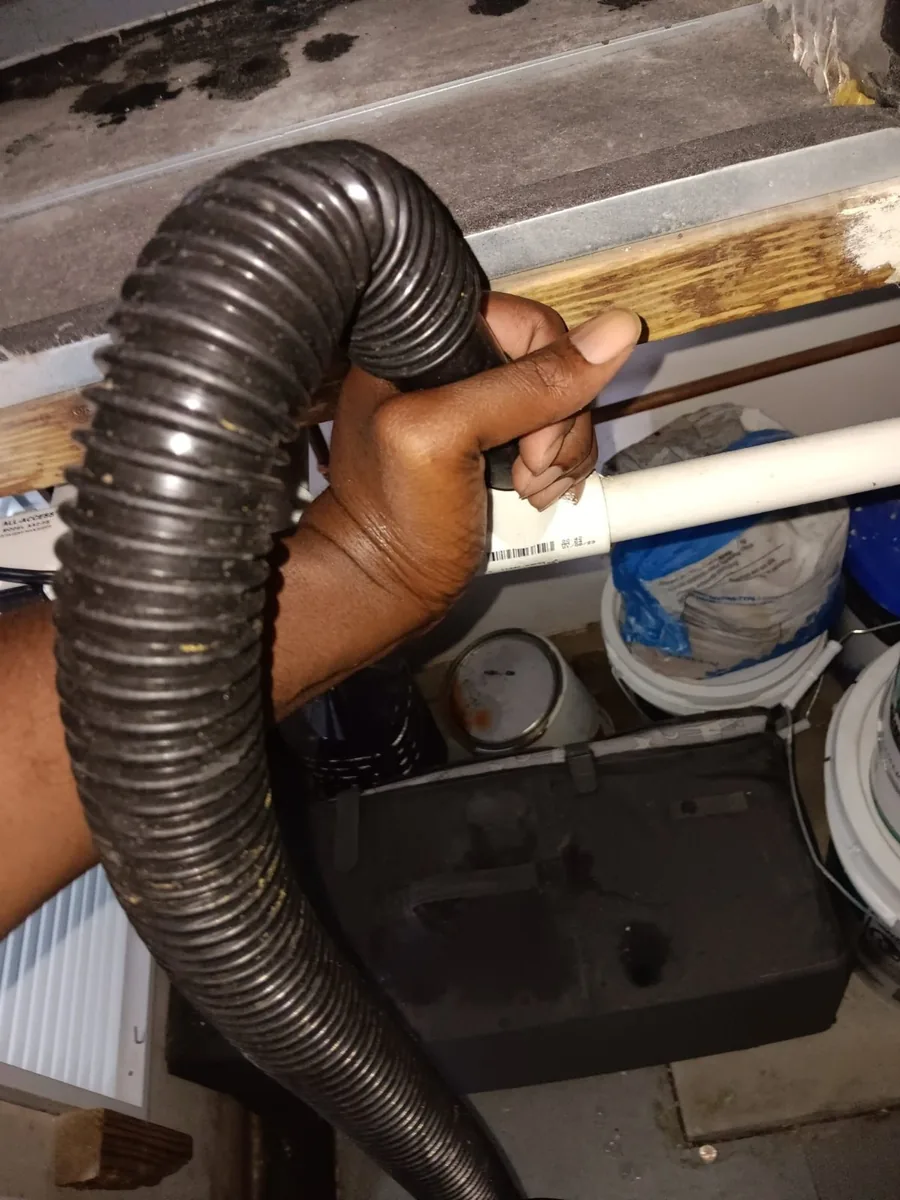
A Florida drain line stays warm and wet, so slime grows in it year-round. A wet/dry vac sealed over the outside end clears a clogged AC drain line when the clog is soft. Clear the line and the system comes straight back, no visit needed.
If you can't get to the air handler, or it keeps cycling after the line is clear, leave the system off until a tech gets there. On an AC repair visit, we clear most Florida drain lines with a shop vac and then warm water.
Long Gaps Between Cycles Point to a High-Pressure Lockout
Liberty techs usually find a high-pressure lockout when an AC sits off 15 minutes or more between runs and the house never reaches the set temperature. A high-pressure switch shuts the compressor off when pressure on the outdoor side climbs too high. That lockout takes longer to reset than a float switch does, and for good reason.
There's no water under a float to confirm this one, so look at the outdoor unit. Once the cycling stops and the system stays off, it's an AC that won't turn on, usually a safety switch that has latched.
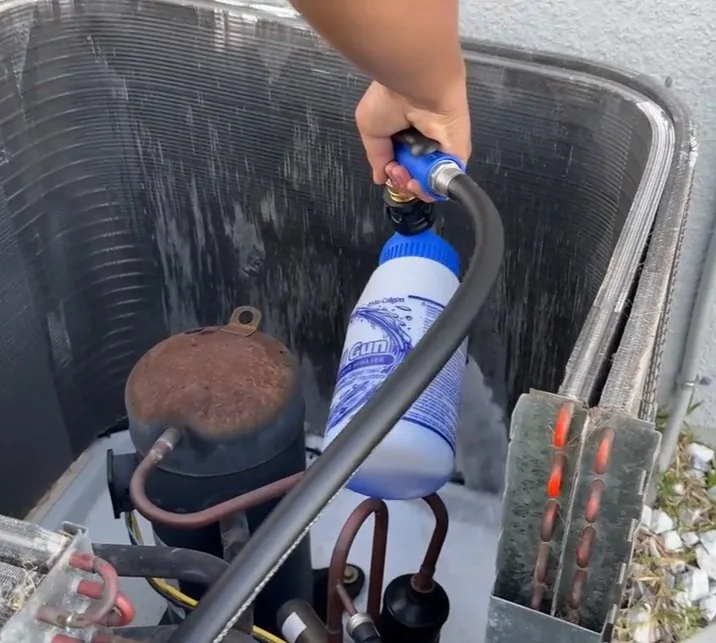
A clogged outdoor coil
High pressure almost always comes from the outdoor unit not getting rid of its heat. Look at the fins. If they're packed with debris, that's the likely answer. A coil dirty enough to lock the system out usually needs professional AC coil cleaning.
A fan that isn't spinning
You may hear the compressor running while the fan on the outdoor unit isn't spinning. With a dead condenser fan motor, the compressor has no way to reject heat, and that takes years off it. Turn the system off at the thermostat.
Off for 15 minutes or more between cycles?
Turn it off at the thermostat and book a diagnostic. We find what tripped the lockout and quote the repair before any work starts.
Don't Reset It at the Breaker
Don't reset a locked-out AC at the breaker to get it running again. Flipping the breaker off and on may reset the control board and clear the lockout, and then the system runs again with the fault still there.
That lockout is protection against a more costly compressor repair.
With a lockout behind it, turn the system off at the thermostat and leave it off until a tech gets there.
What Else Makes an AC Short Cycle
Other problems cause the same on-and-off cycling. Most of them work the same way, with a fault tripping a safety lockout.
An oversized system
An oversized system can short cycle. It hits the set temperature fast, shuts off, and starts again soon after. It leaves humidity in the air, so the house feels sticky. Oversizing doesn't happen suddenly. It usually shows the first cooling season after the install, like a system put in in November that starts short cycling in March. There's no need to keep an oversized system off.
A dirty filter or coil, or the wrong refrigerant charge
A dirty filter, a dirty coil, or a refrigerant charge that's too high or too low can trip a safety lockout and short cycle the system. The filter is the one you can check and change yourself. A new filter is very unlikely to stop it, but if it does, there's no reason to keep the system off. With a dirty coil or a wrong charge, turn it off at the thermostat and don't reset it at the breaker.
What it usually isn't
A weak capacitor makes the compressor start and quit on its overload, but the fans usually keep running the whole time. You notice warm air and a humming outdoor unit more than a system turning on and off. A bad thermostat is more likely to overcool or undercool the house. The exception is a thermostat mounted where direct sunlight comes and goes. It isn't reading wrong. It's reading a bad spot, and that can short cycle the system.
Questions?
Frequently Asked Questions About an AC That Keeps Turning On and Off
Q: Why does my AC keep turning on and off?
A: An AC that keeps turning on and off has a clogged drain line tripping the float switch in the majority of cases, and that cycle is usually under five minutes. If it stays off much longer between runs and never reaches the set temperature, it's usually in a high-pressure lockout. An oversized system can do it too.
Q: What is AC short cycling?
A: AC short cycling is when an air conditioner turns on and off over and over without really cooling the house. In the majority of cases it's a clogged drain line tripping the float switch, and the cycle is usually under five minutes. It wears the parts out fast.
Q: Is short cycling bad for an AC?
A: Yes. Short cycling is bad for an AC because it wears the parts out fast. When a safety lockout is behind it, the lockout is protecting the compressor, so turn the system off at the thermostat. Liberty Air and Electric finds the cause before it costs you the compressor.
Q: Should I reset my AC at the breaker when it keeps shutting off?
A: No. Don't reset your AC at the breaker when it keeps shutting off. Flipping the breaker may reset the control board and clear a lockout, and that lockout is protecting you from a more expensive compressor problem. Turn the system off at the thermostat and leave it off until a tech gets there.
Q: Can a clogged drain line make an AC turn on and off?
A: Yes. A clogged drain line is what makes an AC turn on and off in the majority of cases. Water backs up in the drain line and the float switch shuts the system off. Water under the float is the sign, and clearing the line brings the system straight back.
Q: Can an oversized AC cause short cycling?
A: Yes. An oversized AC can cause short cycling. It hits the set temperature fast, shuts off, and starts again soon after. It leaves humidity in the air, so the house feels sticky. Oversizing doesn't happen suddenly, so it usually shows the first cooling season after the install.
Q: How much does it cost to fix an AC that keeps turning on and off?
A: The diagnostic on an AC that keeps turning on and off costs $49 to $149 in Florida, depending on the season and the day of the week. That fee is waived with an approved repair. If it's a drain clog you clear yourself, you don't need a visit. A drain clearing in Florida mostly runs $150 to $300.